



Poland
GdyniaLublinSzczecinPrzemyślGdańskPoznanSopotTorunŁódźKatowicePiwnicza-ZdrójChałupyKolobrzegOlsztynKrakowWrocławHelNowy TargKłodzkoJurataWładysławowoWalbrzychRzeszówKielceBialystokZakopaneWarsaw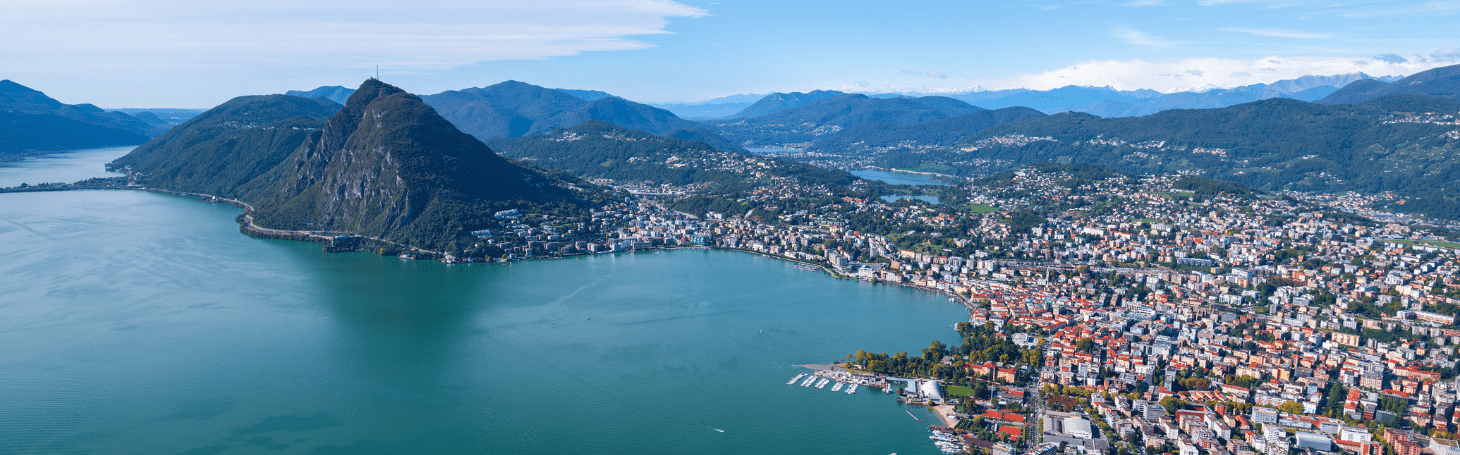
Train to Lugano - connections, tickets and itinerary
Stazione di Lugano railway station is located on a hill above Lake Lugano, and you can walk to the lakeside promenade from there in just a few minutes. Switzerland is part of the Schengen area, so all you need to enter is a valid identity card. From Poland, you can reach Lugano with a change of train, usually via Milan or Zurich. The journey takes about 10–14 hours, depending on your starting city. When planning this international journey, PolishTrains lets you compare connections via Milan or Zurich and choose tickets according to your departure city and date.
Fast facts - Lugano by train
-
Currency: Swiss franc (CHF). Payment cards are widely accepted, but it is advisable to carry cash for small expenses.
-
Best time to go: spring, especially April-May, or early autumn, i.e. September-October. During these months you hit pleasant walking temperatures and less tourist traffic than in summer.
-
How much to go for: a weekend, i.e. Friday evening - Sunday, is enough for a city break with the main attractions in the centre. If you want to add Monte San Salvatore, Monte Bre and a lake cruise, plan 3-4 days.
-
Local transport: Lugano is in the hills, so comfortable shoes will come in handy, especially in the old town and the Belvedere gardens.
-
Practical tip: train tickets are worth buying in advance - the earlier, the better the price and the greater the choice of seats. Because international seat reservations are compulsory, PolishTrains helps you secure the relevant reservation while comparing available itineraries.
When to go to Lugano
The best choice is spring or early autumn, as the daytime temperature is then 15–22°C, tourist traffic is moderate and accommodation prices are lower than in summer.
| Month | Daytime temperature | Weather | Tourist traffic |
| January | 4°C | Cool, possible rain and snow | Low |
| February | 6°C | Cool, the days lengthen | Low |
| March | 10°C | Spring warming, variable precipitation | Low |
| April | 15°C | Warm, gardens in bloom | Moderate |
| May | 19°C | Warm and sunny | Moderate |
| June | 23°C | Hot, bathing season | High |
| July | 26°C | Hot, full summer | High |
| August | 26°C | Hot, peak season | High |
| September | 22°C | Warm, fewer tourists | Moderate |
| October | 16°C | Mild, autumn colours | Moderate |
| November | 9°C | Cool, short days | Low |
| December | 5°C | Cold, festive atmosphere | Low |
Spring (March–May)
-
Camellias and magnolias bloom in the Belvedere gardens, making this one of the best times to stroll along the lakeside promenade.
-
The Lugano Festival dedicated to classical music takes place in spring, with concerts at various locations around the city.
-
You'll pay less for accommodation than in summer, and there are shorter queues for the funicular on Monte San Salvatore.
Summer (June–August)
-
Daytime temperatures reach 23–26°C, so the season for lake cruises and swimming at the town beaches is in full swing.
-
Tourist traffic is at its highest during this period and accommodation prices are the highest of the year.
-
Evenings are warm, so restaurants in the old town serve dinner outside until late.
Autumn (September–October)
-
Daytime temperatures are 16–22°C, and tourist traffic and accommodation prices drop compared to summer.
-
October sees the Festa d'Autunno, an open-air culinary event featuring local specialities and Merlot del Ticino wine.
-
The autumn colours on the slopes of Monte Bre and Monte San Salvatore make for impressive panoramas of the town and lake.
Winter (November–February)
-
Daytime temperatures are 4–9°C and some attractions operate reduced hours.
-
This is a good time to visit museums and galleries without queues, including the Hesse Museum in Montagnola.
-
In December, Christmas markets are held in the old town and along the promenade. PolishTrains sends the purchased ticket by email and SMS, while its exchange and return conditions help you manage changes before departure.
Getting to Lugano by train
You can reach Lugano from Poland with a change of train, usually via Milano Centrale station or Zurich Hauptbahnhof station. The choice of route depends on your starting city and departure date.
From Kraków to Lugano
-
From Kraków to Lugano you travel around 12–13 hours with a change of train.
-
One route takes you through Vienna and on to Milan.
-
You change trains at Milano Centrale station.
-
An alternative route takes you through Wien Hauptbahnhof station and on towards Zurich.
From Wrocław to Lugano
-
From Wrocław to Lugano you travel approximately 12–13 hours with a change of train.
-
The route takes you via Vienna or Prague and on to Milan or Zurich.
-
From Wien Hauptbahnhof station, you continue towards Zurich or Milan.
From Warsaw to Lugano
-
From Warsaw to Lugano you travel approximately 13–14 hours with a change of train.
-
You can choose between a daytime option via Milan or an overnight connection via Vienna or Zurich.
-
You change trains at Milano Centrale station.
-
With the overnight option, you leave in the evening and arrive in Switzerland in the morning.
From Poznań to Lugano
-
From Poznań to Lugano you travel about 13–14 hours with a change of train.
-
The route goes via Berlin and Zurich, or via Vienna and Milan.
-
You change trains at Berlin Hauptbahnhof station.
-
From Zurich Hauptbahnhof station you can travel directly to Lugano.
If you are travelling from Gdańsk, Łódź, Katowice or any other city, you will reach Lugano via one of the main hubs and then follow the route described above. Seat reservations are compulsory on the international leg.
You can buy tickets on PolishTrains without creating an account – the ticket is sent to your email and by SMS. You receive an SMS reminder 30 minutes before departure with a link to your ticket, so you are not searching your inbox at the last minute. The earlier you buy, the better the price and the greater the choice of seats. You can return your PKP Intercity ticket up to 20 minutes before departure and exchange it up to 30 minutes before departure. See our returns and exchanges policy page for details.
Local transport in Lugano
The main attractions of the centre are within a 1–2 km radius of the station. You walk down the hill through the old town to the lakeside promenade.
Funiculars run to the higher districts and viewpoints. The funiculars to Monte San Salvatore and Monte Bre make it easy to reach the city's most important panoramic viewpoints. You buy your tickets at the lower station.
City buses serve the entire town and the surrounding lakeside villages. A single ticket costs a few francs and a day ticket a little more. You buy your tickets from vending machines at bus stops or at points of sale.
Boat cruises on Lake Lugano combine travel between villages with views of the Alps. You buy your tickets at the jetty. Cruises to Gandria take about 30 minutes one way, and longer cruises to Morcote take several hours with stops.
You get around central Lugano on foot and by public transport. Funiculars, buses and boats provide access to the main points of interest in the city and surrounding area.
You will find accommodation in various price ranges near the station and the old town. From the station to hotels in the centre is just a few minutes' walk.
Where to stay:
-
Station area – a convenient base, minutes from the centre and the old town
-
Old town – close to the main attractions, the promenade and restaurants
What to see in Lugano - highlights
Lake Lugano and the promenade
The lakeside promenade is the main walking axis of the city. Along it are the Belvedere gardens with subtropical plants and modern outdoor sculptures. Entry is free and the walk takes 30-60 minutes. The gardens transition into the Parco Civico Ciani, an extensive urban park right on the lake.
Monte San Salvatore
By funiculare you will reach the summit at 912 m above sea level, from where you can see the lake, the Alps and, in good weather, the Lombardy plain. There is an entrance fee. The whole trip with funicular ride and walk to the summit takes 2-3 hours. The lower station of the funicular is in the Paradiso district, a dozen minutes' walk from the centre.
Monte Bre
This is the second summit overlooking the town, accessible by funicular from the Cassarate district. At 925 metres above sea level, you will find a viewpoint and the small village of Bre with its stone houses. There is an entrance fee. The tour takes 2-3 hours.
San Lorenzo Cathedral (Cattedrale di San Lorenzo)
The Renaissance cathedral was built between 1447 and 1522 and is distinguished by its ornate façade and interior with frescoes. It stands on a hill in the centre of the old town. Entrance is free and the tour takes 20-30 minutes.
Church of Santa Maria degli Angioli
The small church on the promenade hides a monumental fresco of the Crucifixion by Bernardino Luini from the 16th century, which ranks among the most important Renaissance works in Switzerland. Entrance is free and the tour takes 15-20 minutes.
Hesse Museum in Montagnola
The museum is dedicated to Hermann Hesse, who lived in the Lugano area for the last four decades of his life. The facility is located in Montagnola, a few kilometres from the centre, so get there by bus. There is an entrance fee and the tour takes 45-60 minutes.
Boat cruise on the lake
You buy your tickets at the marina in the centre of Lugano. Cruises to Gandria, a picturesque village on the Italian border, take about 30 minutes one way. Longer cruises to Morcote take several hours with stops.
Plan for day 1
In the morning, walk along the promenade through the Belvedere gardens to Parco Civico Ciani. Before noon, you can visit the Cathedral of San Lorenzo and the Church of Santa Maria degli Angioli, as both places are in the centre and a short walk away. In the afternoon, plan a cruise to Gandria or a walk along the lake shore. In the evening, have dinner in the old town.
Plan for the weekend
Day 1: In the morning, walk along the promenade through the Belvedere gardens to Parco Civico Ciani. Before noon, visit San Lorenzo Cathedral and the church of Santa Maria degli Angioli. In the afternoon, plan a cruise to Gandria or a walk along the lake shore. In the evening, enjoy dinner in the old town.
Day 2: Spend the morning at Monte San Salvatore or Monte Bre. In the afternoon, time remains for the Hesse Museum in Montagnola or a longer cruise to Morcote. In the evening, choose a restaurant in a side street of the old town.
Eating and shopping in Lugano
What to eat
The cuisine of the canton of Ticino combines Italian and Swiss influences. In restaurants you will find risotto, polenta, ossobuco and local cured meats, especially salame ticinese.
Grotto - traditional restaurants in stone buildings, often hidden in side streets or on the edge of town. They serve local dishes at wooden tables and Merlot del Ticino wine, the region's showpiece.
Festa d'Autunno - an open-air event in October with local specialities, chestnuts and wine. If you hit this date, you'll sample regional cuisine in one place.
Where to eat:
-
Via Nassa - the old town's main shopping street with boutiques, Swiss chocolate shops and local delicatessens
-
The side streets of the old town - here you'll find grottoes and restaurants with local cuisine in a quieter atmosphere
Prices in restaurants are noticeably higher than in Poland. Lunch in an average restaurant costs from a few dozen zlotys per person. In the bars and cafés along the promenade you can have a sandwich or salad for a few dozen zlotys.
Fairs with local products are regularly held in the centre. Check the schedule at the tourist information on site.
Souvenirs
-
Swiss chocolate - wide choice in shops on Via Nassa and in local delicatessens
-
Merlot del Ticino - local wine, a showpiece of the region, available in shops and wineries
-
Chestnut products - a typical Ticino souvenir, available especially in autumn
How much does Lugano cost? Indicative costs
Lugano is one of the more expensive cities in Switzerland, so prices for accommodation and restaurants are noticeably higher than in Polish cities and many Central European cities. Approximate costs in PLN per person are as follows:
| Category | Budget | Mid-range | Comfort |
| Accommodation (1 night) | 200–350 PLN | 400–600 PLN | 700–1,200 PLN |
| Food (per day) | 80–120 PLN | 150–250 PLN | 300–500 PLN |
| Local transport (per day) | 15–30 PLN | 40–80 PLN | 100–200 PLN |
| Attractions (per day) | 0–20 PLN | 80–150 PLN | 200–300 PLN |
| Total for the weekend (2 days, 1 night) | 390–690 PLN | 940–1,560 PLN | 1,900–3,200 PLN |
Amounts do not include the train ticket from Poland, as this cost depends on the route and the date of purchase.
Payment cards are widely accepted. The currency is the Swiss franc (CHF), so it is advisable to carry some cash for smaller shops and vendors.
Frequently asked questions
Check out where else you can go by train in Europe
Czech Republic
BrnoOstravaPragueOlomoucNetherlands
RotterdamAmsterdamFrance
LilleToulouseBordeauxNiceDijonLyonParisMarseilleParisAvignonSwitzerland
Château-d'OexLucerneSt. MoritzZurichLuganoBrocMontreuxInterlakenSankt GallenGenevaBernBellinzonaBaselAustria
InnsbruckVienna