



Poland
GdyniaLublinSzczecinPrzemyślGdańskPoznanSopotTorunŁódźKatowicePiwnicza-ZdrójChałupyKolobrzegOlsztynKrakowWrocławHelNowy TargKłodzkoJurataWładysławowoWalbrzychRzeszówKielceBialystokZakopaneWarsaw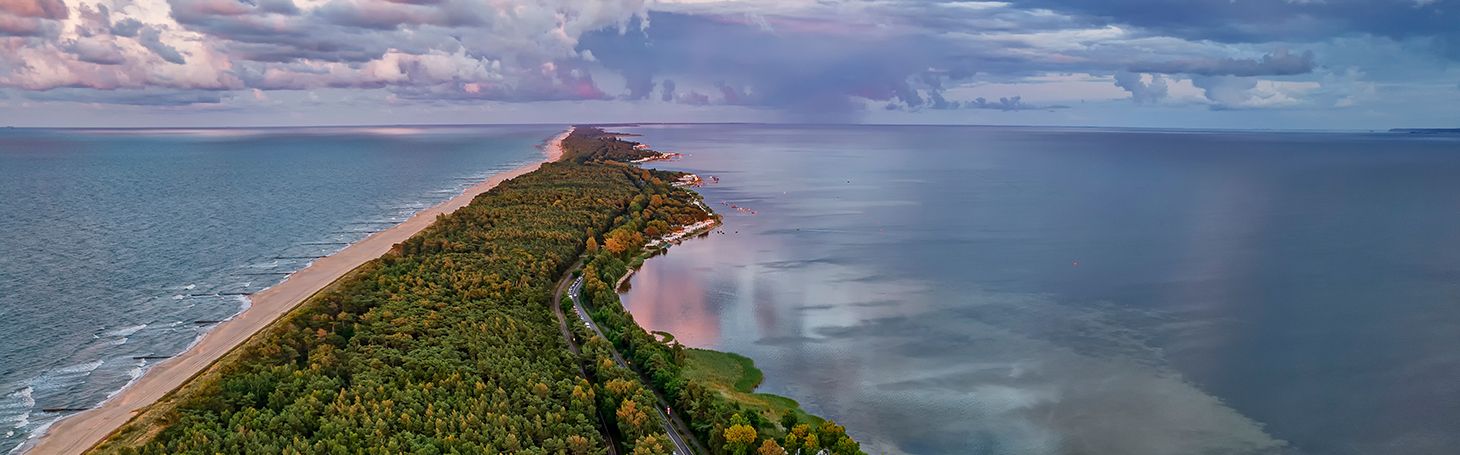
Train to Hel - connections, tickets and itinerary
Hel train station is the terminus at the tip of the Hel Peninsula - it's about 0.5km from the town centre, and you can walk to the beach and lighthouse in a few minutes along the promenade. The Hel Peninsula is a narrow 34-kilometre strip of land between the Baltic Sea and the Bay of Puck, and by train you travel picturesquely along the water. You can get to Hel from Gdańsk in about 2.5 hours with a change in Gdynia, and from Warsaw in about 5-7 hours.. For a convenient journey to the peninsula, PolishTrains lets you check connections to Hel and plan the change at Gdynia Główna before departure.
Fast facts - Hel by train
-
Journey from Gdynia to Hel: takes about 1 hour 40 minutes.
-
Best time to go: May-June (14-22°C, less crowds, sea heats up) or September (12-19°C, quieter beaches, lower accommodation prices).
-
Local transport: Hel is a small town of around 3600 inhabitants. Most attractions are accessible on foot or by bicycle. Bicycle rentals operate seasonally.
-
Main attractions: sandy beaches on both sides of the Spit, lighthouse with 360° views, fishing harbour, seal sanctuary, cycle path along the whole peninsula.
-
How much to go for: one day is enough for the main attractions, and a weekend allows you to cycle the Spit and visit Chałupy, Jastarnia and Jurata.
-
Practical tip: in July and August, trains from Gdynia to Hel fill up quickly. It is worth buying your ticket in advance, especially for weekends and holidays. During July and August, PolishTrains helps you buy Gdynia–Hel tickets in advance, which is particularly useful for weekends and holidays when trains fill quickly.
When to go to Hel
The best choice is May, June or September - the daytime temperature is then 14-22°C and the beaches are not yet overcrowded.
| Month | Daytime temperature | Weather | Tourist traffic |
| January | 3°C | Cloudy, windy | Low |
| February | 4°C | Cloudy, possible snow | Low |
| March | 8°C | Variable, windy | Low |
| April | 13°C | Mostly sunny | Moderate |
| May | 18°C | Sunny, fresh breeze | Moderate |
| June | 22°C | Warm, long days | Moderate |
| July | 24°C | Warmest, rare showers | High |
| August | 23°C | Warm, possible storms | High |
| September | 19°C | Variable, stronger wind | Moderate |
| October | 14°C | Cloudy, rain | Low |
| November | 9°C | Cloudy, rain, wind | Low |
| December | 5°C | Cloudy, possible snow | Low |
Spring (March to May)
-
Temperatures rise from 8°C to 18°C. The sea in May reaches around 12°C, so the weather is mainly favourable for cycling on the Spit.
-
There are fewer tourists than in summer.
-
Some restaurants and seasonal attractions do not open until May.
Summer (June-August)
-
July and August are the peak season. The sea is around 17°C then, the beaches are overcrowded and it is worth buying train tickets from Gdynia in advance.
-
June is warm, up to 22°C, and there are fewer crowds than in July.
-
In August, there are some afternoon thunderstorms. For a rainy day, the Fisheries Museum or a walk around the fishing harbour will do.
Autumn (September-October)
-
In September it is 12-19°C, the sea is still around 15°C and the beaches are quieter after the summer holidays.
-
In October, the weather is changeable and most seasonal attractions remain closed.
Winter (November-February)
-
It is 3-9°C during the day and often windy from the sea.
-
Most restaurants and bike rental shops are closed then.
-
Hel in winter attracts people who are looking for empty beaches and peace and quiet. Before travelling outside summer, use PolishTrains to compare the current timetable, while its digital ticket delivery keeps your reservation available by email and SMS.
Getting to Hel by train
You can get to Hel by changing trains at Gdynia Główna - trains to the Hel Peninsula depart from here. You make the connection at the same station. In the summer season, the train lets you avoid traffic jams at the entrance to the peninsula.
Gdańsk Główny - Hel
-
From Gdańsk to Gdynia you travel approximately 30 minutes.
-
In Gdynia Główna you change trains to Hel - about 1 hour 40 minutes.
-
In total, you travel from Gdańsk to Hel in about 2.5 hours.
-
From Gdynia you go via Rumia, Reda, Puck, Chałupy, Jastarnia and Jurata, overlooking the Bay of Puck.
Warsaw Central Station - Hel
-
The fastest train from Warsaw to Gdynia takes about 3.5 hours. Slower connections take approximately 4.5-5.5 hours.
-
On arrival in Gdynia, you change trains to Hel, which takes about 1 hour 40 minutes.
-
In total, you travel from Warsaw to Hel in about 5-7 hours, depending on the connection to Gdynia you choose.
Poznań Główny - Hel
-
The fastest train from Poznań to Gdynia takes about 4-4.5 hours. Slower connections take about 5-5.5 hours.
-
From Gdynia you travel on to Hel in about 1 hour 40 minutes.
-
In total, you travel from Poznań to Hel in about 5.5-7 hours.
Kraków Główny - Hel
-
The fastest train from Kraków to Gdynia takes about 4.5-5 hours. Slower connections take approximately 6.5-7 hours.
-
From Gdynia to Hel you travel approximately 1 hour 40 minutes.
-
In total, you travel from Kraków to Hel in around 6-9 hours.
Outside the summer season, Polregio trains run between Gdynia and Hel and the journey takes around 1 hour 40 minutes. In the summer season, roughly from the end of June to the beginning of September, seasonal PKP Intercity trains also run on this route. There are fewer connections outside the season than in summer, so check the current timetable before you go.
You can buy tickets on PolishTrains without registering - you provide your email address and phone number. Your ticket arrives in your inbox and by SMS, and 30 minutes before departure you receive a reminder with a link to your ticket. The earlier you buy, the better the price and the greater the choice of seats, and during the summer season trains to Hel fill up quickly. You can return your PKP Intercity ticket up to 20 minutes before departure and exchange it up to 30 minutes before departure - see the website for details, where you can check the refund and exchange policy.
Transport on site in Hel
Hel train station is close to the centre - the seafront promenade leads straight from the station, and you can walk to the lighthouse and main beach in just a few minutes.
Cycling is the most convenient way to get around Hel and the whole Spit. Rentals operate seasonally, usually from May to September, and the cost ranges from a dozen to several dozen zloty per day. You can cycle the entire Hel Spit to Chałupy, Jastarnia and Jurata - a cycle path runs along the entire peninsula.
Bus transport on Hel is limited - there are only a few services a day in the low season, and more in summer. For tourists, getting around on foot or by bike is the better option.
Taxis are available locally and you can find the numbers at the station or at the hotel reception. Uber and Bolt have limited coverage in Hel, so it is better not to base your entire travel plan on them.
If you are looking for accommodation, the centre of Hel on the promenade puts you close to the attractions, but it can be noisy in high season. You will find quieter options in the northern part of town or closer to Chałupy and Jurata - further from the main attractions, but quieter and with easy access by bike.
The main attractions of Hel are within a few kilometres of the station. On a city break in Hel you get around mainly on foot and by bike.
Where to stay:
-
Centre by the promenade - close to attractions, can be noisy in high season
-
Northern part of town - quieter options, more peaceful than the centre
-
The area around Chałupy and Jurata - further from the main attractions, but quiet and with easy access by bike
What to see on Hel - highlights
Lighthouse with the Marine Environment Protection Museum
This is an icon of Hel. Climbing the 117 steps to the viewing gallery gives a 360° view of the sea, the Bay of Puck and the entire peninsula. The tour takes about an hour. There is an entrance fee. The queues are shorter in the morning, so it's worth starting your day just at the lighthouse.
Main Beach (Central Beach)
This is a sandy beach with full seasonal facilities - lifeguards, sunbed hire and beach bars. The water is at its warmest in August at around 17°C, and 12-15°C in May and June. Admission is free. It is quieter in the morning and gets crowded at midday in high season.
Hel Spit
This is a 34-kilometre strip of land between the Baltic Sea and the Bay of Puck. A cycle path runs along the entire Spit. The most popular section from Hel to Chałup is 10-15 km long - on the way you pass Jurata and Jastarnia. The bike ride takes about 2-4 hours, depending on your pace and the number of stops. Admission is free.
Fisheries Museum (Museum of Fishing Traditions)
In the museum you will see traditional boats, fishing gear and the history of fishing on Hel. The tour takes about 45 minutes. There is an entrance fee. It is a good addition to the day, especially when the weather is not conducive to beachcombing.
Puck Bay (western side of the Spit)
Here the water is calmer than on the Baltic side, so it's a good place for families with children. The beach is sandy and admission is free. It's best to come in the morning or after 4pm, when the beach is quieter.
The Sea Promenade
This is a several-kilometre long route along the shore with restaurants, cafes and sea views. A cycle path runs parallel to the pavement. An evening walk between 18:00 and 20:00 provides good light and less traffic.
Plan for day 1
In the morning: lighthouse and viewing gallery. Before noon: cycle along the spit to Chałup - about 15 km one way. Lunch: fishing harbour - fresh fish straight from the fishermen. Afternoon: main beach and swimming in season. In the evening: a walk along the sea promenade and dinner with a view of the sea.
Plan for the weekend
Friday evening: arrival in Hel, dinner in the fishing harbour and a walk on the promenade.
Saturday: day on the Spit by bike - Jurata, Jastarnia and Chałupy. On your return, you can visit the Fisheries Museum.
Sunday: lighthouse in the morning, then main beach and lunch in the centre. Plan your return by train for the afternoon.
Eating and shopping in Hel
What to eat
Herring marinated in oil with onions - served with black bread. You can also buy it in jars as a souvenir.
Eel smoked on juniper wood - buy it from smokehouses by the harbour.
Fried mussels in butter with garlic - a seasonal starter available in restaurants along the promenade.
Baltic fish soup - thick and warming, served at most pubs in the harbour.
Where to eat:
-
Hel's fishing port - the most authentic place to eat. Several traditional pubs stand right by the pier - you'll buy fish straight from the fishermen and eat in a less touristy atmosphere. Portions are large and prices are lower than in the centre.
-
The centre of Hel by the lighthouse - brings together restaurants and cafés overlooking the sea. It is more expensive here than in the harbour, but in the evening the area has a very good atmosphere.
-
Promenade by the main beach - a place for a quick snack - you'll find cafes, ice cream, bars with drinks and grilled seafood.
Souvenirs
-
Baltic amber - buy earrings, necklaces and brooches made from authentic amber from local artists in the centre.
-
Herring in oil in jars - a practical souvenir to take home.
-
Local craft beers - from the Tricity, available in shops.
-
Wooden fishermen figurines - you'll find them in the souvenir shops in the centre.
The souvenir shops in the centre close earlier in the off-season, so shopping is best done before dinner.
How much does it cost to go to Hel? Indicative costs
| Category | Budget | Mid-range | Comfort |
| Accommodation (1 night) | 80-120 PLN | 200-350 PLN | 400-600 PLN |
| Food (3 meals) | 60 PLN | 120 PLN | 200 PLN |
| Local transport | 15-20 PLN | 40 PLN | 60 PLN |
| Attractions | 20-30 PLN | 50-70 PLN | 100-150 PLN |
| Total | 175-230 PLN | 410-580 PLN | 760-1010 PLN |
The budget option includes a guesthouse or hostel, a fish bar and snacks, a bike for half a day and entry to the lighthouse with the museum. The mid-range option involves a three-star hotel, cafés and a seafood restaurant, a bicycle for a full day and a few paid attractions. The comfort option is a four- or five-star hotel with sea views, a gourmet restaurant, taxi and a premium bike, plus all paid attractions.
Accommodation prices are higher in July and August and lower in May, June and September. Add to the cost the ticket from the starting city to Gdynia.
Discounts apply to PKP Intercity tickets: students 51%, children and young people 37%, senior citizens 30%, Large Family Card 30%, groups of 2-6 people 30%.
Frequently asked questions
Check out where else you can go by train in Europe
Czech Republic
BrnoOstravaPragueOlomoucNetherlands
RotterdamAmsterdamFrance
LilleToulouseBordeauxNiceDijonLyonParisMarseilleParisAvignonSwitzerland
Château-d'OexLucerneSt. MoritzZurichLuganoBrocMontreuxInterlakenSankt GallenGenevaBernBellinzonaBaselAustria
InnsbruckVienna