




Poland
GdyniaLublinSzczecinPrzemyślGdańskPoznanSopotTorunŁódźKatowicePiwnicza-ZdrójChałupyKolobrzegOlsztynKrakowWrocławHelNowy TargKłodzkoJurataWładysławowoWalbrzychRzeszówKielceBialystokZakopaneWarsaw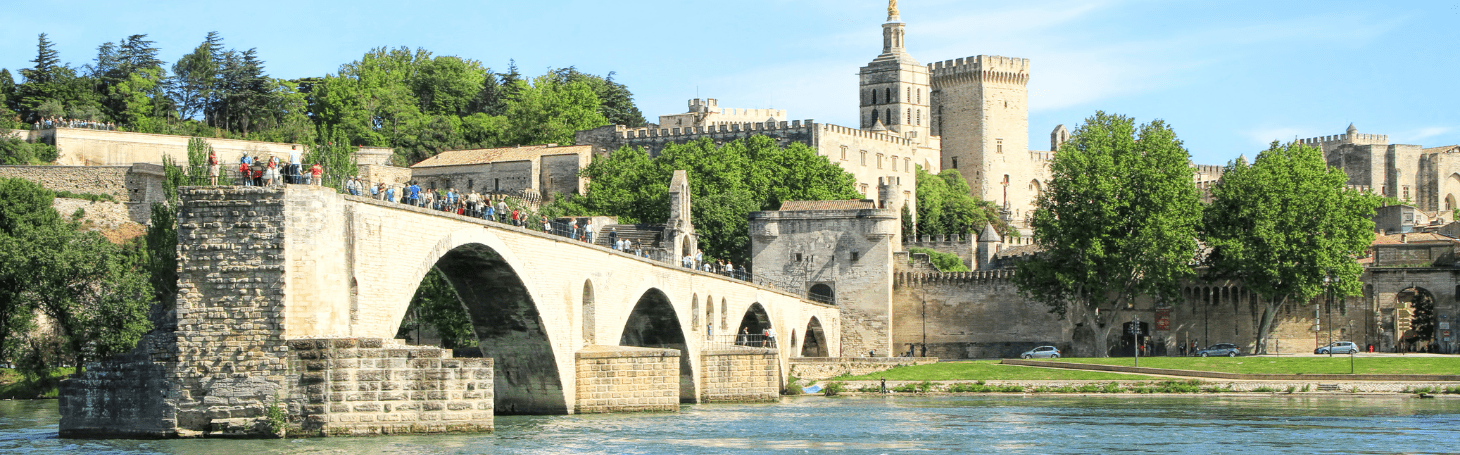
Train to Avignon - connections, tickets and itinerary
Avignon is one of Provence's most important historic cities - it was the seat of the popes in the 14th century and today attracts visitors with its Papal Palace, medieval walls and one of the largest theatre festivals in Europe. You can get there from Poland with a change in Paris - from Warsaw it's about 10-11 hours, from Krakow a little longer. France is part of the Schengen area, so all you need to enter is an identity card. PolishTrains lets travellers compare the Paris connection when planning rail journeys from Poland to Avignon, including the required international seat reservation.
Fast facts - Avignon by train
-
Avignon stations: the Avignon TGV station is a few kilometres from the centre and serves trains from Paris, and the Avignon-Centre station stands in the very centre and serves TER regional trains. If you're coming from Paris, get off at Avignon TGV station - you can reach the centre by shuttle bus or taxi in a matter of minutes.
-
Attractions: historic papal capital in the heart of Provence. The Papal Palace, the Pont d'Avignon, the Romanesque cathedral and the well-preserved defensive walls are worth seeing within a 1-2 km radius of Avignon-Centre station.
-
How long to stay: a weekend (2-3 days) is enough for the Papal Palace, the Pont d'Avignon, the cathedral and a walk in the old town. A week allows for excursions around Provence - to Arles, Nîmes or Marseille by TER regional trains.
-
Festival d'Avignon: the festival takes place every July and is one of the biggest theatre events in the world. There are street performances, art fairs and film screenings throughout the city, and accommodation prices are at their highest of the year.
-
Seat reservation: a seat reservation is compulsory on the international leg. The earlier you buy your ticket, the better the price and the greater the choice of seats. When booking through PolishTrains, check whether your itinerary ends at Avignon TGV or Avignon-Centre, since they serve different routes and have different locations.
When to go to Avignon
For a city break in Avignon, it is best to choose spring (April-May) or early autumn (September-October) - daytime temperatures are 17-24°C, crowds are smaller than in summer and accommodation prices are lower than in high season.
| Month | Daytime temperature | Weather | Tourist traffic |
| January | 8°C | Cool, possible precipitation | Low |
| February | 9°C | Cool, mistral | Low |
| March | 13°C | Increasingly warm, windy | Low |
| April | 17°C | Warm, sunny | Moderate |
| May | 21°C | Warm, little precipitation | Moderate |
| June | 26°C | Hot, dry | High |
| July | 30°C | Very hot, clear skies | High |
| August | 29°C | Very hot, dry | High |
| September | 24°C | Warm, mild | Moderate |
| October | 20°C | Pleasant, sunny | Moderate |
| November | 13°C | Cooler, possible precipitation | Low |
| December | 9°C | Cold, short days | Low |
Spring (March-May)
-
Gardens and parks are in full bloom - the Jardin des Doms at the Papal Palace, with views over the Rhône and Mont Ventoux, is well worth a visit.
-
Temperatures of 13-21°C allow for a full day's sightseeing on foot without the heat.
-
Accommodation prices are lower than in summer and it is easier to find a table in restaurants without a reservation.
Summer (June-August)
-
The heat reaches 30-35°C - sightseeing is best planned for the morning and evening.
-
The Festival d'Avignon in July attracts street performances, art fairs and film screenings throughout the city. Tickets for the main events are worth booking in advance.
-
Accommodation prices are the highest of the year, especially in July. Book hotels in the centre several weeks in advance.
-
Evenings are warm and long - restaurants along the Place de l'Horloge serve dinners outside until late.
Autumn (September-October)
-
Temperatures of 20-24°C and smaller crowds after the festival season make it easier to visit the Papal Palace without long queues.
-
The wine harvest is underway around Avignon - the Côtes du Rhône region offers tastings at wineries accessible by TER train.
-
In autumn, you are more likely to find markets selling local products such as olives, cheeses and Provençal honeys.
Winter (November-February)
-
Temperatures of 6-10°C and the mistral - a strong wind from the north - can be harsh; bring a warmer jacket.
-
Low tourist traffic means shorter queues at the Papal Palace and the Pont d'Avignon, as well as lower accommodation prices.
-
In December, Christmas markets are held on the Place de l'Horloge and around the Papal Palace. PolishTrains can help organise the Paris–Avignon journey, but allow time to change from Gare du Nord or Gare de l’Est to Gare de Lyon.
Getting to Avignon by train
You will reach Avignon in one day, with a transfer in Paris and a final TGV leg to Avignon TGV station.
From Warsaw to Avignon
-
From Warsaw Central station you travel to Paris, either to Gare du Nord or Gare de l'Est, and then change to the TGV to Avignon.
-
Total travel time is around 10-11 hours, depending on the length of your connection in Paris.
-
You can leave in the morning and arrive in Avignon in the evening of the same day.
-
Seat reservation is compulsory on the international leg.
-
When changing in Paris, you switch stations - from Gare du Nord or Gare de l'Est to Gare de Lyon. You can travel between the stations by metro in a matter of minutes.
From Kraków to Avignon
-
From Kraków Główny station you travel via Warsaw to Paris and then take the TGV to Avignon.
-
Total journey time is about 11-12 hours.
-
You transfer twice - in Warsaw and in Paris.
-
If you are planning a weekend trip, you can leave on Friday morning and arrive in the evening.
From Wrocław to Avignon
-
From Wrocław Główny station you travel via Warsaw or Berlin to Paris and then take the TGV to Avignon.
-
The total journey time is about 11-12 hours.
-
If you choose the route via Berlin, you can plan a few hours' stopover in the city.
In Avignon, trains from Paris stop at Avignon TGV station. If you plan to travel onward by TER regional trains, change at Avignon-Centre station - a shuttle bus runs between the two stations.
On PolishTrains you can buy a ticket for the entire route without registering - the ticket is sent to your email and by SMS. 30 minutes before departure you receive an SMS reminder with a link to your ticket. If you have a PKP Intercity ticket on the route, you can make a refund up to 20 minutes before departure and an exchange up to 30 minutes before departure. See the refund and exchange rules for details. The earlier you buy, the better the price and the greater the choice of seats.
Getting around Avignon
Avignon TGV station is located a few kilometres from the centre. You can get there by shuttle bus, which runs regularly and stops at Avignon-Centre station. Alternatively, you can take a taxi or a VTC - the French equivalent of a ride-hailing service - both can be found at the station exit.
Avignon-Centre station stands right next to the ramparts of the old town. Once you leave the station, you are close to the main attractions - you can walk to the Papal Palace in a matter of minutes.
You get around the centre of Avignon on foot. The main attractions - the Papal Palace, the Pont d'Avignon, the cathedral and the city walls - lie within a 1-2 km radius of Avignon-Centre station. The old town sits within the walls, so distances are short.
Avignon has a city bike scheme, which is useful for excursions beyond the city centre - for example to the Rhône or to parks on the outskirts of the city.
| Mode of transport | When useful | Notes |
| On foot | Old town, main attractions | Sufficient for the whole city break |
| Shuttle bus (navette) | Getting from Avignon TGV to the centre | Runs regularly |
| Taxi / VTC | Getting from Avignon TGV with luggage | Available at the station |
| City bike | Excursions outside the centre | Docking stations at various points around the city |
| TER train | Day trips to Arles, Nîmes, Marseille | Departures from Avignon-Centre station |
From Avignon-Centre station you can take TER regional trains to Arles, Nîmes and Marseille. Trains run regularly - Avignon works well as a base for day trips around Provence.
Where to stay:
-
Old town (intra-muros) - closest to the main attractions, higher prices, ideal for a short stay
-
Around Avignon-Centre station - convenient access, wider choice of hotels across different price ranges
What to see in Avignon - highlights
Palais des Papes (Palace of the Popes)
The largest Gothic palace in Europe and the seat of the popes in the 14th century. The interiors are impressive in scale - audience rooms, chapels with fresco fragments and papal chambers. The tour takes 1.5-2 hours. There is an entrance fee. An audioguide in Polish is available. There are fewer people in the morning, so it's worth starting the day here.
Pont d'Avignon (Pont Saint-Bénézet)
A medieval bridge from the 12th century, partially preserved - four of the original 22 arches remain. There is an entrance fee. The tour takes 30-45 minutes. The bridge offers a view of the Rhône and Fort Saint-André across the river. An audioguide tells the story of the construction and the legend of the shepherd Bénézet.
Notre-Dame des Doms Cathedral
The Romanesque cathedral stands right next to the Papal Palace, at the top of the Rocher des Doms. Entrance is free of charge. Inside you will see 12th-century frescoes and the Gothic tomb of Pope John XXII. The tour takes 20-30 minutes.
The city walls (les Remparts)
Well-preserved medieval walls surround the entire old town - they have a perimeter of more than 4 km. A walk along the walls takes about an hour. The prettiest section runs from the Papal Palace towards the Rhône, overlooking the river and the Pont d'Avignon.
Jardin des Doms
Park on the hill behind the cathedral, with a panoramic view of the Rhône, the Pont d'Avignon and Mont Ventoux in the distance. Entrance is free. After visiting the Papal Palace, take a break here - there are benches in the shade, fountains and a pond.
Festival d'Avignon
The Festival d'Avignon is one of the largest theatre festivals in the world, held every July. The programme includes street performances throughout the city, art fairs and alternative film screenings. Running alongside the official programme is Festival Off - hundreds of independent performances in churches, courtyards and cellars. It's worth checking the programme before you go and booking tickets for selected events.
Plan for Day 1
Morning: the Papal Palace, which takes 1.5-2 hours to visit, and Notre-Dame des Doms Cathedral, which takes 20-30 minutes to visit - the two attractions stand side by side. Midday: the Pont d'Avignon, which takes 30-45 minutes to visit, followed by lunch at a restaurant on the Place de l'Horloge or in the side streets of the old town. Afternoon: a walk along the ramparts, which takes about an hour, and the Jardin des Doms with a panoramic view of the Rhône. Evening: dinner in one of the restaurants in the old town - look for places with Provençal cuisine around the Rue des Teinturiers.
Plan for the weekend (2-3 days)
Day 1: You can arrange the first day in the same way as the 1-day plan - the Papal Palace, the cathedral, the Pont d'Avignon, the walls and the Jardin des Doms.
Day 2: Excursion by TER train to Arles - see the Roman amphitheatre, Saint-Trophime monastery and the streets where Van Gogh walked. Alternatively, visit Nîmes with the Maison Carrée and the Roman arena.
Day 3: Morning market at Les Halles, open every morning - cheeses, olives and local produce. Then a stroll through quieter streets off the main tourist trail: Rue des Teinturiers with its mill wheels by the canal and Place des Corps-Saints with local cafés.
Eating and shopping in Avignon
What to eat
Provençal cuisine
In restaurants look for:
Ratatouille - a dish of stewed aubergines, courgettes, peppers and tomatoes.
Tapenade - a paste of black olives, capers and anchovies, served with bread.
Brandade de morue - cream of cod with oil and garlic, a traditional dish of the south of France.
Local cheeses - chèvre and banon wrapped in chestnut leaves.
Daube provençale - slow-braised beef in red wine with Provençal herbs.
Wines from the Rhône Valley
Surrounding Avignon is the Côtes du Rhône region - some of the best red wines in France. In wine bars and restaurants, try Châteauneuf-du-Pape, whose vineyards lie a dozen or so kilometres from the city. In Avignon itself, several places offer tastings.
Where to eat:
-
Les Halles - market hall open every morning, fresh local produce, cheeses, olives and cured meats
-
Rue des Teinturiers - a street with more interesting restaurants off the main tourist trail
-
Place des Corps-Saints - local cafés and restaurants with Provençal cuisine
-
Place de l'Horloge - convenient location, outdoor dining, higher prices than in side streets
Souvenirs
-
Lavender products - soaps, essential oils and pouches of dried lavender - you'll find shops around the Papal Palace.
-
Provençal ceramics - colourful vessels with distinctive designs.
-
Local wines and olive oils - available in shops and at Les Halles market.
The currency in France is the euro. Payment cards are accepted virtually everywhere, including in markets and smaller shops.
How much does Avignon cost? Indicative costs
Below are the approximate costs of a stay in Avignon per person per night, in three categories.
| Category | Budget | Mid-range | Comfortable |
| Accommodation (1 night) | 200-300 PLN | 400-600 PLN | 800-1200 PLN |
| Food (per day) | 60-100 PLN | 150-250 PLN | 300-500 PLN |
| Local transport | 0-20 PLN | 30-60 PLN | 80-150 PLN |
| Attractions | 50-80 PLN | 80-130 PLN | 150-250 PLN |
| Total | 310-500 PLN | 660-1040 PLN | 1330-2100 PLN |
Budget - accommodation in a hostel or budget hotel outside the city centre, food at Les Halles market and inexpensive bars, sightseeing on foot, selected paid attractions such as the Papal Palace.
Mid-range - three-star hotel in the centre or close to the ramparts, lunch and dinner in mid-range restaurants, taxi from Avignon TGV station and main attractions with audioguide.
Comfortable - boutique hotel in the old town, dinners in restaurants serving Provençal cuisine and local wines, VTC from the station and all attractions plus a wine tasting around Châteauneuf-du-Pape.
July, when the Festival d'Avignon takes place, is the most expensive month of the year. Accommodation prices can be twice as high as in other months, so it is worth booking well in advance. In spring and autumn, the same hotels cost less.
Frequently asked questions
Check out where else you can go by train in Europe
Czech Republic
BrnoOstravaPragueOlomoucNetherlands
RotterdamAmsterdamFrance
LilleToulouseBordeauxNiceDijonLyonParisMarseilleParisAvignonSwitzerland
Château-d'OexLucerneSt. MoritzZurichLuganoBrocMontreuxInterlakenSankt GallenGenevaBernBellinzonaBaselAustria
InnsbruckVienna