



Poland
GdyniaLublinSzczecinPrzemyślGdańskPoznanSopotTorunŁódźKatowicePiwnicza-ZdrójChałupyKolobrzegOlsztynKrakowWrocławHelNowy TargKłodzkoJurataWładysławowoWalbrzychRzeszówKielceBialystokZakopaneWarsaw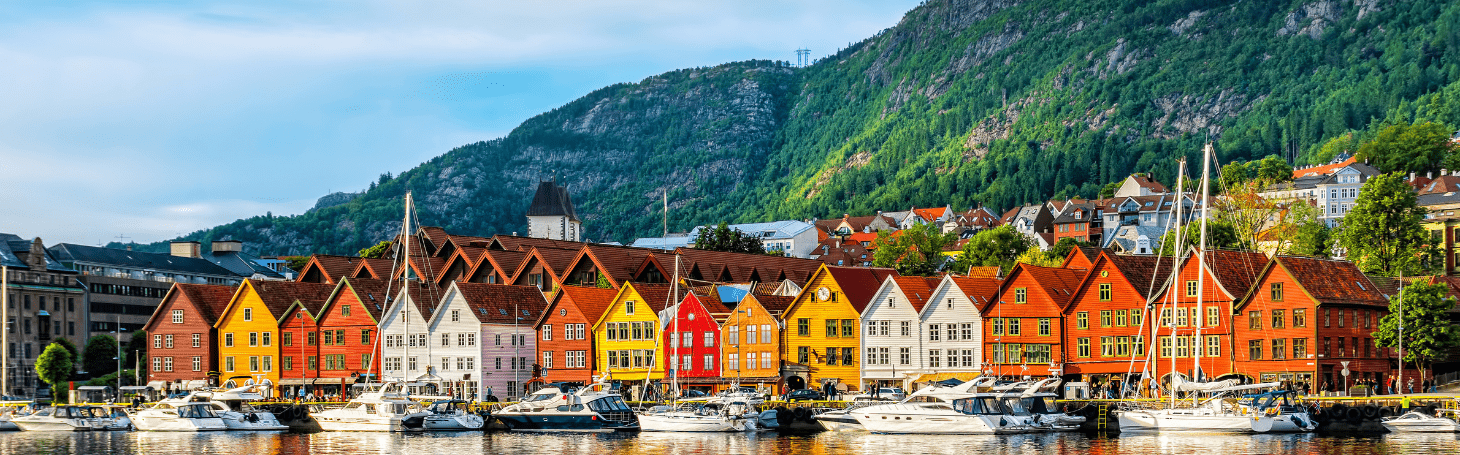
Train to Bergen - connections, tickets and itinerary
Bergen togstasjon station at Strømgaten 6 is a ten-minute walk from Bryggen quay and the city centre. Norway is part of the Schengen area, but not a member of the EU - you need a valid passport to enter and the currency is the Norwegian krone (NOK). You can get there from Poland with transfers in Berlin and Oslo, and the Oslo to Bergen section of the route Bergensbanen takes 6.5-7 hours and takes you through mountains, tunnels and fjords. For a journey from Poland involving changes in Berlin and Oslo, PolishTrains lets travellers arrange Bergen rail tickets and receive them electronically.
Fast facts - Bergen by train
-
Best time to go: June-August - the daytime temperature is 14-21°C and the very long days make sightseeing easy.
-
Local transport: you can walk from the train station to the centre or take the bus in a few minutes; a single ticket costs a dozen zlotys in conversion.
-
How much to go for: the minimum for a trip is 2 full days - spend the first on Bryggen, Bergenhus Fortress and Fish Market, and the second on the Fløibanen railway and Nordnes district.
-
Practical tip: Bergen is one of the rainiest cities in Europe, so a waterproof jacket will come in handy at any time of the year. PolishTrains sends Bergen tickets by email and SMS without requiring an account, while an SMS reminder helps you access the ticket before departure.
When to go to Bergen
The best choice is June-August, when the daytime temperature is 14-21°C and you get the longest daylight hours.
| Month | Daytime temperature | Weather | Tourist traffic |
| January | 1-4°C | Rain, possible snow, short days | Low |
| February | 1-5°C | Rain and snow, days getting longer | Low |
| March | 3-7°C | Variable, some clear spells | Low |
| April | 4-11°C | Variable, frequent precipitation | Moderate |
| May | 9-17°C | More sunshine, more pleasant | Moderate |
| June | 13-20°C | White nights, lots of sunshine | High |
| July | 14-21°C | The warmest, longest days | High |
| August | 13-20°C | Warm, crowds thin towards end of month | High |
| September | 10-16°C | Cooler, fewer tourists | Moderate |
| October | 6-11°C | Rainy, short days | Low |
| November | 3-7°C | Rain, possible snow | Low |
| December | 1-5°C | Short days, snowfall | Low |
Spring (April-May)
-
In April, the weather is changeable and difficult to predict - daytime highs are 4-11°C, so several layers of clothing are useful.
-
May is a good month for a city break: the daytime temperature is 9-17°C, more sunny days appear, and the Bergen International Festival attracts musicians and artists from all over the world.
-
Accommodation prices are lower than in summer and queues to attractions are shorter.
Summer (June-August)
-
In June, you have white nights - the sun doesn't set until after 11pm and the sky doesn't darken completely; daytime temperatures are 13-20°C.
-
July is the warmest month, with 14-21°C during the day, and this is when the peak tourist season falls.
-
In August it is still warm, and towards the end of the month the crowds are smaller than in July.
Autumn (September-October)
-
In September, the daytime temperature is 10-16°C, there are fewer tourists and the hills around the city take on autumn colours.
-
In October, you'll usually encounter rainy weather and short days; daytime highs are 6-11°C.
Winter (November to February)
-
From November to February, the daytime temperature is 1-7°C, the days are very short and snow appears periodically.
-
In December, Christmas markets with mulled wine and gingerbread operate in the Bryggen district.
-
Accommodation prices are the lowest of the year. When planning the Oslo–Bergen journey, PolishTrains helps you include the Bergensbanen section, whose mountain scenery makes the transfer an important part of the itinerary.
Getting to Bergen by train
You will reach Bergen with transfers via Berlin and Oslo. The entire journey from Poland takes 24-33 hours, and you can plan some sections by overnight train.
From Warsaw - via Berlin and Oslo
-
From Warsaw to Berlin you travel by PKP Intercity train for 6 hours; day and night connections are available.
-
From Berlin to Oslo you take a DB or SJ train; you can also choose a night connection on this section.
-
From Oslo to Bergen you take the Bergensbanen route for 6.5-7 hours.
-
The entire journey takes 24-30 hours, depending on transfer times.
-
If you leave Warsaw in the evening, you arrive in Berlin in the morning.
From Krakow - via Warsaw or Berlin
-
From Krakow, you arrive in Berlin either via Warsaw or a direct connection, and continue via Oslo to Bergen.
-
With an evening departure from Krakow, you change trains in Berlin in the morning.
-
The entire journey takes 25-32 hours.
From Gdańsk - via Warsaw to Berlin
-
From Gdansk you travel first to Warsaw and from there to Berlin; you continue via Oslo to Bergen.
-
You change trains in Warsaw at the same station - Warszawa Centralna.
-
The entire journey takes 26-33 hours.
Oslo-Bergen route (Bergensbanen)
The Oslo - Bergen section is an attraction in itself. Bergensbanen is one of the most beautiful train routes in Europe - you travel 6.5-7 hours through the Hardangervidda plateau, mountain tunnels, lakes and fjords. The route reaches heights of more than 1,200 metres above sea level, and outside your window you see the transition from green valleys to rugged, rocky highlands where snow can also lie in summer.
You can buy train tickets to Bergen on PolishTrains without creating an account - your ticket arrives via email and SMS. 30 minutes before departure you get an SMS reminder with a link to your ticket. The earlier you buy, the greater the choice of seats. Seat reservation is compulsory on the foreign section. On PKP Intercity, you can return your ticket up to 20 minutes before departure or exchange it up to 30 minutes before departure - for details, see our Return and Exchange Policy page.
Transport on site in Bergen
You can walk to Fish Market and Bryggen quay from the station in a few minutes - the road leads down towards the harbour. Alternatively, you can take the bus; the journey takes a few minutes and a single ticket costs a dozen zloty in conversion. With large luggage, a taxi will be more convenient - a ride from the station to the centre costs 50-80 PLN.
The main attractions - Bryggen, Fish Market, Bergenhus Fortress and the Fløibanen railway - are all within a 1-2 km radius of the station. You get around the centre on foot, and the bus is useful for trips outside the inner city, for example to Edvard Grieg's house in Troldhaugen.
Where to stay overnight:
-
Bryggen / Waterfront - a dozen minutes' walk from the station and close to the main attractions; prices are highest here, but you stay right on the waterfront.
-
Sentrum (city centre) - 5-10 minutes' walk from the station; average prices and a good base for any part of the city.
-
Nordnes - quieter neighbourhood on the peninsula behind the centre; get here by bus from the station and prices are lower than at Bryggen.
What to see in Bergen - highlights
Bryggen
A historic Hanseatic quarter listed by UNESCO. Colourful wooden houses from the 16th-18th centuries stand along the waterfront, and the narrow streets between them lead to small galleries, craft studios and cafés. Admission is free. The tour takes two hours. It is best to arrive in the morning before 10am, before groups from the cruise ships arrive.
Hanseatic Museum
Authentic Hanseatic merchant's house from the 16th century in the heart of Bryggen. The exhibition shows the daily life of the merchants - cramped bedrooms, cod-warehouses and trading rules. There is an entrance fee. The tour takes 1.5 hours. An audio guide is available in several languages.
Bergenhus Fortress and Hakon Hall
A medieval fortress from the 14th century lies at the northern end of the quay. Hakona Hall was a former royal palace and is one of the largest medieval ceremonial halls in Norway. The Rosenkrantz Tower opens up views of Bergen, the harbour and the surrounding islands. The fortress grounds are free of charge, while there is a fee to enter the buildings. The tour takes 1.5 hours.
Fish Market (Fisketorget)
The quayside market has been operating since the 17th century. Today it is a combination of traditional fish stalls and seafood food courts. Here you can find fresh smoked salmon, king crab, prawns and sushi. Admission is free. The best time to come is in the morning between 9:00 and 11:00, when the stalls are full and the crowds are even smaller.
Fløibanen cable car to Fløyen Hill
The funicular railway ascends Fløyen Hill (320 m above sea level) in five minutes. From the top, you view Bergen, the fjord and the island archipelago. There are walking paths, a children's playground and a café at the top. A round-trip ticket is payable. The return walk takes 50-60 minutes - the path leads through the forest and is well signposted.
Edvard Grieg House (Troldhaugen)
The composer's wooden house from the 19th century stands by the lake, surrounded by a garden. On site you will see Grieg's original furniture, instruments and personal items. During the summer season, piano concerts are held in a small concert hall next to the house. There is an entrance fee. The tour takes 1.5 hours. You can get here by bus from the centre.
KODE Museum
Five buildings house collections of Norwegian and international art - from Munch and Nikolai Astrup to contemporary art and crafts. There is a partial entrance fee. The tour takes two hours. The museum stands by Lille Lungegårdsvann Lake, a few minutes' walk from Fish Market.
Plan for day 1
-
Morning: Fish Market - seafood breakfast.
-
Morning: walk around Bryggen and the Hanseatic Museum.
-
Midday: Bergenhus fortress and Rosenkrantz Tower.
-
Lunch at a quayside restaurant.
-
Afternoon: Fløibanen railway to Fløyen hill and walk to the top.
-
Evening: dinner at Bryggen quay.
Plan for the weekend
Friday evening: arrival in Bergen, walk through the illuminated Bryggen quarter and dinner.
Saturday: Fish Market, Bryggen, Hanseatic Museum, Bergenhus fortress and Fløibanen railway.
Sunday: Edvard Grieg's house in Troldhaugen, KODE museum, souvenir shopping in Bryggen and departure by evening train.
Eating and shopping in Bergen
What to eat
Klippefisk - a traditional Norwegian dish of dried and salted cod, served with butter, potatoes and mustard; you'll try it at restaurants along Bryggen and in the centre.
Smoked salmon and gravlax - gravlax is salmon marinated in salt, sugar and dill; best tried in the morning at Fish Market.
Rømmegrøt - a traditional Norwegian dessert made of cream with berry syrup; appears in cafes at Bryggen, especially in winter.
Brunost - Norwegian brown cheese with a caramelly, slightly sweet taste; try it on a sandwich or with waffles.
Where to eat:
-
Fish Market (Fisketorget) - seafood, sushi, crab and prawn stalls; a good place for a quick meal overlooking the harbour.
-
Bryggen - small restaurants and bistros in historic wooden houses; prices are higher, but you are eating in a historic part of the city.
-
Sentrum / Torget - modern restaurants with Norwegian and international cuisine; you'll find more establishments in the mid-price range here.
Souvenirs
-
Norwegian woollen jumpers with traditional patterns - cost a few hundred zlotys but are renowned for their good quality; you'll find the largest selection in Bryggen.
-
Fish products - smoked cod, tinned salmon and tins of crab; easy to carry in your luggage.
-
Brunost and geitost - unique brown cheeses; you will buy them cheaper in regular grocery shops than in souvenir shops.
How much does Bergen cost? Indicative costs
For a day in Bergen you will spend 305-1600 PLN, depending on the standard of accommodation, the number of attractions and how you eat out.
| Category | Budget | Medium | Comfort |
| Accommodation | 120-150 PLN | 250-350 PLN | 500-700 PLN |
| Food | 90-120 PLN | 150-200 PLN | 300-400 PLN |
| Local transport | 15-30 PLN | 30-50 PLN | 100-150 PLN |
| Attractions | 80-120 PLN | 200-250 PLN | 250-350 PLN |
| Total / day | 305-420 PLN | 630-850 PLN | 1150-1600 PLN |
Norway is one of the more expensive countries in Europe. A coffee in a café costs 20-30 PLN, and a main course in an average restaurant 80-150 PLN. The budget option assumes a hostel or hotel of a lower standard, food from the Fish Market and street food, and 1-2 attractions. The medium variant includes a 3-star hotel, restaurants and 3-4 attractions. The comfort option means a 4-5 star hotel, good restaurants, taxis and entry to all attractions.
Prices are in PLN and are indicative - check the current Norwegian krone conversion rate before you travel.
Frequently asked questions
Check out where else you can go by train in Europe
Czech Republic
BrnoOstravaPragueOlomoucNetherlands
RotterdamAmsterdamFrance
LilleToulouseBordeauxNiceDijonLyonParisMarseilleParisAvignonSwitzerland
Château-d'OexLucerneSt. MoritzZurichLuganoBrocMontreuxInterlakenSankt GallenGenevaBernBellinzonaBaselAustria
InnsbruckVienna