



Rail gauge in Poland - what is the standard gauge? | PolishTrains
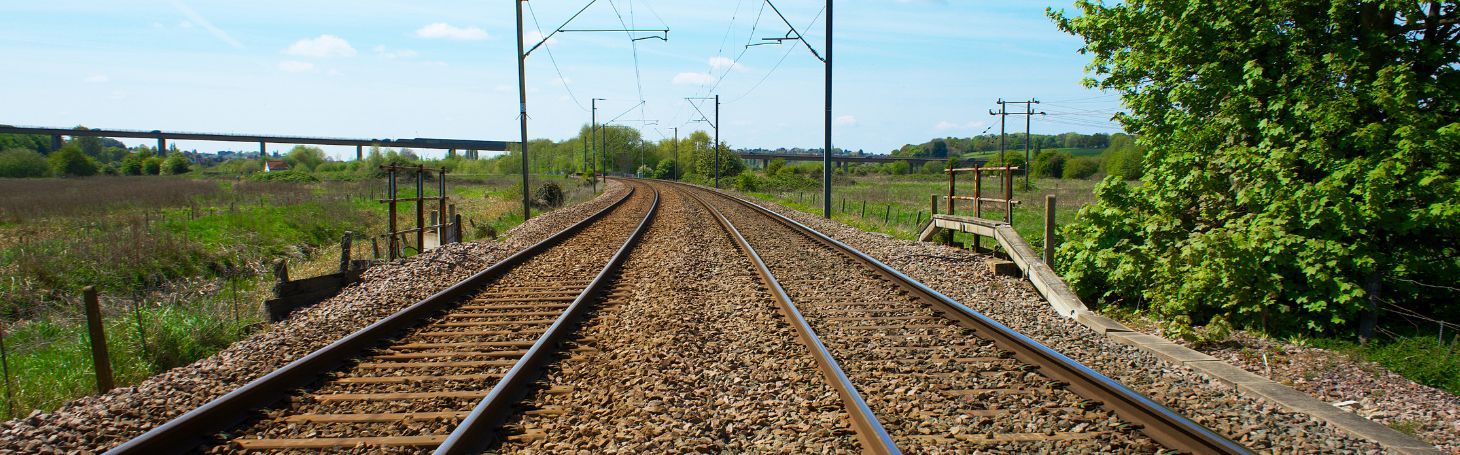
Rail gauge is one of the most important parameters of railway infrastructure, of great significance for passenger and freight transport. What exactly is the rail gauge in Poland? How does it look in other European countries? What does it actually depend on? You will find the answers to these questions in this article. When travelling by train, have you ever wondered about the rail gauge? Most people probably do not pay attention to this. However, if you are interested in this issue, we have prepared an article which explains not only what the width of railway tracks is in Poland and other countries, but also - what this value actually results from..
At a glance
At a glance
- Poland uses the standard 1435 mm gauge, matching most of Europe and North America
- The 1435 mm gauge is also known as normal or Stephenson gauge
- Broad gauge (1520 mm) is used on Poland's Linia Hutniczo-Siarkowa industrial line
- Russia, Finland, Ireland, Spain and Portugal all use gauges different from the 1435 mm standard
- The difference between 1520 mm and 1524 mm stems from a historical revision of the Russian gauge
- Narrow-gauge railways survive in Poland, including a 450 mm track at the Luiza Mine in Zabrze
Standard gauge in Poland and its importance in rail transport
The standard track width in Poland is 1435 mm. This parameter is in line with the international standard in force in most European and North American countries. Which other regions have this gauge standard?
- Europe (except Portugal, Spain, Ireland, Finland and the countries of the former USSR),
- North and Central America,
- China,
- Middle East,
- Peru,
- Uruguay.
The 1435 mm gauge (normal or Stephenson track) has been adopted as a global standard mainly because:
- facilitation of international rail transport,
- infrastructure compatibility,
- standardisation of rolling stock in different countries.
The standard track gauge in Poland means that trains can run freely to other European countries without the need for special systems to adapt wagons. In practice, this means greater fluidity of transport, lower operating and modernisation costs for railway lines, and greater availability of modern rolling stock. This is not only important for passengers, but also for the economy - a uniform gauge makes it easier to transport raw materials, products and goods on a large scale.
Rail gauge in Poland versus other countries - comparison with Russia and Europe
Although most countries in the world have a standard gauge of 1435 mm, it is possible to name countries that use other gauges:
- The track gauge in Poland and Russia (and other countries of the former Soviet Union) is different. To the east of our country it is 1520 mm. In Poland, an example of a line with a wider, Russian gauge is the Metallurgical and Sulphur Line (LHS), which connects the transhipment terminals on the eastern border with the centre of the country.
- In Finland, the standard gauge is 1524 mm. Interestingly, the slight difference between the Finnish track and the former Russian (so-called Tsarist) track is done without changing the gauge.
- Ireland has much wider tracks - their gauge is 1600 mm.
- In Spain and Portugal, the standard track width is 1668 mm.
What about other countries in the world? India, Pakistan, Bangladesh and Sri Lanka, for example, have a track width of 1676 mm. The widest track gauge can be found in Japan, on the Kyoto rollercoaster, with a value of 2743 mm.
Interesting fact: by order of Adolf Hitler, a broad gauge railway was designed for the Third Reich in 1936 - it was to be 3000 mm wide. This is more than twice the current gauge in Poland!
The importance of different track gauges around the world
Different rail gauges in different countries have practical consequences. They often require the transhipment of goods at borders or the use of special technical solutions, such as the replacement of bogies in wagons or the use of variable gauge rolling stock.The different gauges are the result of historical engineering decisions that influenced the development of railways in particular regions - you will read more about this below.
History and evolution of rail gauge in Poland
Railway gauge in Poland has a fascinating history, closely linked to the development of railways around the world and, in particular, to decisions made in the 19th century in Great Britain. It was there that Robert Stephenson, son of George Stephenson (designer of the first steam locomotive), initiated changes that would forever shape railway infrastructure.
Before uniform gauge was introduced, different gauges of track were used. Often these were narrow gauge railways matched with horse-drawn railways. However, Stephenson's inventions contributed to the adoption of the 1435 mm (4 feet 8.5 inches) standard. This compromise was mainly due to practical and financial considerations - the Stephenson locomotives of the time worked best with this gauge.
Interesting fact: there are still narrow gauge railways in Poland. The narrowest one is located in Kopalnia Luiza in Zabrze and has a gauge of 450 mm. Passenger trains run on it, transporting tourists in the undergrounds of the historic mine.
The first railway line on Polish soil was the Warsaw-Vienna Railway, whose construction began in 1835. The decision-makers at the time relied on English solutions, importing not only the knowledge, but also the rolling stock itself - manufactured in Britain.
After independence, our country had to face the challenge of standardising the railway network. Since then, the standard gauge in Poland has been 1435 mm. Nevertheless, broad gauge sections can still be found to this day, a testament to the diverse history of the railways.
History of track gauging in America and Russia
In the United States, the history of gauge has unfolded somewhat differently than in Europe. Instead of importing ready-made locomotives, the Americans began to manufacture them locally, based on British plans. A standard gauge of 1435 mm was then used, but a wider gauge of 1524 mm was also introduced.
Eventually the Stephenson gauge prevailed in America and became the dominant standard, facilitating the development of the rail network across the vast expanses of the continent. However, it was the 1524mm gauge - used on parts of the American lines - that played a key role in the development of railways... in Russia.
How did this happen? In 1842, when Russia was planning the construction of the Moscow-Petersburg railway, technical consultation was sought from the Americans, who were in favour of a wider gauge. It was on their recommendation that 1524mm became the Russian standard. In the 1960s, the formerly popular track gauge was officially changed to 1520 mm to disassociate itself from imperial measurements and emphasise the USSR's technical independence from the West.
As you already know, the standard rail gauge in Poland ensures efficient national and international communication. Differences in track gauge affect the possibilities associated with transport - requiring special technological solutions and adjustments to rolling stock. Railways are constantly evolving and the parameters we have described in this article continue to be an important part of transport planning for the future.
What are the types of trains on the PKP? | PolishTrains
Travelling by train in Poland offers a diverse experience, depending on the type of train chosen. The Polish State Railways (PKP) companies offer passengers several categories of trains - from high-speed intercity connections to more economical options. Each differs in terms of amenities, speed of travel and ticket price. In this article, we take a closer look at what each type of train entails and the differences between them.
Poland's first railway line - history of rail transport | PolishTrains
Wondering what it used to be like to create railway lines and how they were used? This article will take you on a journey back in time, revealing how railways were established in Poland and how this has influenced the current economic and social state. From the pioneering attempts to build the Warsaw-Vienna Railway, to the challenges of unifying the network after the three partitions, to participation in wartime events, to the key role of railways in modern times.
How did the steam railway transform Poland and the world? | PolishTrains
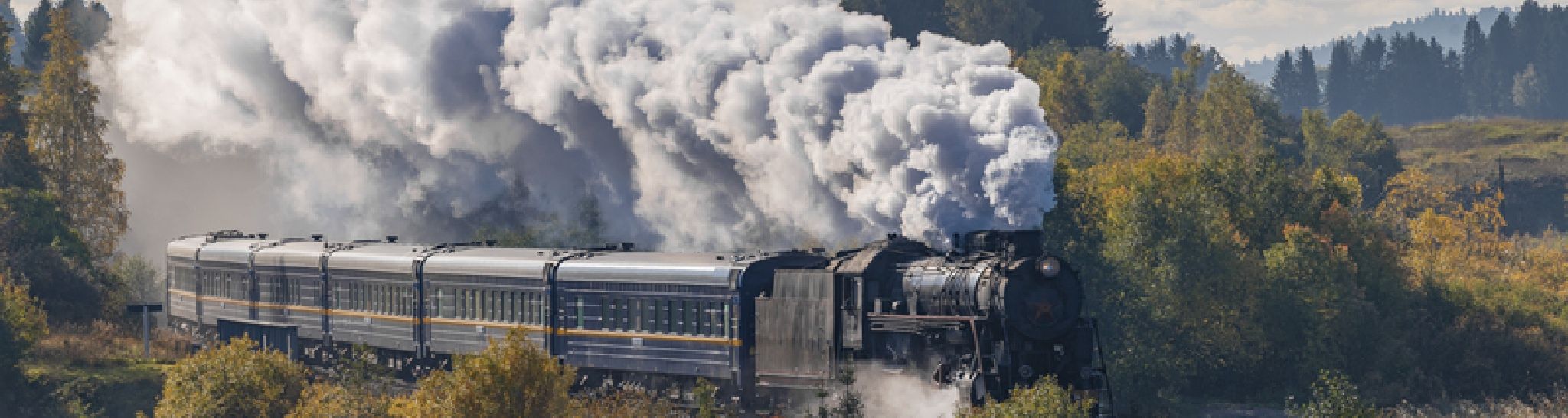
The invention of the steam railway changed the history of land transport forever. The intensive development of railways made it much cheaper and faster to transport goods or people. The beginning of railways was the horse railway, which had many disadvantages. It was not until steam locomotives and later diesel and electric locomotives led to rail transport looking the way it does today.