





Poland's first railway line - history of rail transport | PolishTrains
Published
Wondering what it used to be like to create railway lines and how they were used? Today, you can still travel by train on the Warsaw - Grodzisk Mazowiecki route, and you can check the current connections in the PolishTrains search engine. When planning your journey on this route, PolishTrains will also immediately show you the platform number and departure time of the selected train. This article will take you on a journey back in time, revealing how railways were established in Poland and how this has influenced the current economic and social state. From the pioneering attempts to build the Warsaw-Vienna Railway, to the challenges of unifying the network after the three partitions, to participation in wartime events, to the key role of railways in modern times.
At a glance
At a glance
- Poland's first railway line opened on 19 October 1845, connecting Warsaw with Grodzisk Mazowiecki
- The Warsaw–Vienna Railway was conceived by Piotr Steinkeller and Henryk Łubieński
- Construction of the first line took 14 years due to financial and political difficulties
- After 1918, three separate rail networks with different track gauges had to be unified into PKP
- By the late 19th century, most major cities in all three partition zones were connected by rail
- The railway network played a key role in both economic development and strategic military planning
The birth of the railway - the beginnings of rail transport in Poland
The beginnings of railways in Poland can be traced to 1845, when the first section of the Warsaw-Vienna Railway was opened, connecting Warsaw with Grodzisk Mazowiecki. The construction of Polish railways was inspired by British ventures, which quickly proved their effectiveness and potential for revolutionary changes in transport. The originators of this ambitious project were Piotr Steinkeller and Henryk Łubieński, who were quick to recognise the enormous opportunities that railways offered.
The choice of project and the obstacles encountered at the outset were extremely challenging. Financial and logistical difficulties became increasingly apparent, so that the investment was interrupted and resumed, and the estimated costs kept rising. The political situation was also not insignificant, as Poland, which was under partition, had no funds of its own. The initiators of the project had to apply for funding from Russia, which was not in favour of the Poles after their patriotic uprisings. The construction of the first railway line running from Warsaw to the border of the Russian partition took a total of 14 years - from the commissioning of the first designs to the handover of the investment. Despite adversity, the project was completed, becoming a milestone in the history of Polish rail transport.
Development of the railway network in Poland in the 19th century
The following decades of the 19th century saw the development of further lines, which gradually formed an increasingly integrated network. This was influenced by both economic and strategic considerations, particularly in the Prussian and Russian partitioned territories, where the expansion of the railway infrastructure was part of wider political and military plans. In contrast, in the Austrian annexed territories, particularly in Galicia, railway development was slower and often depended on local initiatives and private investors. By the end of the 19th century, most of the major cities in the annexed territories were already connected by a railway network, which significantly influenced population mobility, economic development and integration into the European transport system.
With the construction of more railway lines, Poland began to change. You can now check these same historic railway hubs – Warsaw, Kraków, Poznań and Wrocław – as routes for a one-day city break in the PolishTrains search engine. The railways contributed to the industrial development, urbanisation and modernisation of the country. Although the beginnings of railways in Poland were associated with many challenges, including technical and financial ones, the successive expansion of the railway network in the 19th century consolidated the position of railways as a key mode of transport, which was of great importance for the future shape of the Polish economy and society.
Consolidation of railways from the three partitions
The consolidation of the railway network from the three partitions after Poland regained its independence in 1918 was an undertaking on an unprecedented scale. Each partition developed its own railway infrastructure according to different technical standards. This resulted in differences in track gauge, signalling systems and operating rules. Furthermore, the railway networks in the partitions were mainly focused on connecting the main cities with the partition metropolises, which further complicated their integration into a unified national transport system.
The task of integrating the disparate systems into a unified railway network required not only a great deal of money, but also coordination at many administrative and technical levels. Work on unification began almost immediately after independence and included, among other things, the standardisation of gauge, the construction of new sections connecting previously separated regions and the modernisation of infrastructure to ensure smooth and safe rail traffic. This was necessary not only to strengthen the cohesion of the country, but also to stimulate economic development and facilitate communication between different parts of the country.
The effects of these measures were already visible in the 1920s and 1930s, when Poland had an extensive and increasingly integrated railway network. The consolidation of the railways contributed to the consolidation of the Polish state, facilitating the movement of people and goods in a very efficient way. It was an undertaking of great strategic importance that helped build Poland's modern infrastructure in the first decades of independence.
Rise of the PKP
The Polish State Railways, established shortly after Poland regained its independence in 1918, became the foundation for the reconstruction and development of rail transport in the country. The establishment of the PKP was a response to the urgent need to integrate the fragmented and dispersed railway network left behind by the three partitioning powers into a unified system capable of serving the national economy. This represented a monumental logistical and administrative task, requiring the unification of technical, legal and operational standards.
In the early years of its existence, the PKP concentrated on rebuilding and modernising the railway infrastructure destroyed by the war, extending the network to better connect Poland's internal regions, and integrating the disparate railway systems of the partitions into a coherent, efficient network. If you want to see how connections on Polish routes operate today, you can check the current services on PolishTrains. These early efforts were not only aimed at facilitating communication and transport across the country, but also helped to foster a sense of national unity and identity among Poles after years of division.
The development of the PKP in the 1920s and 1930s was closely linked to the general trend of modernisation of the Polish state. The company not only expanded the existing infrastructure, but also introduced modern technologies and solutions, such as the electrification of railway lines, which significantly improved transport efficiency. As a result, the PKP played a key role in Poland's economic development, enabling the rapid transport of goods and passengers, which contributed to the growth of industry, trade and social mobility.
The importance of railways during the Second World War
During the Second World War, the railways played an extremely important role on many fronts - from military logistics to population migration to support for the resistance. The rail network, which had previously connected nations and cultures, was transformed into a tool of war. Rail transport was crucial for the rapid movement of troops, equipment and supplies over vast distances, which was critical to the war strategies of both sides of the conflict.
The railway also had its impact on the activities of resistance movements. The network was used to smuggle arms, ammunition and people, helping to organise diversions and maintain communications between isolated groups. Sabotage on the railway lines to disrupt enemy logistics was one form of active resistance against the occupying forces. Thus, despite its tragic use during the war, the railways also gave an advantage to the fighting troops.
History of railways in Poland - summary
The development of railways in Poland is a story of innovation, perseverance and constant transformation. If you want to see how connections on Polish routes operate today, you can check the current services on PolishTrains. From humble, troubled beginnings to international connections, the railway has played an irreplaceable role in Poland's economic and social life. If you have been inspired by this journey back in time, don't miss the opportunity to experience rail travel for yourself. Visit polishtrains.eu and book your ticket to discover the heritage and modernity of Polish railways first-hand.
This article was prepared by the PolishTrains editorial team. We follow the rail market in Poland and Europe, look for new connections and support you at every stage of your journey.
Embark on a rail journey

PKP Intercity sleeper trains and couchettes
On PolishTrains you can book a berth on a PKP Intercity sleeper train across all 19 night routes, with a customer support consultant handling the booking for you. A couchette is a fold-down berth in a 4- or 6-berth compartment; a sleeping car gives you a made-up bed in a private 1-, 2- or 3-berth compartment with its own washbasin. You always buy the berth together with your travel ticket - call us daily from 7:00 to 23:00, up to 30 days ahead for domestic and 60 for international trains.
What are the types of trains on the PKP? | PolishTrains
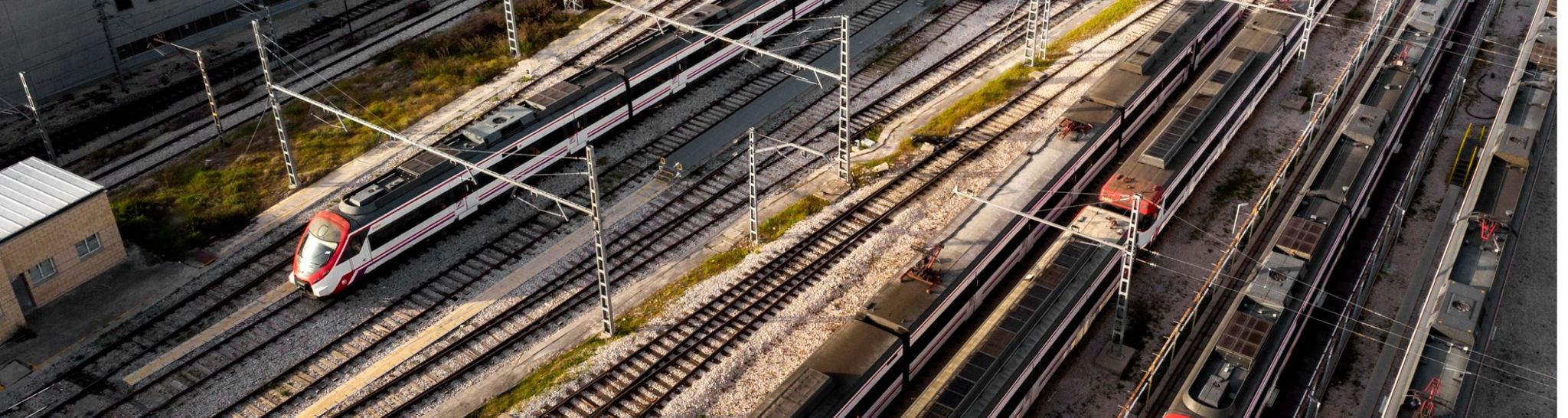
Travelling by train in Poland offers a diverse experience, depending on the type of train chosen. In the PolishTrains search engine, you can sort results by departure time, so you can quickly compare the available categories on your chosen route. On PolishTrains, you can buy a ticket for any of these categories without creating an account, and the ticket is sent by email and SMS. The Polish State Railways (PKP) companies offer passengers several categories of trains - from high-speed intercity connections to more economical options. Each differs in terms of amenities, speed of travel and ticket price. In this article, we take a closer look at what each type of train entails and the differences between them.
CPK - the future of rail. Planned railway lines | PolishTrains
The Central Communication Port (CPK) is a huge undertaking. You can check the current connections between these cities in the PolishTrains search engine. CPK combines air, rail and road transport, and the design plans for the railway section extend to 2034. You can check the current departure timetable for these cities in the PolishTrains search engine by entering the station and travel date. It involves the construction of an airport, the extension of railway lines and, most importantly, the integration of air, rail and road transport into one coherent system. However, the investment involves gigantic costs.
What are the most luxurious trains in Poland and the world? | PolishTrains
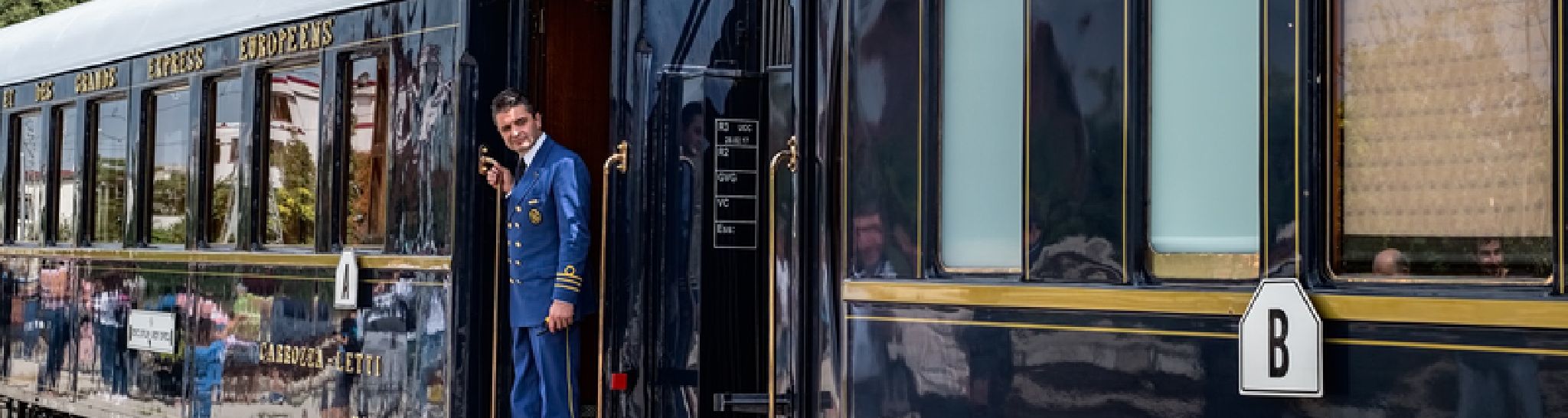
Poles, representing the upper and middle classes, are spending more and more on non-trivial travel. You can check regular train connections across Europe on PolishTrains. See which trains are considered the most prestigious and what standard is realistically available in Poland today. You can check a route with changes and waiting times between trains in the PolishTrains (polishtrains.eu) search engine when planning your journey to the departure point of the selected luxury train. They do not skimp on unique experiences - including... travelling on luxury trains. The most exclusive train is the legendary, now defunct Orient Express, whose route led from Paris to Istanbul. However, it has successors. Meet the most luxurious trains in Poland and around the world.