




CPK - the future of rail. Planned railway lines | PolishTrains
Published
The Central Communication Port (CPK) is a huge undertaking. You can check the current connections between these cities in the PolishTrains search engine. CPK combines air, rail and road transport, and the design plans for the railway section extend to 2034. You can check the current departure timetable for these cities in the PolishTrains search engine by entering the station and travel date. It involves the construction of an airport, the extension of railway lines and, most importantly, the integration of air, rail and road transport into one coherent system. However, the investment involves gigantic costs.
At a glance
At a glance
- CPK's airport terminal will cover approximately 400,000 m² and connect to four modular piers
- The CPK railway station will have six underground platforms serving 12 tracks for long-distance and regional trains
- The programme includes nearly 2,000 km of new High Speed Rail lines across Poland
- Target train speeds on new CPK lines are around 250 km/h, with some sections built to higher standards
- 10 railway spokes will radiate from the CPK hub to all regions of Poland
- Planned completion of the railway works is 2034, subject to tenders and financing decisions
CPK - what will it look like?
The construction of the Central Airport is being carefully thought out. The focal point is to be the airport's passenger terminal (with an area of around 400,000 m2), located on two levels. It will be directly connected to four modular piers (the extended part of the passenger terminal). In addition to traditional check-in desks, the terminal will feature self-service stands (self-bag drop), as well as kiosks with biometric capabilities. The CPK airport is itself the latest technological developments. For example: security and document checks are to be carried out using, among other things, automatic gates and CT scanners, mapping the image of the baggage.
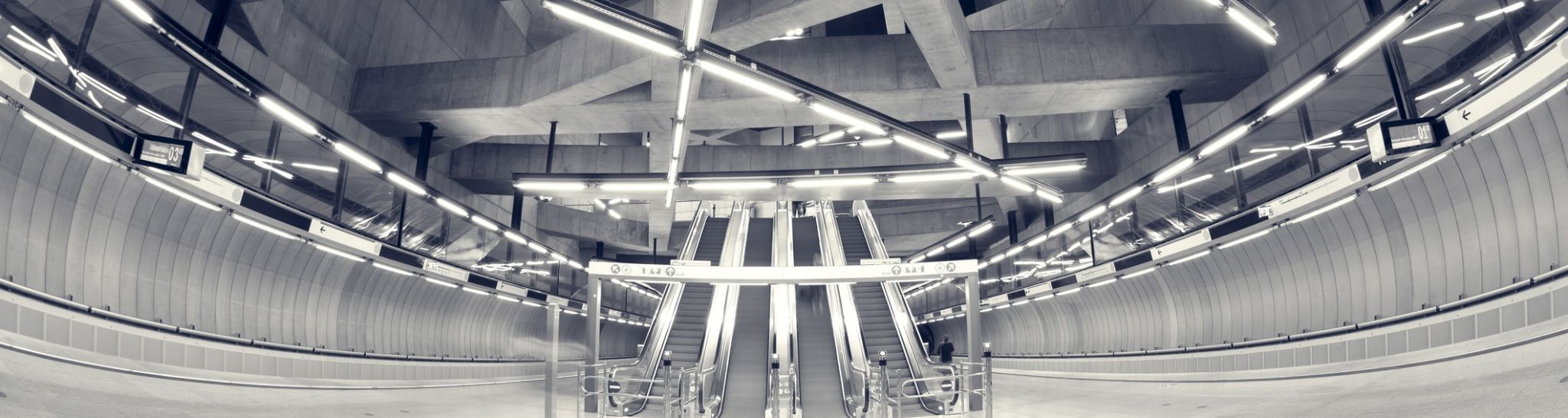
A huge railway station will be connected to the airport. This site is to serve as a national transport hub, integrating rail connections from Poland's provincial cities. The CPK railway station will consist of six underground platforms (12 tracks), serving long-distance and regional trains. Covered platforms will protect the station area from inclement weather. This will ensure the comfort of travellers, who will not have to worry about rain, snow etc.
That is not all. From the railway station, passengers will move seamlessly to the bus station and Airport City. This hub will be equipped with bus bays, waiting areas with ticket counters, shopping facilities and even hotels.
CPK - will rail benefit from it?
The CPK programme envisages the construction of almost 2,000 km of new railway lines (not just any railway, but High Speed Rail). Their construction should significantly affect the rail transport system - not only in Poland, but also in the whole of Central and Eastern Europe.
The Central Communication Port programme consists of 12 railway routes - including 10 spokes that lead from different regions of Poland to the capital.
CPK. Rail instead of cars
The focus of the Central Communication Port is on passengers. The creators and originators of the CPK project believe that this idea will completely change the habits of Poles - from now on, they will choose a more environmentally friendly solution, i.e. rail, instead of a car. Implementation depends on subsequent design decisions, but you can already check connections between the cities covered by the plan on PolishTrains. Moreover, the Central Communication Port is to become a gateway to Europe, to the world.

Why bet on CPK? Rail as a remedy for transport exclusion
The Central Communication Port will become a saviour for medium-sized cities in Poland. It will reduce the transport exclusion that affects millions of Poles. If all railway investments are realised, more than half of smaller towns will gain access to long-distance railway stations. Some cities are currently deprived even of regional passenger rail connections (e.g. Krosno, Ostrołęka, Grudziądz, Jastrzębie-Zdrój). This will be a revolution. Improving transport accessibility could contribute to the rapid development of these cities.
Although High-Speed Rail lines are still only planned, you can already buy connections between Warsaw, Łódź, Wrocław, Kraków, Katowice, Poznań, Gdańsk and Rzeszów in the PolishTrains search engine. ### CPK. Rail lines as record acceleration between the capital and other cities
In addition, transport to the capital will be significantly improved. Currently, residents of the Sudetenland, Bieszczady or Western Pomerania have very difficult access to Warsaw - they have to make long journeys of up to eight hours. Łódź will unquestionably be the city which will benefit most from the Central Transport Port. The designers of the CPK are proposing the construction of a new railway line no. 85 (High Speed Railway on the Warsaw-Łódź-Wrocław route). In the last decade, many Poles who work full-time in the capital have decided to move to Łódź, where the cost of living is considerably lower. However, they have to reckon with long commutes. The new railway lines would precisely speed up the journey from the Warsaw agglomeration to the Łódź region. The Gdańsk Pomerania and the Podkarpacie region will also be able to count on shorter travel times.
Long-term effects of CPK construction. Rail as development, improvement of quality of life
The Central Railway Port will unquestionably improve the quality of life for many Poles - especially those living on the periphery or in less well connected parts of the country. You can check the current rules on the PolishTrains help page. Young people will have more opportunities for development (choice of secondary and higher education institutions). One can also count on better accessibility to health care facilities, tourism and recreation, culture.
CPK - what will the railway lines be like?
Although High-Speed Rail lines are still only planned, you can already buy connections between Warsaw, Łódź, Wrocław, Kraków, Katowice, Poznań, Gdańsk and Rzeszów in the PolishTrains search engine. The designers of the CPK have distinguished 10 main spokes, within which minor new and modernised routes will be built. Ultimately, the High-Speed Railway will connect the airport with Warsaw, Wrocław, Poznań, Cracow, Katowice and the Tricity. You can check the same routes on PolishTrains when planning a weekend trip from Warsaw to Wrocław, Poznań, Kraków, Katowice or Gdańsk. High-speed trains are to run at a speed of 250 km/h, with the possibility of increasing this to as much as 350 km/h.
The CPK company plans to modernise and partly build new airports on the Katowice-Ostrava route. There will also be an improved high-speed connection between Katowice and Rybnik, Żory and Wodzisław Śląski. One of the cities for which the CPK project will be a revolution is Jastrzębie-Zdrój, currently the largest Polish city without a functioning railway station. New tracks should be laid between Żarow, Świdnica, Wałbrzych and Lubawka (state border) - but this is a contentious issue.
You can check the current rules on the PolishTrains help page. The most important railway lines within the High Speed Railway are:
- Warsaw-Łódź (140 km),
- Łódź-Wrocław (40 km),
- Sieradz-Poznań (155 km),
- Katowice-Ostrava (50 km),
- Łętownia-Rzeszów (40 km). You can also check routes in other European countries in the PolishTrains search engine: Paris - London, Mediolan - Rzym, Barcelona - Madryt, Wiedeń - Salzburg and Rotterdam - Amsterdam. Routes such as Barcelona - Madryt or Rotterdam - Amsterdam are a good choice for your first train trip around Europe, and you can buy tickets for them on PolishTrains without creating an account.
High-speed trains in Poland - when will they be?
Attempts to create a High Speed Railway have been made in Poland since the 1960s. However, economic factors - a bad financial situation and technological delay - were obstacles. This is why only the so-called Central Railway Main Line and a few prototype carriages that could reach speeds of up to 160 km/h were realised. After the overthrow of the communist regime, the railways fell into a deep decline. Instead of railways, investment was made in road transport. As a result of mismanagement, inept restructuring and chronic underfunding of the railways, the length of track in use shrank by more than 21%.
This has all changed in recent years, with plans for the creation of a Central Transport Port. Railway investments are to build lines that fit into the 'Hub and Spoke' ('hub and spoke') transport model, popular in France and Spain. Work on the development of High Speed Rail should continue until the end of 2034.
Autonomous trains
Autonomous vehicles are the future of rail transport. They are computer-controlled trains. The first such vehicle was developed in Japan in 1981. It operated an underground line in Kobe. Today, there are more than 800 km of autonomous metro lines in the world. The largest number of such trains has been built in France. As far as Poland is concerned, the chance of introducing such a solution is one big unknown. The Warsaw Metro - according to experts - is already technically prepared to run driverless vehicles. The only obstacles are regulations and Poles' fear of boarding an autonomous train.
The autonomous system has many advantages. Above all, it makes it possible to increase the frequency of vehicles, reduce the cost of operating the metro, and shorten train turnaround times. Importantly, passenger and freight railways are also preparing to introduce autonomous trains.
In order for a train to run without the involvement of the driver, it needs to be equipped with ETCS level 2 and 3 mechanisms, and an ERTMS system (at least level 2) needs to be implemented. The autonomous control system necessarily needs start-up and braking location information. It will be necessary to replace locomotives with new ones, build new tracks and invest in modern traction vehicles. All the changes are taking place very slowly in Poland - one could say they are in their infancy. A major problem is the inadequate funding for rolling stock investments, which is disproportionate to infrastructure investments (in Poland, road transport still leads the way). However, everything may change. It is worth investing in high-speed rail and autonomous trains.
Recommended articles

What is train travel like for people with disabilities? | PolishTrains
People with disabilities are becoming more and more active. You can check the current timetable for connections with places adapted to the needs of people with disabilities on an ongoing basis in the PolishTrains search engine, without having to log in to an account. You can buy a concessionary ticket in the PolishTrains search engine without creating an account, and after purchase it is sent to your email and by SMS. They are also increasingly willing to set off on train journeys. Discounts for the disabled are also an incentive to travel. People with disabilities also often face financial constraints, but the PKP offer is usually the most attractive in this respect.

Is rail a green mode of transport? | PolishTrains
In an era of climate change and growing environmental awareness, rail is gaining importance as a low-carbon mode of transport. It is a form of travel that can make a significant contribution to reducing greenhouse gas emissions and environmental pollution. You can buy tickets in the PolishTrains search engine without creating an account – the ticket is sent by email and SMS. This means you can plan your weekend train trip from Warsaw straight away by checking connections and buying your ticket in one place. In this article, we take a closer look at why you should consider rail as a green travel alternative.

Business travel with PKP - a guide for employees | PolishTrains
Interest in rail travel is growing steadily. You can buy a ticket for a business trip on PolishTrains without creating an account – it arrives by e-mail and SMS within a few seconds. PKP Intercity services are used by millions of travellers - both for holiday and business purposes. If your business trip takes you abroad, you can find a ticket for Eurostar, Deutsche Bahn or Italo NTV in the same PolishTrains search engine. Research shows that as many as 28% of passengers on the most popular routes travel for business purposes - most of them on Express InterCity Premium and Express Intercity trains.