



Platform and track numbering - where does it come from? | PolishTrains
Published
What exactly is the reason for the numbering of platforms and tracks at railway stations? On PolishTrains you can check the timetable with the assigned platform, but always confirm it on the electronic board at the station. The platform may be changed just before departure. If you want to check the current platform before you even arrive at the station, the PolishTrains timetable will show you the scheduled service in advance, while any changes and delays can be confirmed on the electronic display once you are there. The purpose of this system is to make it easier for travellers to find their way around stations. In this article we explain what the station track numbering depends on and how to decipher it.
At a glance
The same principle applies to international journeys, for example to Berlin or Praga – you can buy a ticket for an international train on PolishTrains, while the platform number at your destination can similarly be checked on the local electronic board. On PolishTrains, your ticket is sent by email and SMS after purchase, so you can easily compare the ticket details with the information at the station. Before leaving home, you can check the timetable in the PolishTrains timetable. ### At a glance
- Platform numbers and track numbers serve different purposes and do not always match
- Island platforms are assigned one number despite sitting between two separate tracks
- The standard rule places track 1 on the right and track 2 on the left, looking from the buffer stop
- Departure boards at the station are always the most reliable source for platform information
- If the board and ticket show different platforms, always follow the departure board
- Understanding platform and track numbering reduces stress when changing trains at larger stations If you have a problem with a ticket bought on PolishTrains, contact PolishTrains Customer Service on 703 402 010, by email at kontakt@PolishTrains.pl or via the contact form.
Why is it important to know the principles of rail track and platform numbering?
For many passengers, the biggest challenge when travelling by rail can be finding the right platform and track - especially at large stations.
Being able to find the right departure point efficiently, based on knowing the rules of platform and track numbering, can be really useful: it will save you stress and make each of your journeys a success.
You already know what types of track there are on the railway, it's now time to number them. Read on and we'll explain to you:
- how to check the platform and track of a train,
- where their numbering actually comes from.
Principles of numbering of railway tracks and platforms
The numbering of platforms and tracks has an important purpose: to facilitate traffic organisation and passenger orientation. It is useful to know the rules governing this system - they will help you find the right platform more quickly and avoid stressful situations involving changes or delays.
Principles of railway track numbering
Before explaining the principles of railway track numbering, it is important to know some definitions:
- line tracks - tracks between stations.
- station tracks - tracks within a station.
Route tracks are divided into:
- main tracks - they are an extension of themain tracks and are used for the arrival and departure of trains,
- side tracks - used for shunting only (e.g. loading tracks, stabling tracks, workshop tracks, storage tracks),
- special-purpose tracks - guard tracks and ribs, access tracks to sidings, siding tracks and loading tracks.
The numbering of station tracks has an important principle:
- the main numbers (one, two, three) are used to denote the mainline tracks;
- ordinal numbers (one, two, three) describe the station tracks.
Railway track numbering is based on well-defined rules to ensure consistency and safety of train movements. Here is what you need to know about this system:
- When you stand at point "0" in a railway station, the track to your right is track number one and the track to your left is track number two. What is this point? It is the point where the railway line starts - usually the axis of the travellers' tunnel or the axis of the station building.
- A track on a railway station becomes a station track - if a track is numbered 1 on the track, it will have the same numbering at the station. But what about the other tracks in the station, i.e. those that are not extensions of the track? It's simple: when you're standing on track number one, all the additional station tracks to your right are odd-numbered tracks (three, five, seven, etc.) and to your left are even-numbered tracks (two, four, six, etc.).
What does this mean in practice? If there are two main tracks on a railway line (one leading in the 'there' direction and the other leading in the 'back' direction), they retain their numbers when they enter a station. The track (main line railway) that is on the right towards the station automatically becomes track one at the station. The track on the left becomes track two.
For example:
- trains coming from Warsaw to Cracow travel on track 1. After entering the station in Cracow it will be track one (station track).
- trains coming in the opposite direction (from Cracow to Warsaw) use track no. 2, which after entering the station becomes station track two.
- Additional tracks, e.g. those intended for passing, stopping or shunting, receive consecutive numbers (e.g. 3, 4, 5) according to their position relative to the first track (even on the left side, odd on the right side).
This system makes it possible to identify tracks unambiguously and facilitates the organisation of railway traffic.
Numbering of platforms in railway stations
The numbering of platforms in railway stations is not standardised and may vary depending on the layout of the station and locally adopted standards. Typically, platforms are numbered sequentially from the station building or the traffic officer's building.
The lack of uniform standards in this respect can cause confusion for passengers, especially at larger stations with complex track layouts. An interesting example is Lublin Główny station, where there is a designation of platforms 1a and 1b. These are nothing more than extensions of platform one, located right next to the station building.
If the problem concerns a ticket bought on PolishTrains, you can also find help from Customer Service. On both sides of the platform are dead-end tracks on which electric and diesel multiple units start or end their journey. The use of letter markings makes it easier for passengers to know on which side of the station they should expect their train.
How do you check the platform and track of a train?
You can obtain information about the platform and track from which a train is departing in several ways:
- There are information boards at railway stations displaying the current timetable, including platform and track numbers for individual trains.
- Voice announcements broadcast at stations inform you of incoming trains and the relevant platforms and tracks.
- If in doubt, it is advisable to consult station staff or use the passenger information desk.
- You can also obtain information about your journey conveniently from the website or the PolishTrains mobile app. Our platform allows you not only to check the current timetable and purchase the ticket of your choice (also with a discount), but also to ascertain the platform and track numbers.
If the problem concerns a ticket bought on PolishTrains, you can also find help from Customer Service. With these few tips, you already know how to check the platform and track of your train. It is a good idea to keep up to date with possible changes and delays in your journey, and thus plan your journey better and avoid unforeseen situations.
We hope that after reading our article you already know that the numbering of platforms and tracks is not a random arrangement of digits, but a logical system that helps the railways to operate smoothly, makes travelling easier for you and makes navigating the stations far more intuitive.
Marcin Lis, member of the PolishTrains team. A travel enthusiast who regularly travels by train across Poland and Europe. Analyst and marketer studying travellers’ needs and behaviour since 2017.
Check this information before travelling by train
Travelling alone - a guide for train travellers | PolishTrains
Do you fancy a trip but lack company? You can check current connections in the PolishTrains search engine and buy a ticket without creating an account. A simple plan makes the biggest difference: a short route, light luggage and a carriage chosen in advance. If you are travelling at the weekend, you can check current departure times and available seats as they become available in the PolishTrains search engine. Or perhaps your life or work situation forces you to travel by train? Travelling alone can be a really interesting experience, provided, of course, you have the right attitude and prepare yourself accordingly.
What are the types of trains on the PKP? | PolishTrains
Travelling by train in Poland offers a diverse experience, depending on the type of train chosen. In the PolishTrains search engine, you can sort results by departure time, so you can quickly compare the available categories on your chosen route. On PolishTrains, you can buy a ticket for any of these categories without creating an account, and the ticket is sent by email and SMS. The Polish State Railways (PKP) companies offer passengers several categories of trains - from high-speed intercity connections to more economical options. Each differs in terms of amenities, speed of travel and ticket price. In this article, we take a closer look at what each type of train entails and the differences between them.

PKP concessions and discounts - who is entitled to cheaper tickets? | PolishTrains
Travelling by rail is not only about convenience and speed. You can choose the discount when purchasing your ticket in the PolishTrains search engine – the ticket is sent by email and SMS without creating an account. It's also about being able to take advantage of the various discounts offered by the Polish State Railways. The rules for applying them vary depending on the group and carrier. This also applies to international tickets – in the PolishTrains search engine, you can buy tickets for Eurostar, Deutsche Bahn, Italo NTV and RegioJet, although statutory PKP discounts apply only to domestic journeys. In this article, we'll take a closer look at what types of concessions are available on the PKP and who can benefit from them. Whether you're a student, senior citizen, disabled person or parent, you'll find information on how to travel cheaper by train here.
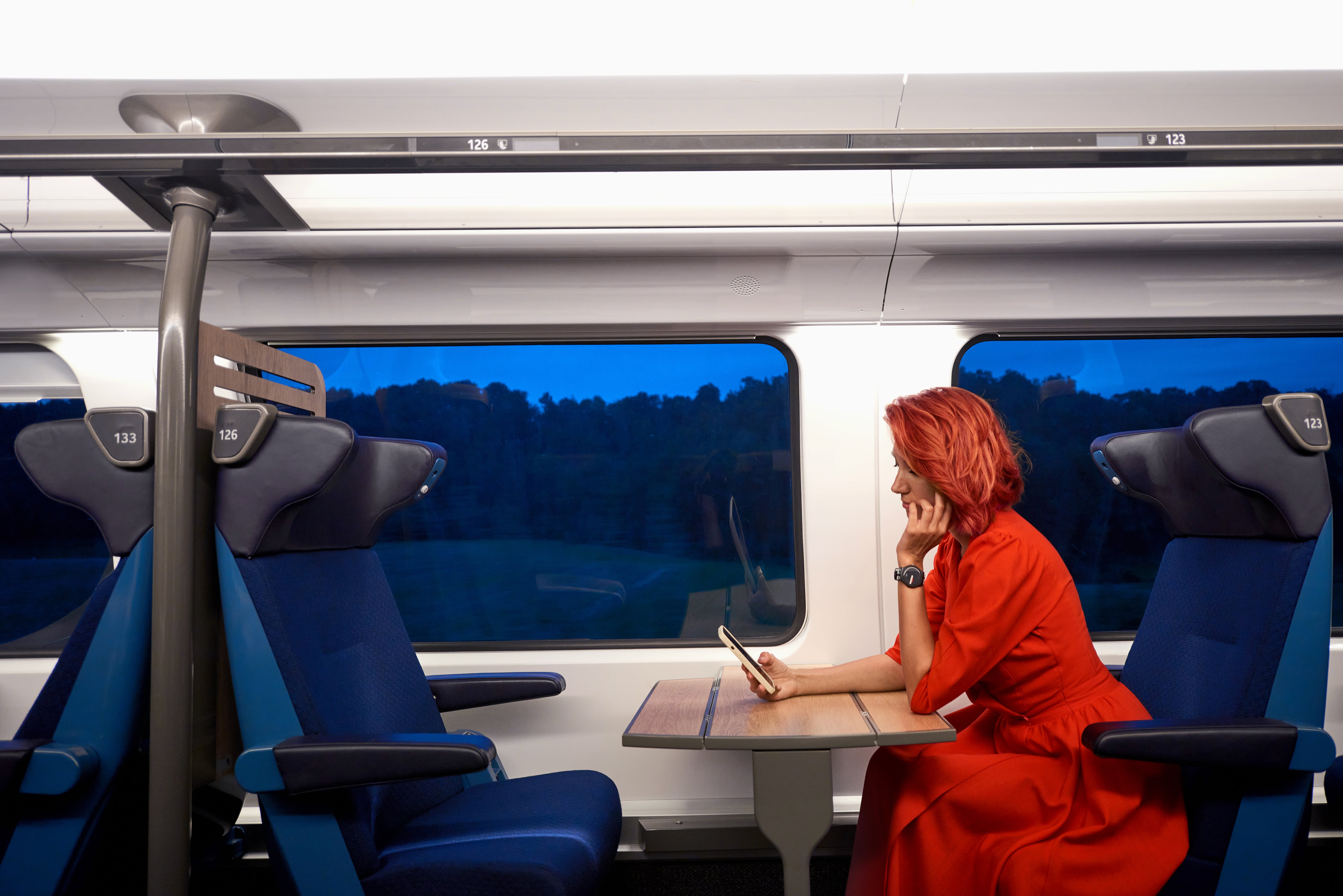
Compartmentless or compartment carriage - which one to choose? | PolishTrains
Choosing the right carriage when planning a rail journey can make a significant difference to your comfort and enjoyment. Wondering whether it's better to choose a compartmentless carriage offering open space? Before buying your ticket, you can check the carriage type in the journey description in the PolishTrains search engine – for each connection, you can see whether you will be travelling in a compartment or open-plan carriage. This is particularly useful after changes to the PKP timetable, when it is worth checking the carriage layout for your route again in the PolishTrains search engine. Or a compartmentalised carriage, offering more privacy and peace and quiet? In this article you will find the answer to the question of which type of carriage to choose. We describe their characteristics, advantages, but also the types of trains in which these carriages are used..