




Compartmentless or compartment carriage - which one to choose? | PolishTrains
Published
Choosing the right carriage when planning a rail journey can make a significant difference to your comfort and enjoyment. Wondering whether it's better to choose a compartmentless carriage offering open space? Before buying your ticket, you can check the carriage type in the journey description in the PolishTrains search engine – for each connection, you can see whether you will be travelling in a compartment or open-plan carriage. This is particularly useful after changes to the PKP timetable, when it is worth checking the carriage layout for your route again in the PolishTrains search engine. Or a compartmentalised carriage, offering more privacy and peace and quiet? In this article you will find the answer to the question of which type of carriage to choose. We describe their characteristics, advantages, but also the types of trains in which these carriages are used..
At a glance
You can find the current rules and the fee calculator on the PolishTrains refunds and exchanges page.
PKP Intercity
PKP Intercity offers both compartment and open-plan carriages. 6-person compartments can be found in newer carriages and in part of first class, while older second-class carriages have 8-person compartments. This applies, for example, to trips to Zakopane in the winter or holiday season, when seats in compartment carriages fill up more quickly and you can buy a ticket with a reservation through PolishTrains in advance. ### At a glance
- Compartmentless carriages feature open seating in a 2+2 layout with a central aisle
- Compartment carriages seat 6–8 passengers in an enclosed, lockable cabin
- Compartment carriages allow temperature and lighting adjustments and often have power sockets
- On PKP Intercity Pendolino and Dart, seat reservation is compulsory
- Compartmentless carriages are standard on regional trains but appear on express services too
- For families with young children, compartment carriages offer a private, self-contained space Before travelling, check the journey description in the PolishTrains search engine to find out what seating layout awaits you inside. This is a good option for a short weekend trip from Warsaw, and you can buy a ticket for this route together with information about the carriage layout on the PolishTrains website. You can check the carriage type in the journey description in the PolishTrains search engine. You can buy a ticket without registering, and after payment you will receive it by e-mail and SMS. If you have questions about the availability of a specific carriage or facilities, contact PolishTrains Customer Service.
A compartmentless carriage is an open space with rows of seats, while a compartment carriage consists of lockable compartments, which usually provides more quiet and privacy on a longer journey. When travelling with a child, a compartment car may be more comfortable, as it is easier to organise space for a toddler. However, it is often quicker to find space for larger luggage in a compartmentless carriage. Thermal comfort depends mainly on the standard of the train and the air conditioning, but usually all newer trains are well air-conditioned and heated.
Compartmentless carriage - what are the characteristics of a carriage without compartments?
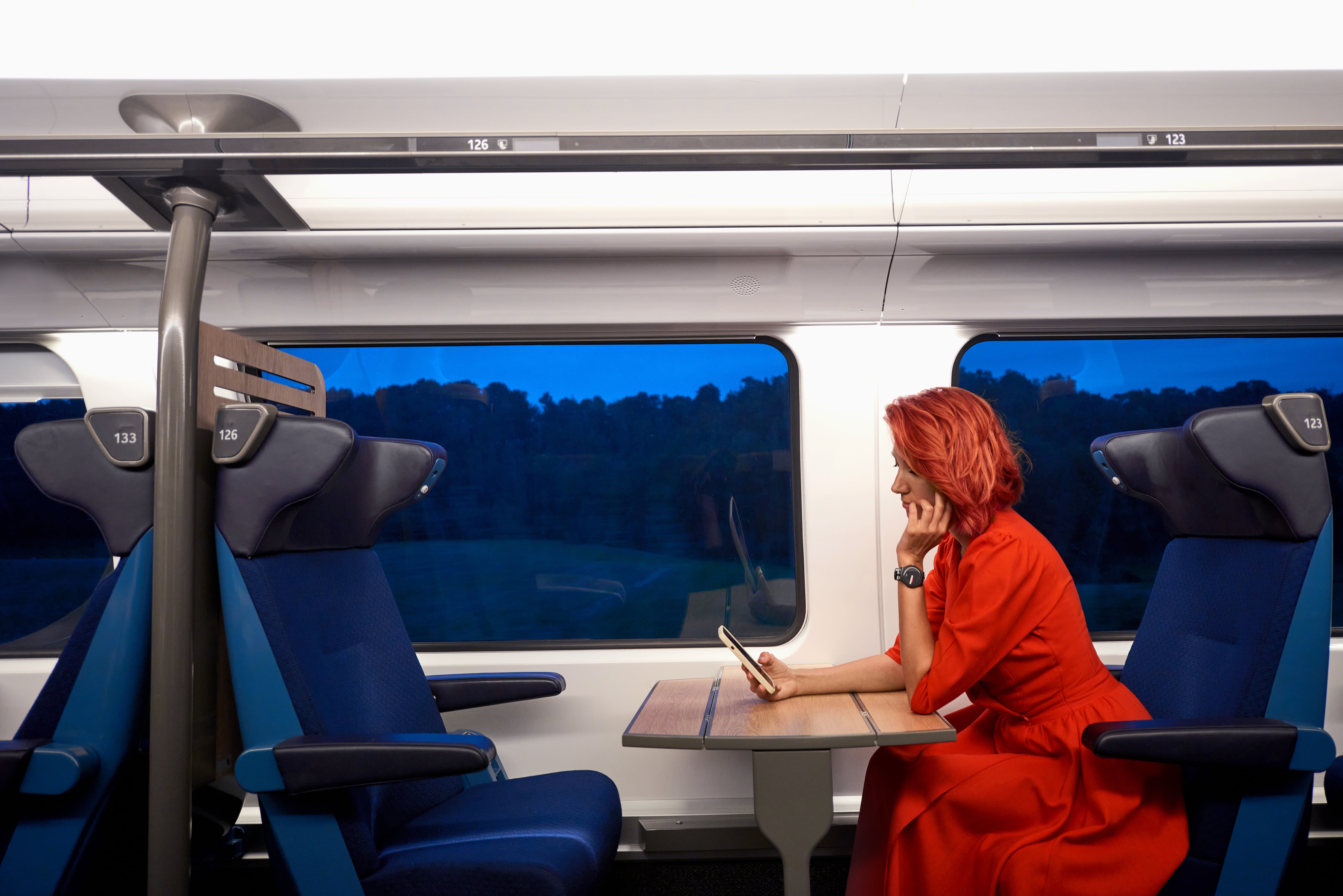
A compartmentless carriage is essentially one common space for all passengers. Seats are arranged opposite each other or in a one-way arrangement, arranged in two columns separated by a central aisle. This configuration promotes easy communication and is ideal for those travelling in a group or who value the ability to access luggage easily.
Characteristic of this type of carriage is the larger space, which makes it easier to access the seats and also to move around during the journey. A compartmentless carriage is more open, which encourages interaction between passengers, which can be beneficial for group journeys. There is usually plenty of space for luggage. You can freely stand up and walk around to stretch your bones during a longer journey.
Compartmentless carriages are standard on regional trains, but are increasingly appearing on fast and express trains too.
Compartment carriage - when is it worth choosing a carriage with compartments?
A compartment carriage, on the other hand, is an enclosed space where six to eight people can travel together in a separate cabin. This arrangement provides greater privacy and a quiet space, ideal for working, reading a book or relaxing. The lighting or temperature can be adjusted in such a carriage, and there is often an outlet for charging devices. This type of carriage can be found on fast and express trains.
The compartment car is particularly suitable for longer journeys, where travel fatigue sets in. In a small group it is certainly easier to maintain silence and privacy, so a nap in a comfortable seat should not be a problem. The ability to book any seat in a compartment is also a plus.
The compartment carriage is an excellent option for families. Travellers with children will particularly appreciate the option of closing the compartment door. This not only increases the safety of toddlers, but also allows you to spend time on the journey without worrying about the comfort of other passengers.
Would a first or second class compartment car be better?
When choosing between first and second class carriages, it is crucial to determine your own needs and budget. First class offers more space, peace and quiet and additional amenities, ideal for those who need quiet to work or value maximum comfort when travelling. It is an excellent choice for those expecting a higher standard, such as in the case of business trips.
Second class, on the other hand, is more affordable while maintaining a good level of comfort. It is ideal for families, groups of friends and travellers who need the opportunity to rest due to a long journey. It is a more economical option, but without significant compromise in the quality of the journey. It provides everything you need to reach your destination in comfort.
Booking and availability of seats in compartment and non-compartment cars
One important aspect when planning a journey is the availability of seats on a particular train. Being able to book a specific seat in advance is a major advantage. Particularly in the case of compartment carriages, where passengers can choose their preferred seat, such as by a window or near an exit.
However, with high occupancy, seat availability in carriages may be limited. In such situations, booking in advance avoids a situation where there are no seats available. Advance booking often also comes with a discount on the ticket, which is an added advantage.
In the case of compartmentless carriages, where it is not possible to reserve a specific seat, passengers have to look for an available seat on the fly. At peak times or with popular travel dates, even these carriages can run out of free seats.
To minimise the risk of such inconvenience, we recommend making reservations in compartment carriages as far in advance as possible, especially if you are planning to travel on a popular date.
Facilities for people with disabilities
Facilities for people who have mobility difficulties can also help in the choice of carriage. Low-floor carriages play a key role in the journeys of wheelchair users, enabling them to enter and exit the vehicle easily without having to climb high steps.
They are quite common on regional services, particularly in modern compartmentless carriages. They also feature dedicated spaces for wheelchair users and the elderly, more manoeuvring space, more spacious bathrooms with additional supports and an alarm system. In this way, the railways ensure the safety and comfort of the journey by creating a space that is adapted to the needs of all passengers.
Such facilities are sadly lacking in the compartment and non-compartment cars of the older type. These are usually trainsets with high floors and narrow aisles. Getting around in them on a wheelchair can cause some problems. Fortunately, more and more carriages with the necessary facilities are appearing on Polish railways.
Wagon with or without compartments - which wagon to choose?
When choosing between compartmentless and compartmentalised carriages, consider what matters most to you. Open space or privacy and quiet? Compartmentless carriages offer more space and usually do not have a specific seat reservation. Therefore, you can change seats during the journey. This is a good option for those who appreciate easy movement on the train or a relaxed atmosphere, or are travelling shorter distances.
On the other hand, a compartment carriage provides an enclosed space, which is an excellent choice for those seeking silence, privacy or concentration. If you prefer a quieter environment and the guarantee of a window seat or want your family to have their own separate cabin, the compartment carriage is what you are looking for. For longer journeys, it offers more comfort in terms of seat positioning, the possibility of a nap or adjusting the conditions of the journey.
The choice of wagon type should be dictated by your individual needs and preferences. Regardless of your decision, both compartmentless and compartment wagons can offer a comfortable journey, provided they are properly matched to your expectations.
Compartment car or compartmentless car? Summary
Choosing between a compartment carriage and a compartmentless carriage is quite an important consideration when planning a train journey. Each option has its advantages and disadvantages, which need to be weighed up against your own preferences and travel conditions. Polish railways are constantly undergoing modernisation, so newer fast and passenger trains offer very similar facilities. Nevertheless, when booking a rail ticket, it is worth checking the signs indicating accessibility and the standard of carriage equipment to make sure that the journey goes as expected.
This article was prepared by the PolishTrains editorial team. We follow the rail market in Poland and Europe, look for new connections and support you at every stage of your journey.