




At what speed do trains run in Japan? | PolishTrains
Published
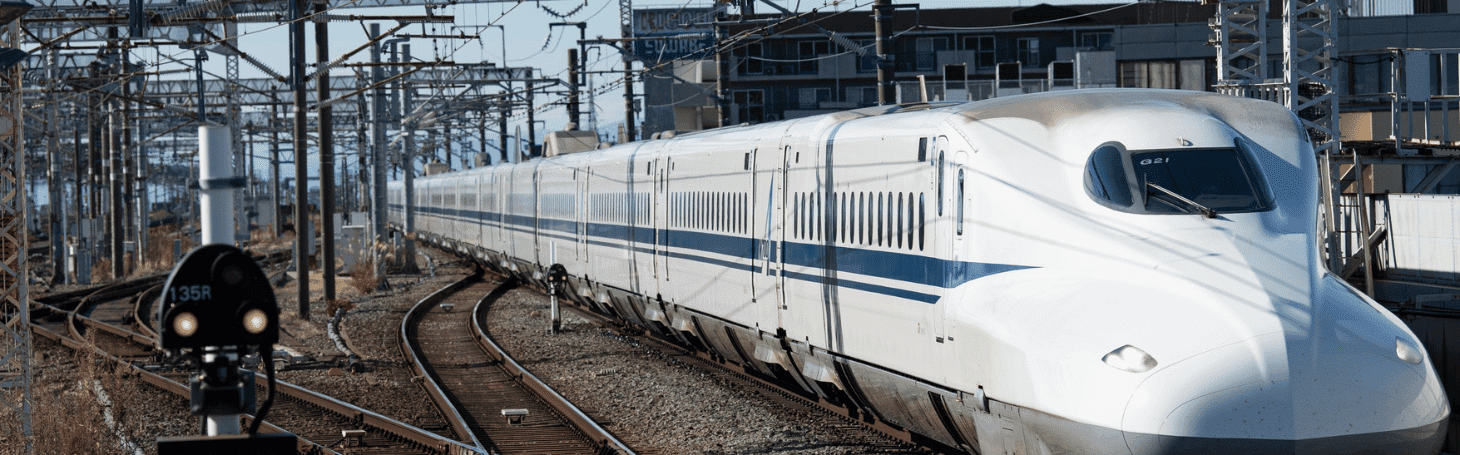
At what speed do trains run in Japan? Japan's Shinkansen trains reach a top speed of 320 km/h in regular service, and a prototype magnetic train broke the world record with 603 km/h. This makes them among the fastest trains in the world, ahead of the Pendolino in Poland and the AVE in Spain, among others.
At a glance
At a glance
- Japan's Shinkansen trains operate at commercial speeds of 300-320 km/h, among the fastest in the world
- The Tokyo to Osaka Shinkansen journey takes approximately 2 hours 21 minutes city centre to city centre
- The Nozomi service covers Shin-Osaka to Hakata (Fukuoka) in just 2 hours 22 minutes
- A single Tokyo-Osaka Shinkansen ticket costs approximately 13,000-14,000 yen (around 400 PLN)
- The 7-day Japan Rail Pass costs around 50,000 yen and covers unlimited Shinkansen travel on most lines
- France's TGV holds the world rail speed record at 574.8 km/h, set in 2007; the Shinkansen maglev test reached 603 km/h
From this article you will learn:
Trains in Japan - speed compared to other countries
When considering the speed at which trains run in Japan, it is worth starting with a comparison with other countries. Japan's Shinkansen trains carry passengers at operating speeds of up to 300-320 km/h, which puts them among the fastest trains in the world.
For comparison:
- France's TGV reaches speeds of up to 320 km/h in regular operation,
- China's Fuxing trainsets accelerate to 350 km/h,
- and the Spanish AVE runs at speeds of up to 310 km/h,
- The Pendolino in Poland, on the other hand, only reaches 200 km/h top speed, although it runs much slower on most routes.
However, the Japanese high-speed rail system is not only distinguished by sheer numbers. It is the stability of the operation, the reliability of the timetable and the comfort of the passengers that make travelling on the Shinkansen a completely different experience from travelling on classic trains in Europe. Each trainset stops at a station with an accuracy of a few tens of centimetres, and delays nationwide are counted in seconds, not minutes.
It is worth remembering that top speed is one thing, operating speed is another. On many lines in Europe, trains can theoretically go faster, but the infrastructure and congestion do not allow for full capacity. In Japan, dedicated high-speed tracks allow high speeds to be maintained along the entire route, making the journey extremely efficient.
Why are trains in Japan so fast?
The first Shinkansen line was established in 1964 and connected Tokyo with Osaka - a distance of about 515 km. Originally, the trainsets ran at speeds of up to 210 km/h, a real world record at the time. Shinkansen is the name used to describe both the trains and the entire track infrastructure. It translates as 'new main line', and the term itself refers to both the trains and the entire track infrastructure.
The key factors responsible for high speed are:
Track separation - The Shinkansen runs exclusively on dedicated tracks, completely separate from classical trains and freight traffic. The rails are designed for maximum speeds (gentle curves, minimal gradients) so that trains can travel long distances without slowing down.
Aerodynamics - modern models (e.g. the N700S series) have an aerodynamic front end inspired by nature to help reduce drag.
Advanced braking and suspension systems - each car is equipped with state-of-the-art features that improve stability and smoothness, even in narrower (compared to European standards) trainsets.
Automatic traffic management - the control system operates fully automatically and allows minimum gaps between trains to be maintained, so that trainsets can be released up to every three minutes during peak hours, serving a very high number of passengers each day.
All these elements ensure that the Japanese railway remains an unrivalled model of efficiency, combining dizzying speed with now legendary punctuality and safety.
High-speed trains in Japan and their actual capabilities
In daily operation, the fastest Shinkansen trains run at speeds of up to 320 km/h - a figure reached by the E5 and H5 series trainsets on the Tohoku Line. On one of the most popular routes, the Tokaido Shinkansen connecting Tokyo and Osaka, trains reach a maximum speed of 285 km/h. It takes just 2 hours and 21 minutes to travel on this route on a Nozomi trainset, which would take more than eight hours using classic trains.
| Trasa | Dystans | Travel time | Average speed |
| Tokyo – Osaka (Tokaido) | 515 km | 2h 21min | ~220 km/h |
| Shin-Osaka – Hakata (Sanyo) | ~600 km | 2h 22min | ~260 km/h |
| Osaka – Hiroshima | ~400 km | 1h 30min | ~267 km/h |
| Osaka – Okayama | ~160 km | 45 min | ~213 km/h |
Each Shinkansen** train consists of between 8 and 16 carriages** and, depending on the model, offers more seats or a higher standard of travel. The seats in the regular class compartments are wider than those in an aeroplane, and in the Green Class, the equivalent of First Class, passengers have**adjustable backrest* seats*, footrests and extra space.** Gran Class compartments, comparable to business class on an aeroplane, are also available in some trainsets.
A Shinkansen ticket can be purchased at the station, from a machine or online. For tourists, the Japan Rail Pass, a season ticket that allows unlimited travel on most Shinkansen lines, is particularly cost-effective. You can board the train with or without a seat reservation - some carriages are designed for free seating, where passengers take their seats according to the queue. The metro and bus in the cities complete the transport network, making it easier to reach the Shinkansen station.
Shinkansen travel is also extremely safe. Since it began operation in 1964, there has not been a single fatal accident caused by a derailment or collision between the trainsets. This is a record that is undoubtedly impressive worldwide and remains unattainable for railways in any other country.
What is the fastest train in Japan?
When it comes to the fastest train in regular service, the E5-series trainsets take the lead, reaching a top speed of 320 km/h on the Tohoku Shinkansen line. These models serve the route between Tokyo and the city of Shin-Aomori, covering a distance of more than 700 km. Their distinctive 15-metre-long elongated nose is not just a decoration - it is a key aerodynamic element that enables them to reach such high speeds.
However, the real speed record belongs to the Magnetic Railway - the L0 Series prototype trainset, which managed to reach an incredible 603 km/h in 2015. This result was achieved on a test track in Yamanashi Prefecture. The magnetic railway is expected to connect Tokyo and Nagoya in the future on the new Chuo Shinkansen main line, which will make it possible to travel this route in just 40 minutes, at speeds of up to 500 km/h. Such a journey will change the face of travel in Japan.
Also noteworthy among the new models is the ALFA-X series (E956), tested from 2019 with speeds reaching 382 km/h. Ultimately, this is to be the new generation of trainsets that will enter service on Shinkansen tracks. Japan is not resting on its laurels and is constantly working on new developments to break new speed barriers.
It is also worth mentioning that the fastest train is a relative term. Globally, China's Shanghai Maglev regularly carries passengers at a maximum speed of 430 km/h, but Japan remains the leader in terms of technological advancement and network scale. Shinkansen trains handle more than 350 million passengers a year, making them the backbone of transport in the country. This goes to show that speed is not everything - reliability, safety and comfort also matter, and these reach unprecedented levels in Japan.
Trains in Japan - delays, is it even possible?
The punctuality of Japan's Shinkansen trains is a legend in the railway world. The average delay on Shinkansen lines is less than one minute per year - and this is no joke. Japan's railway system is designed to make delays virtually impossible under normal operating conditions. Punctuality is one of the reasons why railways in Japan are so trusted by passengers.
Each station has precise markings on the platform, indicating exactly where the doors of each carriage will stop. Passengers queue up even before the train arrives, making it possible to get on and off the train in a matter of seconds. The whole process of stopping at a station usually takes between one and two minutes. At the largest stations, such as Tokyo Station, more than a dozen Shinkansen trainsets per hour pass through the platforms.
Delays only occur in extreme situations - earthquakes, typhoons or very heavy snowfall. Japan lies in one of the earth's most seismically active regions, which is why Shinkansen trains are equipped with an earthquake early warning system that automatically brakes the trainsets even before seismic waves arrive. It is a solution that has no equivalent in the world and guarantees the safety of millions of passengers.
When delays occur, the Japanese take them extremely seriously. In 2017, the rail operator apologised publicly for a train departing 20 seconds ahead of schedule - yes, just twenty seconds. This shows the importance placed on punctuality in Japan. Travelling on the Shinkansen can be treated like travelling by clockwork - the trains are so reliable that many people plan their commute to the minute. You won't find this level of punctuality in Europe or anywhere else in the world.
Summary - at what speed do Japanese trains run?
Japan's Shinkansen trains reach a top speed of 320 km/h in daily operation, while the magnetic railways have set a record of 603 km/h. Compared to the TGV, Pendolino or Chinese Fuxing trainsets, they stand out not only for their speed, but above all for their legendary punctuality, safety and travel comfort. How fast are the trains in Japan? Fast enough to cover the Tokyo-Osaka route in 2 hours and 21 minutes - faster than by plane. If you are planning to travel in Japan, the Shinkansen is the country's fastest, most comfortable and reliable mode of transport.
This article was prepared by the PolishTrains editorial team. We follow the rail market in Poland and Europe, look for new connections and support you at every stage of your journey.
Frequently asked questions
Recommended for you:
At what speed does the Intercity train travel? | PolishTrains
Intercity trains are some of the fastest trainsets running on Polish tracks. Some of them are able to reach speeds of up to 200 km/h. You can check current connections in the PolishTrains search engine – no account required, and the ticket is sent by email and SMS. Which are the fastest? You can check the exact journey time for your chosen Pendolino train in the PolishTrains search engine before buying your ticket. What is the maximum speed of an Intercity train in Poland and what does it depend on? Let's find out!
TGV - High-speed train in France
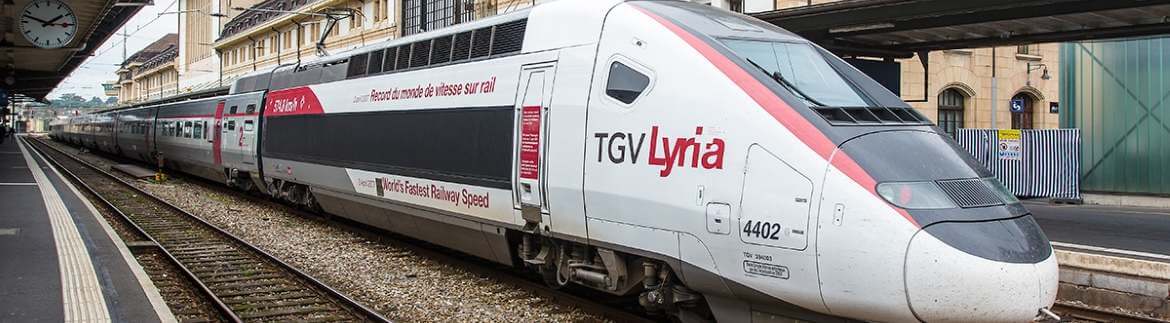
France was the first country to have high-speed trains. Today's TGVs (Train a Grande Vitesse) are the most recognisable high-speed rail brand in Europe. They are a symbol of modernity, speed, comfort and civilisational success. The TGV network in France comprises some 2,000 kilometres of high-speed rail links. You can check and buy tickets for TGV connections on PolishTrains without creating an account. When buying a ticket on PolishTrains, you do not need to create an account – simply provide the passenger’s details and pay online. A TGV train on 3 April 2007 broke the speed record by reaching 574.8 km/h on the new TGV Est line from Paris to Strasbourg.
AVE - High-speed rail in Spain
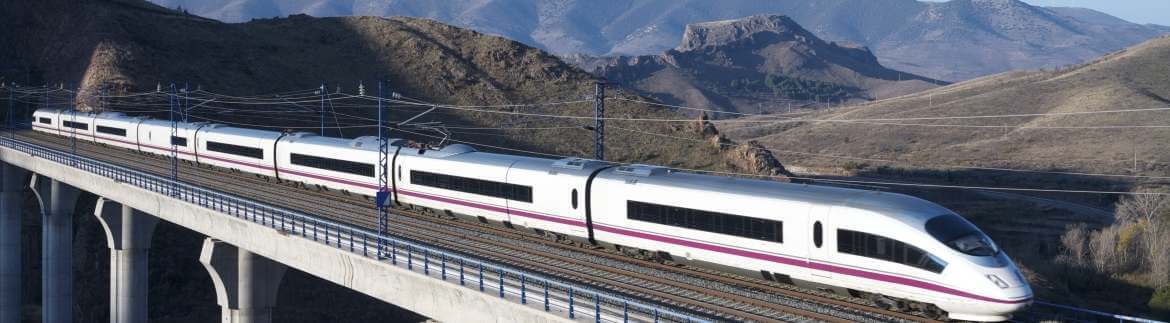
The comfort and speed of travelling around Spain is provided by the high-speed rail. Trains reach speeds of up to 320 km/h and connect Spain's largest cities, among others. All AVE services are direct, so when searching for a ticket in the PolishTrains search engine, you will immediately see the journey time without changes, including Madryt, Barcelonę, Malagę, Walencję, Valladolid and Saragossę. You can buy AVE tickets using the PolishTrains search engine without creating an account – you will receive the ticket by email and SMS. It is the best and most convenient way to travel between the country's major cities. Passengers can embark on rail journeys around Spain on superfast trains.
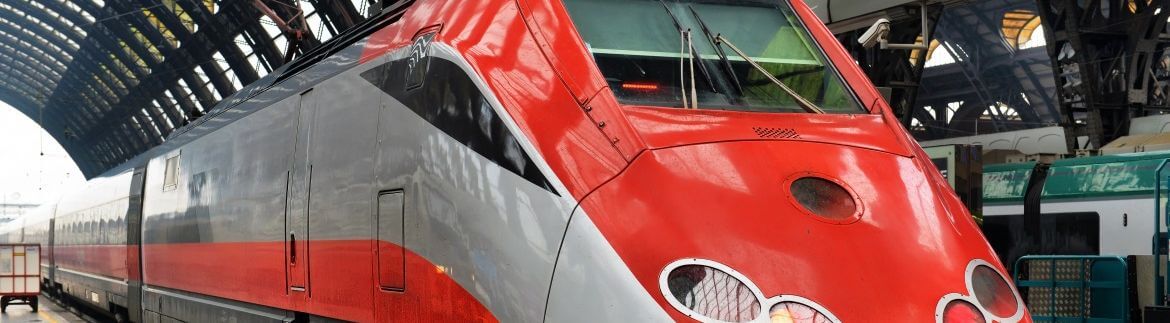
Frecciarossa - high-speed rail in Italian | PolishTrains
Often you can find a lot of cheap flights to Milan, Bologna or Rome on the internet that are nowhere near your chosen destination. You can buy Frecciarossa tickets in the PolishTrains search engine without creating an account, in Polish zloty. The train connects Italy’s largest cities along the north–south axis: from Salerno and Neapol, via Rzym and Florencję, to Mediolan and Turyn. You receive the carriage and seat number, including a window seat, automatically immediately after purchase in the PolishTrains search engine. At the airport, yes, you can rent a car to get to your destination and move around the country. However, there are people who want to see Italy in a different way and it is simply not worth renting a car. In such situations, the Italian railway is indispensable.
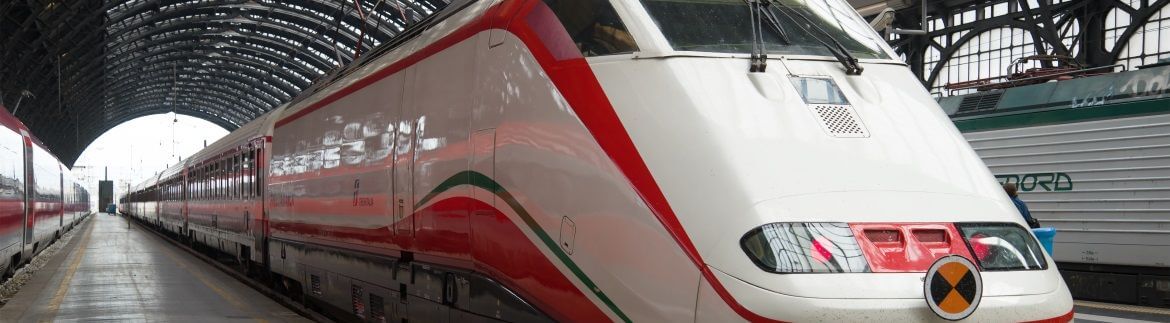
Frecciabianca - high-speed trains in Italy
Italy's railways are among the most modern in the world. Italians have some of the fastest high-speed railways (as do Japan and France), ahead of the Germans, among others. You can buy tickets for these connections in the PolishTrains search engine without creating an account – the ticket is sent by e-mail and SMS. In the PolishTrains search engine, you can also filter Frecciabianca trains by departure time to quickly find the most convenient connection.
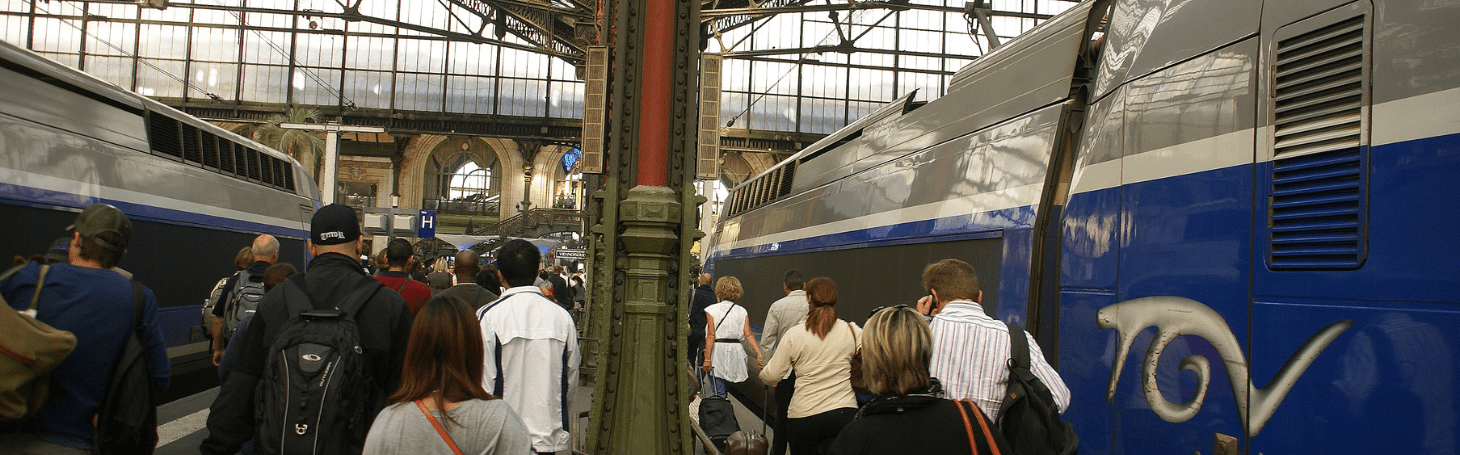
TGV - high-speed rail in France. Timetables and online tickets | PolishTrains
The French TGV train has for years remained a symbol of speed, modernity and comfort. It is thanks to it that the slogan "French high-speed rail" has become internationally recognisable and that France has become known as a pioneer in the development of high-speed rail in Europe. You can buy TGV tickets in the PolishTrains search engine without creating an account – the ticket is sent by email and SMS. You arrive in the city centre, without check-in and with no luggage limit, which gives a real advantage over flying on routes of up to 1000 km. For someone planning their first journey abroad by train, routes from Paryż to Bruksela or Frankfurt found using the PolishTrains search engine are a simple starting point. You will notice changes to the TGV timetable before travelling fastest on the PolishTrains website, where services and prices are updated on an ongoing basis. Today, TGV trains can travel at impressive speeds of up to 320 km/h. The convenience and practicality of the French railway mean that thousands of passengers choose to travel by this mode of transport every day..
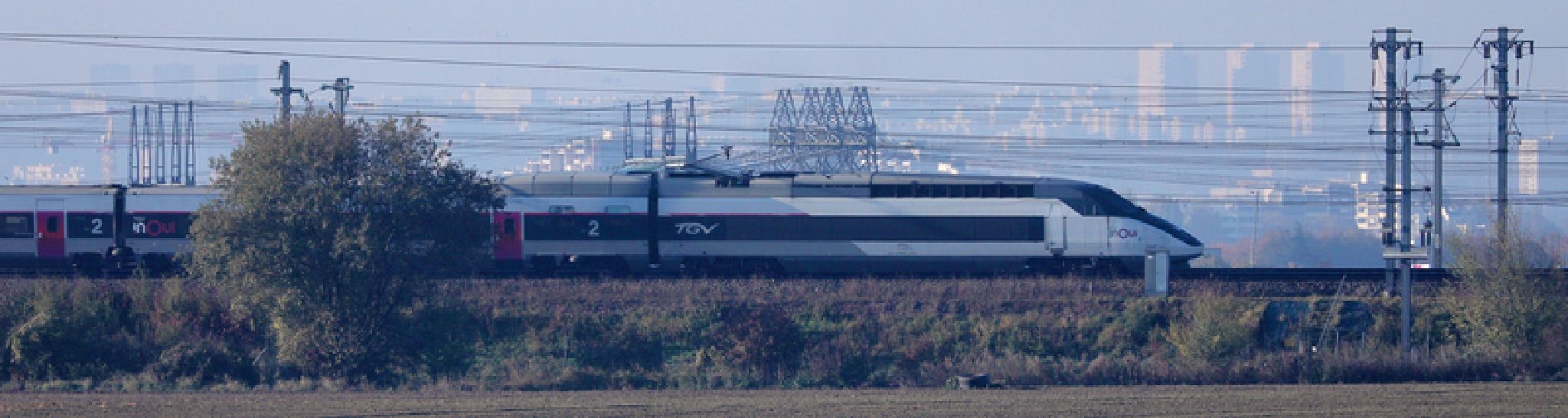
Comparison of high-speed rail in Europe and worldwide | PolishTrains
Railways are constantly evolving and are one of the most efficient modes of transport in the world. You can buy tickets for high-speed trains in Europe – ICE Deutsche Bahn, AVE Renfe, Frecciarossa Trenitalia and Italo – using the PolishTrains search engine in Polish and PLN, without creating an account. It is a good place to plan your first train trip around Europe, because the PolishTrains search engine lets you find ICE, AVE, Frecciarossa and Italo connections alongside domestic PKP Intercity tickets. One of the developments that have dominated and revolutionised modern railways is high-speed railways, i.e. trains that reach very high speeds. With them, it is possible to cover sky-high distances in a very short time.