





At what speed does the Intercity train travel? | PolishTrains
Published
Intercity trains are some of the fastest trainsets running on Polish tracks. Some of them are able to reach speeds of up to 200 km/h. You can check current connections in the PolishTrains search engine – no account required, and the ticket is sent by email and SMS. Which are the fastest? You can check the exact journey time for your chosen Pendolino train in the PolishTrains search engine before buying your ticket. What is the maximum speed of an Intercity train in Poland and what does it depend on? Let's find out!
At a glance
You can buy a ticket for a PKP Intercity train in the PolishTrains search engine – enter the route, choose the time and pay. ### At a glance
- PKP Intercity's Pendolino (ED250) reaches up to 200 km/h on selected Polish rail sections
- The average commercial speed of all PKP Intercity trainsets was 80.4 km/h in 2024
- The average speed across all Polish trains, including regional services, was 55.2 km/h in 2024
- Commercial speed accounts for all station stops and route restrictions, giving the real journey time
- Speeds are further limited by weather conditions, track modernisation works, and signalling systems
- Urban railway trains such as SKM Tricity average 36.1 km/h due to frequent stops over short distances After purchase, the ticket is sent by email and SMS, and 30 minutes before departure you receive a reminder with a link to the ticket. You can check the refund and exchange rules on the PolishTrains website – PKP Intercity allows refunds up to 20 minutes before departure and exchanges up to 30 minutes before departure.
Intercity train speed in Poland
On Polish tracks, Intercity trains today run at speeds that were unattainable a decade ago.
-
The average commercial speed - i.e. that which takes stops and speed limits into account - is usually between 80 and 120 km/h, depending on the length of the route and the number of stops.
-
The operating speed of modern trainsets is as high as 200 km/h, although they can develop this on selected sections of railway lines (Warsaw - Gdańsk, Cracow - Katowice).
According to the Railway Transport Office, the average speed of all trains in Poland in 2024 was 55.2 km/h - slightly lower than the year before (56 km/h). However, this result does not give the full picture, as it also includes regional and agglomeration traffic.
The highest results were achieved by PKP Intercity trainsets, which moved at an average speed of 80.4 km/h last year. In comparison, urban railway trains, such as SKM Tricity, travel at an average of 36.1 km/h (which is naturally due to frequent stops over short distances).
It is worth bearing in mind that for every carrier, including Intercity, the speed is sometimes limited by external factors: weather conditions or track modernisations. You can buy a bicycle ticket together with your basic ticket on PolishTrains, by choosing a train with the appropriate designation. What does the message "PKP technical break" mean? Find out what a service time and a PKP technical break are
Maximum speed of Intercity trains
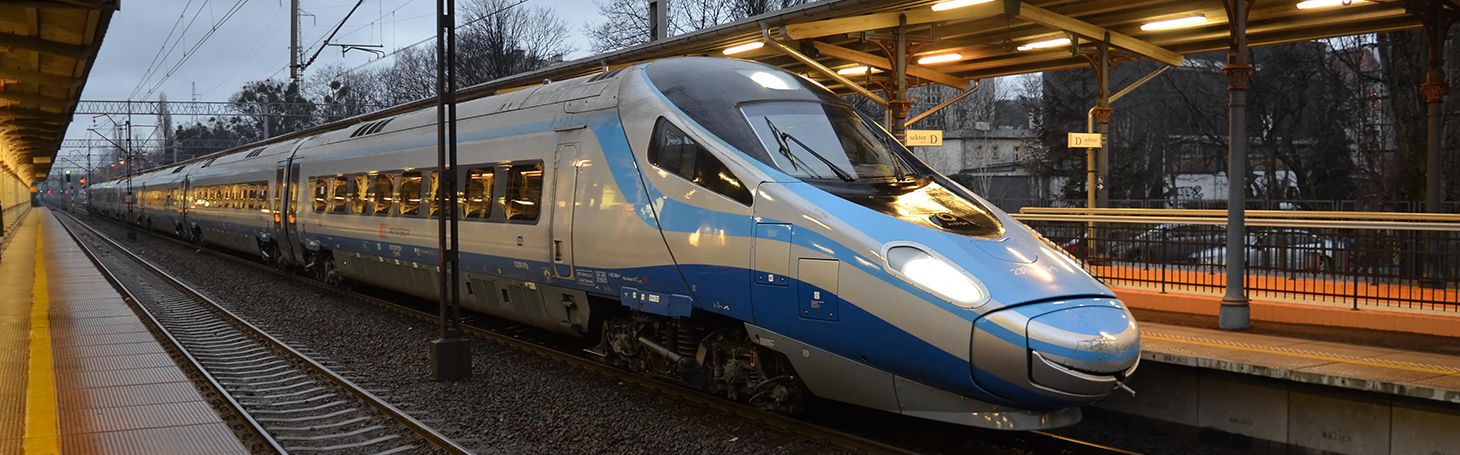
What is the maximum speed an Intercity train travels at? It depends on the specific type of train. The fastest of these, the Pendolino (ED250), were designed to travel at speeds of up to 250 km/h, but due to the limitations of the track infrastructure in Poland, in practice they reach a maximum of 200 km/h. Among the other vehicles, such as the Pesa Dart or Newag Flirt, the maximum speed is usually 160-200 km/h, and classic wagon trainsets with locomotives rarely exceed 140-160 km/h.
What are the reasons for these restrictions? You can see whether a WARS carriage is available when selecting a specific train in the PolishTrains search engine, before buying your ticket. First and foremost, the condition of the railway lines. In order for Intercity to be able to develop maximum speeds without any problems, an appropriate railway infrastructure, safety systems (such as ETCS Level 2) and modern traffic control are needed.
Work is currently underway in Poland on the High Speed Rail (HSR) project, a transport system that aims to provide fast and efficient rail links in Poland, with speeds of up to 350 km/h.
Marcin Lis, member of the PolishTrains team. A travel enthusiast who regularly travels by train across Poland and Europe. Analyst and marketer studying travellers’ needs and behaviour since 2017.
How many days in advance can you buy an Intercity ticket?
Wondering how many days in advance you can buy an Intercity ticket? You can check current services and prices in the PolishTrains search engine – buy your ticket in Polish, in PLN and without creating an account. Refunds and exchanges depend on the fare, so check the conditions for your chosen service before buying. If your journey requires a change of train, routes with changes will be shown immediately in the search results on PolishTrains. PKP Intercity tickets for domestic connections go on sale 30 days in advance, while tickets for international connections (with certain exceptions) can be purchased much further in advance. Below you will find detailed information on this subject.

How do I read the series and number of a PKP Intercity ticket?
The indications on the train ticket - including the series and number - carry specific information. A ticket bought via the PolishTrains search engine is sent by email and SMS, and you will find its number at the top of the document next to “Ticket no.” They are important in the event of an inspection, but also in the event of a complaint, ticket return or verification of an online purchase. In the same PolishTrains search engine, you can also filter trains by departure time to find the right connection more quickly before buying a ticket. In this article, we tell you where to find the series and number of your PKP Intercity ticket, what this data means and why you should know it. Whether you use a traditional paper ticket or an electronic version, this guide will help you read your tickets like a pro.
Pendolino seating arrangements - how do you get to grips with the numbering? | PolishTrains
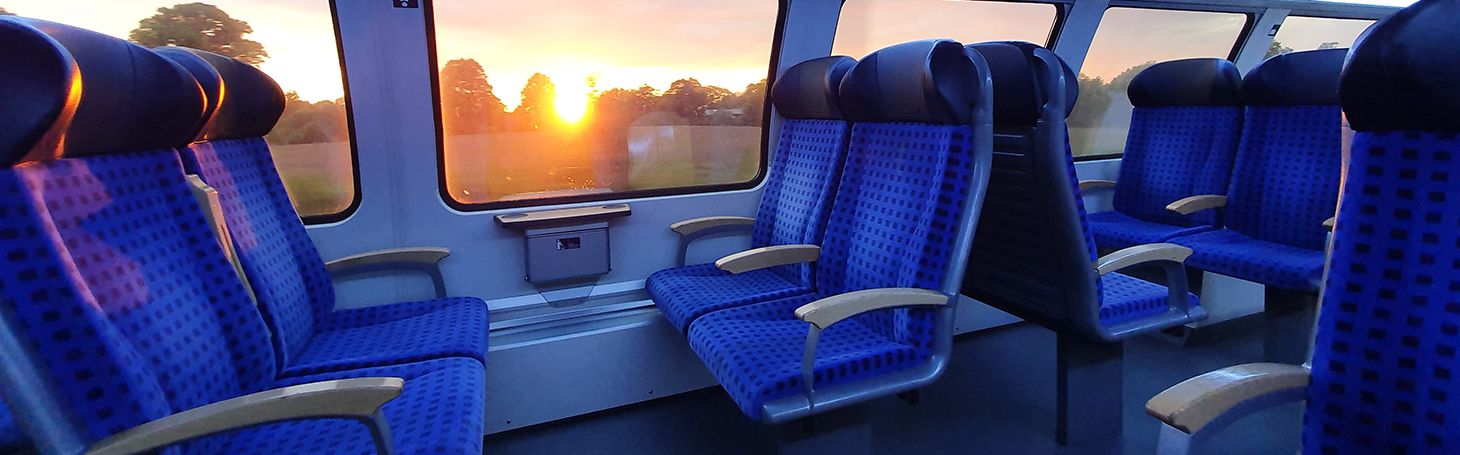
Pendolino, PKP Intercity's state-of-the-art train, has revolutionised travel around Poland, offering fast and comfortable connections between major cities. However, despite its great convenience, some passengers feel a little perplexed at first, thanks to a seat numbering system that seems puzzling. You can buy Pendolino tickets on PolishTrains – during the purchase, you can choose a specific seat from the carriage layout, which makes it considerably easier to understand the numbering system. The price of a Pendolino ticket bought through PolishTrains already includes the choice of a specific seat from the carriage layout, with no additional reservation fees. In this article, we will answer the question of what the seat layout is on the Pendolino and explain how to choose the best ones for you.