



The most beautiful cities in Germany that you can visit by train | PolishTrains
Published
Germany's most beautiful cities include Heidelberg, Rothenburg ob der Tauber and Dresden, the best metropolises for a first trip are Berlin, Munich and Hamburg, and you can plan a quieter trip in places like Cochem. All of these destinations are connected by high-speed ICE trains and regional lines, which will get you to most cities from Berlin in around one to five hours. This guide will give you the information you need to plan your rail journey in Germany - without stress on the road, with time to work or relax..
At a glance
At a glance
- Germany's ICE high-speed trains connect major cities such as Berlin, Munich, Hamburg and Frankfurt at up to 300 km/h
- Gorlitz, on the Polish border, is regarded as one of Germany's best-preserved historic towns
- Dresden's Baroque old town, Frauenkirche and world-famous art collections make it a top day-trip from Poland
- Berlin is the most visited city in Germany, with top sights including the Brandenburg Gate, Museum Island and the Wall Memorial
- Seat reservation on German ICE and IC trains is optional but recommended during peak periods
- PolishTrains offers international train tickets to Germany with electronic delivery - no printing required
From this article you will find out:
which cities are considered the most beautiful in Germany and why you should include them in your itinerary;
which German metropolises are best suited for your first city break by train;
which major cities are the easiest to reach by ICE high-speed trains;
where to find picturesque, quieter towns accessible by regional train services;
how to plan your route in Germany in terms of travel time, transfers and ticket costs.
What is the most beautiful city in Germany?
Choosing the most beautiful city in Germany is not easy - this country truly impresses with its variety of landscapes and architecture. Romantic old towns by the river, or perhaps rebuilt Baroque centres and towns surrounded by the hills of the wine regions? Travelling by rail allows you to discover these places in comfort - you will get directly to the historic centres without having to navigate narrow streets or restricted traffic zones by car. It is the train that will best show you how the character of the country changes with each successive region.
Heidelberg
Heidelberg is regarded as one of Germany's most romantic cities. Situated on the Neckar River, surrounded by wooded hills, it impresses with its harmonious combination of a baroque old town and monumental castle ruins towering over the city. Walking across the Charles Theodore Bridge at sunset looks like a scene from a 19th-century painting. This place often finds its way onto lists of the country's most beautiful cities thanks to its cohesive architecture and unique university town atmosphere. Visiting Germany? You must put the train to Heidelberg on your itinerary!
Practical tips:
- Train: ICE / IC (direct)
- Distance from Berlin: approx. 478 km
- Travel time: 4 h 50 min - 5 h 40 min
- Ticket price: from approx. €32-60 with advance purchase
Rothenburg ob der Tauber
Rothenburg ob der Tauber looks as if the Middle Ages never ended here. Completely preserved town walls, colourful half-timbered houses and cobbled streets create one of the most photogenic places in Europe. The town is a symbol of fairytale Germany and often regarded as the prettiest town on the famous Romantic Route.
Practical tips:
- Train: ICE + regional train (1-2 transfers)
- Distance from Berlin: approx. 415 km
- Travel time: 4 h 15 min - 5 h 45 min
- Ticket price: from approx. 37-55 €
Bamberg
Bamberg is a UNESCO-listed city, often referred to as the 'Franconian Venice'. The historic buildings are spread over seven hills, and the town hall standing in the middle of the Regnitz River looks like an architectural joke from several centuries ago. The old town survived the Second World War almost unscathed, so a walk through the town is like a journey back in time. No wonder Bamberg is considered one of the most beautiful cities in Germany!
Practical tips:
- Train: ICE (direct)
- Distance from Berlin: approx. 339 km
- Travel time: 2 h 15 min - 2 h 45 min
- Ticket price: from approx. 20-45 €
Dresden
Dresden is sometimes referred to as "Florence on the Elbe". The city centre, rebuilt after the war, impresses with its monumental baroque architecture: The Frauenkirche, the Zwinger and the panorama over the river create one of the most spectacular urban silhouettes in Germany. This is one of those cities to which the train journey alone is part of the attraction, especially on the section through Saxony.
Practical tips:
- Train: ICE / EC / IC (direct).
- Distance from Berlin: approx. 166 km
- Travel time: 1 h 30 min - 2 h 30 min
- Ticket price: from approx. 7-25 €
What are the top 3 cities in Germany?
The best and at the same time most beautiful cities in Germany are those that combine rich history, modern culture and excellent transport accessibility. For many travellers, they are the natural starting point for their first trip around the country, as they offer a large number of attractions, a developed infrastructure and fast train connections to other regions. Thanks to the ICE train network, it often takes just a few hours to travel between major centres, making it possible to plan a dynamic itinerary covering several cities in one trip.
Berlin
Berlin is a city of contrasts, where history meets modernity at every turn. Monumental government buildings sit side by side with industrial art districts, green parks and the banks of the Spree. The German capital attracts with the energy of a large metropolis, but at the same time surprises with its spaciousness and relaxed atmosphere. It is one of the most interesting European cities to discover by train, as most attractions are within easy reach of well-developed rail and public transport. If you want to visit Germany, the train will be the best possible means of transport!
Practical tips:
Train: ICE / EC / IC (numerous national and international connections)
Munich
Munich combines the elegance of southern Germany with an Alpine flair and orderly urban architecture. The wide squares, representative avenues and historic buildings around Marienplatz give the city a unique visual coherence. The Bavarian capital also impresses with its proximity to nature - you can reach the lakes or the Alps by train within an hour. It is one of Germany's best-rated cities in terms of quality of life and urban aesthetics.
Practical tips:
- Train: ICE (direct)
- Distance from Berlin: approx. 585 km
- Travel time: 3 h 50 min - 4 h 30 min
- Ticket price: from approx. 30-70 € with advance booking
Hamburg
Hamburg is distinguished by a very different character from southern German cities. The harbour skyline, canals and brick architecture of the Speicherstadt create an austere northern cityscape with enormous visual power. The city is alive with water - the promenades along the Elbe River, the modern HafenCity and the spectacular Elbphilharmonie make Hamburg regularly feature in lists of Europe's most attractive metropolises.
Practical tips:
- Train: ICE (direct, very frequent services)
- Distance from Berlin: approx. 289 km
- Travel time: 1 h 45 min - 2 h
- Ticket price: from about €10-35 with advance purchase
Germany's biggest cities to visit
The large German metropolises act as key railway hubs from which lines leading to almost every corner of the country diverge. This is where it is easiest to start a journey by train, plan further transfers or combine sightseeing with convenient travel between regions. Germany by train? A great idea! With modern stations close to the centres, train travel allows a seamless transition from arrival to exploring the city, without the additional logistics associated with local transport.
Frankfurt am Main
Frankfurt am Main is the financial heart of Germany and the only city in the country with a truly metropolitan skyline of skyscrapers. Here, the modern city centre contrasts with the rebuilt old town of Römerberg and the Rhine boulevards, which give the city a more intimate feel. With one of Europe's largest rail hubs, Frankfurt is a great starting point for further travel in Germany by train.
Practical tips:
- Train: ICE (direct)
- Distance from Berlin: approx. 545 km
- Travel time: 3 h 50 min - 4 h 10 min
- Ticket price: from approx. 30-70 € with advance booking
Stuttgart
Stuttgart is set amidst the green hills of Baden-Württemberg - this sets it apart from other major German metropolises. Known for its automotive heritage of Mercedes and Porsche, the city combines modern architecture with extensive parks and vineyards visible almost from the centre. It is one of the most orderly and comfortable urban centres in southern Germany, well connected by the ICE high-speed train.
Practical tips:
- Train: ICE (direct or with 1 change)
- Distance from Berlin: approx. 635 km
- Travel time: 5 h 20 min - 6 h
- Ticket price: from approx. 35-80 €
Düsseldorf
Düsseldorf is regarded as one of the most elegant and beautiful cities in Germany. The Rhine promenade, the modern MedienHafen district and the luxurious Königsallee create a dynamic yet highly aesthetic centre. The city is an important business and trade fair hub, but remains tourist-friendly thanks to its compact buildings and excellent rail connections to the entire country.
Practical tips:
- Train: ICE (direct)
- Distance from Berlin: approx. 565 km
- Travel time: 4 h 10 min - 4 h 40 min
- Ticket price: from approx. 25-60 €
Leipzig
Leipzig has become one of East Germany's most interesting cities in recent years. Historic shopping arcades, monumental squares and a booming art scene attract young travellers and culture lovers. Thanks to its location at the intersection of the main ICE routes, the city is one of the best accessible destinations for a quick city break from Berlin. Germany by train? Be sure to go through Leipzig!
Practical tips:
- Train: ICE (very frequent direct connections)
- Distance from Berlin: approx. 190 km
- Travel time: 1 h 10 min - 1 h 20 min
- Ticket price: from approx. 10-30 €
Discover the charm of small German towns
Rail travel in Germany does not stop at the big cities. One of the greatest advantages of Germany's regional network is the ability to reach smaller towns that have retained their historical character and quieter pace of life. Picturesque towns along the Rhine, in the Harz mountains or in the southern Länder are often only an hour's drive from the large conurbations. Thanks to frequent regional connections, they can easily be incorporated into your itinerary as a one-day stopover or an intimate leg of a longer tour of Germany.
Quedlinburg
Quedlinburg looks like a living museum of half-timbered architecture. More than a thousand colourful houses from different eras make up one of the best-preserved medieval old towns in Europe, listed by UNESCO. With its narrow streets, cobbled squares and castle hill, the town impresses with its tranquillity and the atmosphere of old Saxony-Anhalt. This is a destination made for travellers who want to slow down and discover Germany off the main tourist routes.
Practical tips:
- Train: RE / RB (with a change in Magdeburg or Halberstadt)
- Distance from Berlin: approx. 200 km
- Travel time: 2 h 30 min - 3 h
- Ticket price: from approx. 24-35 €
Cochem
Cochem, situated on a bend in the Moselle, is one of Germany's most picturesque towns. The colourful townhouses reflected in the river and the towering Reichsburg Castle create a postcard-like landscape. The surrounding hills covered with vineyards give the place an almost Southern European feel. The journey along the Moselle valley is in itself one of the most beautiful routes when it comes to travelling through Germany by train.
Practical tips:
- Train: ICE to Koblenz + RE (or regional connections)
- Distance from Berlin: approx. 620 km
- Travel time: 6 h - 7 h
- Ticket price: from approx. 35-70 €
Görlitz
Görlitz is one of Germany's most underrated cities, often referred to as a film gem of Europe. It has preserved almost complete historical buildings from Gothic to Art Nouveau, making it the set for many international productions. Its location right next to the Polish border gives it a unique cross-border character, and the relaxed pace of life is conducive to unhurried sightseeing.
Practical tips:
- Train: RE (direct or with a change in Cottbus)
- Distance from Berlin: approx. 215 km
- Travel time: 2 h 30 min - 3 h
- Ticket price: from approx. 20-35 €
Trains in Germany
Germany has one of the best developed rail networks in the whole of Europe. Among the carriers operating railways in Germany, Deutsche Bahn plays the largest role. However, it is not the only rail operator, as you can also use the services of companies such as European Sleeper, Westbahn or ÖBB. You can check the current timetable for your selected route in Germany in the PolishTrains search engine by entering the station and travel date. You can buy tickets for trains in Germany from PolishTrains – in Polish zloty, without creating an account, with the ticket sent by e-mail and SMS. Due to its dense network, rail is a convenient and fast means of transport in Germany - no traffic jams, but comfortable and environmentally friendly.

By train across Europe? Why not! | PolishTrains
🎫 Everything in Polish - tickets, service and currency 🚄 Dozens of carriers in one place 🗺️ Numerous connections to the most beautiful cities in Europe You can buy tickets for these routes in the PolishTrains search engine in Polish, in PLN and without creating an account, and the ticket is sent as a PDF by e-mail and SMS. Compare international connections, carriers and purchasing rules in one place. The PolishTrains search engine also shows where your journey requires a change, for example on routes with a change in Warsaw to cities across Europe.
Deutsche Bahn - tickets
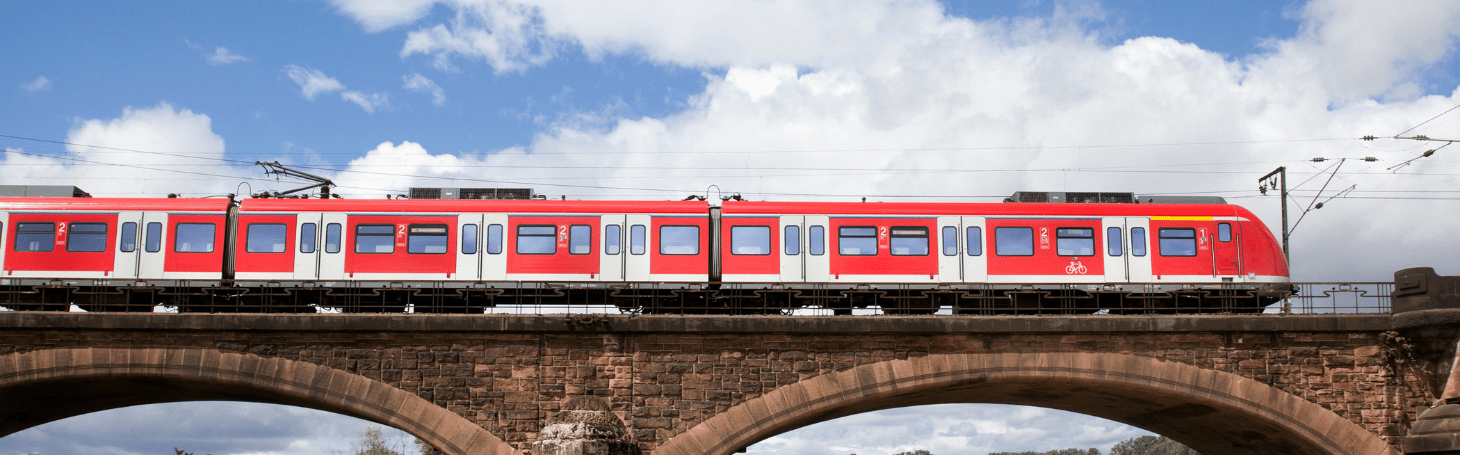
Deutsche Bahn is Germany's largest rail operator, known for its punctuality, comfort and extensive route network. You can buy DB tickets in the PolishTrains search engine in Polish zloty, without creating an account. Millions of passengers use DB's services every day - whether they are business travellers or tourists discovering German cities. Thanks to a modern booking system, tickets can be purchased in just a few minutes - also in Polish, via polishtrains.eu. DB ticket sales open several months in advance. You can check the current DB timetable and train departure times on an ongoing basis using the PolishTrains search engine, without looking for the departure board at the station. Simply select your route, date and class of travel to plan a journey tailored to your individual needs.
Nuremberg
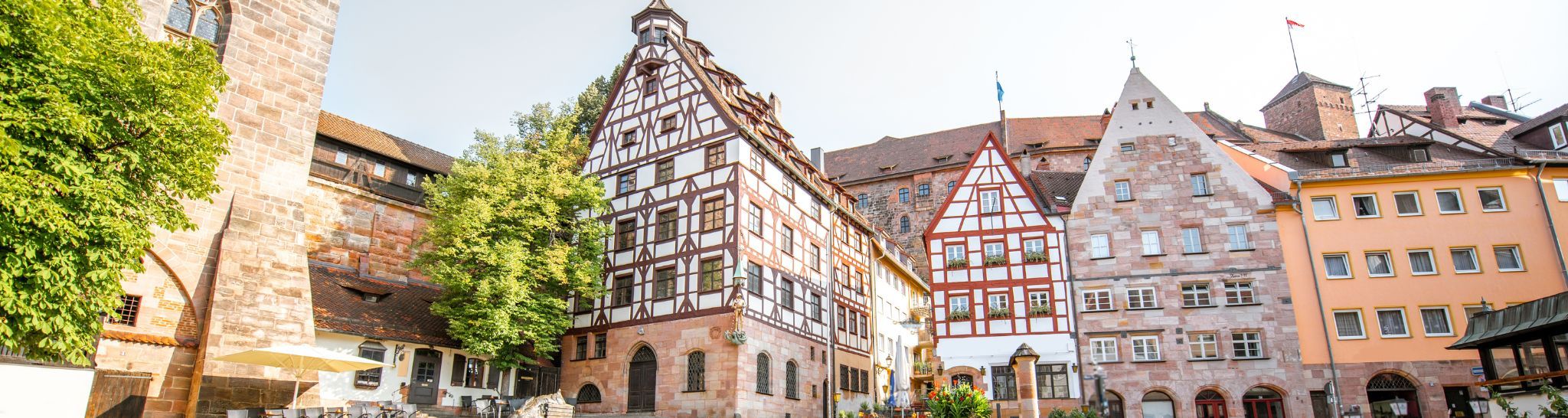
Walking through the old streets of Nuremberg, it seems like you are about to meet the master Albrecht Dürer while he is working in his art gallery or hear the carriage of the Holy Roman Emperor. You can buy train tickets to Norymberga on PolishTrains without creating an account – the ticket is sent by email and SMS. A weekend is enough to see the main sights of the Old Town, the Fortress and taste Norymberga sausages straight from the grill. You can pay for your ticket to Norymberga in Polish zloty, even when the route crosses the border, because payments on PolishTrains (polishtrains.eu) are settled in PLN.
How to travel by train in German cities?
Travelling around Germany by train is one of the most convenient and logical ways to explore the country. Germany's rail network connects major metropolises, historic cities and smaller tourist destinations within a single, coherent transport system. Train stations are usually located in city centres, allowing you to start exploring almost as soon as you arrive.
The Deutsche Bahn (DB), the national railway operator and one of Europe's largest transport operators, is responsible for most train services in Germany. The company operates both ICE high-speed long-distance trains and regional and local services, allowing travellers to travel between major cities and smaller towns on a single ticket system.
How does the rail system work in Germany? The German railway is based on several categories of trains that serve different types of routes:
ICE (Intercity-Express) - high-speed connections between major cities, e.g. Berlin, Munich, Frankfurt, Hamburg
IC / EC - national and international long-distance connections
RE (Regional-Express) - high-speed regional trains between cities in a single state
RB (Regionalbahn) - local trains that stop at all stations
How do you plan journeys between cities? Preferably in stages:
- first a fast ICE between major centres;
- then regional connections to smaller cities;
- if necessary, short transfers at the same station.
Many routes are designed to make transfers quick and intuitive. In major cities, long-distance and regional trains often use the same stations.
Why is it convenient to travel in Germany by train?
- Train stations are located close to the historic centres of Germany's most beautiful cities.
- Platform markings and timetables are clear.
- Connections run regularly throughout the day.
- You don't have to worry about parking or traffic.
- You can work or rest comfortably during the journey.
Does the railway only reach big cities? No. One of the biggest advantages of rail travel in Germany is access to smaller towns and scenic regions. Regional trains enable you to reach, among others:
- Rhine Valley,
- Bavaria and the Alpine region,
- Black Forest,
- historic towns in Saxony and Thuringia.
In this way, rail travel is not limited to the metropolis - it allows you to discover less obvious destinations without having to hire a car!
What is worth knowing before travelling through Germany by train for the first time?
German trains run according to a precise timetable.
Interchanges are usually short, but well marked.
Platform information is updated on electronic boards.
Most major stations offer catering and shopping facilities.
How do I buy train tickets in Germany?
You can conveniently buy train tickets in Germany, as well as train tickets to Germany from Poland, via PolishTrains.eu and the PolishTrains mobile app. Need help planning a trip involving several German cities? Or perhaps you get an error while booking on the website? If so, be sure to get help from our consultants:
- by telephone on +48 123 451 661 (charge according to the operator's tariff),
- via priority call +48 703 402 010 (cost: PLN 2.58 inc. VAT/min.),
- by e-mail: contact@polishtrains.eu.
The PolishTrains customer service desk is open every day, including Sundays and public holidays, from 7am to 11pm, and consultants are available in Polish, English, Ukrainian and Russian.
Once you have purchased your ticket online, you will receive it in electronic form - as a PDF file and a link sent via SMS, so that when you are inspected, all you need to do is present the ticket on your smartphone screen, without having to print out the documents.
The PolishTrains service also allows you to quickly exchange or return your tickets, giving you the flexibility to change your travel plans, and you can complete the purchase without registering.
Germany's most important cities accessible by train - comparison of journeys from Berlin
| Miasto | Type of direction | Rodzaj pociągu | Travel time from Berlin | Number of transfers | Oriented ticket price | |
| Dresden | historic city | ICE / EC | 1 h 30 min | 0 | from 7 € | |
| Lipsk | city break | ICE | 1 h 15 min | 0 | from 10 € | 10 |
| Hamburg | big metropolis | ICE | ok. 2 h | 0 | from 10 € | |
| Bamberg | UNESCO | ICE | ox. 2 h 30 min | 0 | from 20 € | |
| Heidelberg | romantic city | ICE / IC | about. 5 h | 0 |
from 32 € . | |
| Munich | Metropolis | ICE | ok. 4 h | 0 | from 30 € | |
| Frankfurt n. Main | Railway hub | ICE | ok. 4 h | 0 | from 30 € |
In summary: travelling by train in Germany allows you to discover major metropolises, historic cities full of monuments as well as small towns with a unique atmosphere in a short period of time. The extensive network of ICE and regional connections makes moving between regions fast, convenient and allows you to reach city centres directly. Whether you're planning an intensive city break or a leisurely slow travel journey, rail remains one of the best ways to explore Germany.