




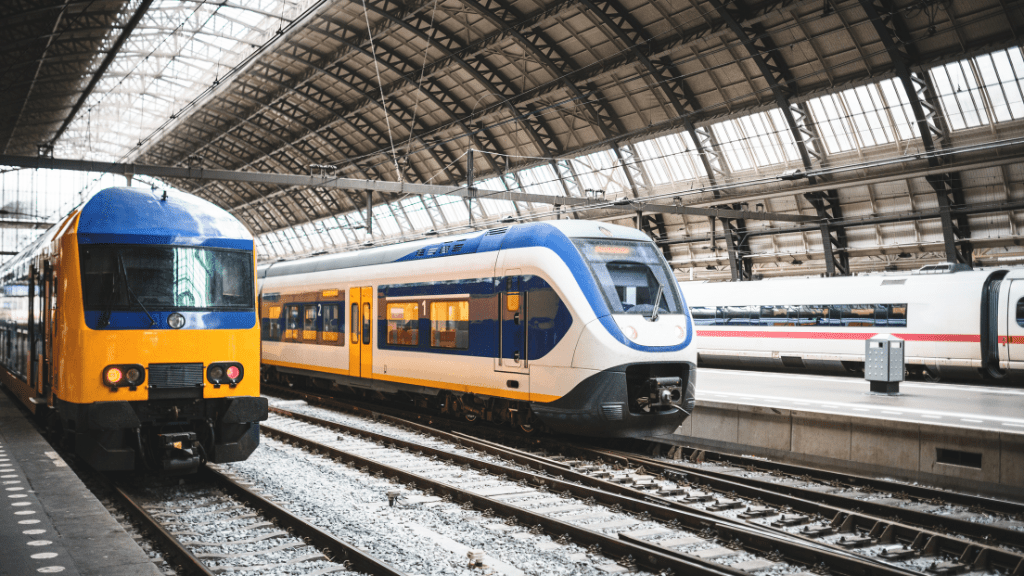
PR - what is the train, what does it look like and how does it travel? | PolishTrains
Published
PR train is one of the most common forms of rail transport in Poland. You can buy a PR train ticket in the PolishTrains search engine without creating an account – the ticket is sent by email and SMS. For the second year running, Polregio has exceeded 100 million passengers per year, demonstrating the scale of daily regional travel in Poland. These daily routes also include longer regional connections, such as travelling to Ustrzyki Dolne in the Bieszczady, which you can plan using the PolishTrains search engine. Not sure what a PR train is? It's a Regional Railway Train. We'll explain exactly what a PR train is, what it looks like from the outside, as well as its interior. It's a guide for anyone who wants to get to know the Polish regional railway better and know what to expect when they get on board. This will enable you to plan your journey with more confidence and comfort. You will also learn about the key advantages of using Polregio services, which make PR trains such a popular choice among travellers..
At a glance
At a glance
- PR (Regional Train) services are operated by POLREGIO with around 3,000 daily departures
- No seat reservation required on POLREGIO trains - choose any available seat on board
- PR trains stop at all intermediate stations, connecting smaller towns with larger urban centres
- Bicycles travel with a separate ticket; skis and snowboards in a cover travel free
- PR trains cover provincial routes and connect neighbouring regions across Poland
- Tickets can be purchased on PolishTrains without creating an account
What is a PR train and who operates it?
A PR train, or Regional Train, is a service operated by POLREGIO (formerly known as "Przewozy Regionalne") - Poland's largest passenger carrier in terms of the number of journeys made. Polregio divides its services into three categories. REGIO services stop at most stations and are well suited to travel between smaller towns. interREGIO connects neighbouring provinces and stops at selected stations, shortening the journey time. If your journey requires a change between different service categories, you can check the route details and change times in the search results on PolishTrains. superREGIO services are commercial services with a limited number of stops. These trains run mainly on provincial routes and between neighbouring regions, connecting smaller towns with larger urban centres. A characteristic feature of PR connections is their accessibility - most of them stop at all intermediate stations, enabling comfortable travel even between small railway stops. In the case of fast connections, stops are planned only at selected stations, which shortens travel time and allows to reach the destination faster.
PR - what is the train?
Thanks to modern and comfortably equipped trainsets and a carefully planned and dense network of connections, travellers have the opportunity to benefit from regular and punctual courses, which provide comfortable travelling conditions on both shorter and longer routes. Polregio trains are, therefore, not only a practical means of transport enabling one to reach one's destination quickly, but also a convenient way of getting to know various corners of Poland, discovering local attractions and experiencing the unique climate of individual regions.
What does the PR train look like inside and what can you expect on board?
Inside, PR trains are usually characterised by simplicity and functionality, designed for the comfort of passengers on short and medium-distance journeys. You can expect** spacious, often compartmentalised or open carriages** with comfortable seats that are comfortable enough to make the journey enjoyable even on longer journeys. Air conditioning is available on many trainsets, which significantly improves comfort, especially on warmer days.
Polregio train - what does it look like inside?
On-board facilities such as toilets are often provided, and on more modern trains you will also find Wi-Fi access, electrical sockets for charging devices or seats adapted for people with reduced mobility, making the journey more accessible for all passengers. The carriages are regularly serviced, which translates into a clean and technically sound interior.
Although there is usually no restaurant service on PR trains, there is a relaxed atmosphere on board and the seating arrangement is conducive to both individual and group travel. In summary, a journey on a PR train is, above all, a comfortable, convenient and safe option for those travelling on a daily basis or as a tourist through the regions of Poland.
The Polregio train - what does it look like on the outside?
On the outside, a PR train looks modern and functional, although the appearance may vary slightly depending on the specific train set and model of carriages or locomotive. Typically, Polregio trains are painted in characteristic colours - red, orange and grey - which are easily recognisable on Polish tracks. The bodywork is aesthetically pleasing, with large windows providing passengers with a good view of the route. Modern trainsets have aerodynamic shapes and are equipped with safety features such as clear markings and LED lights. In the case of older wagons, the outer shell may be simpler, but it is also neat and clean, indicating that the rolling stock has been regularly serviced. The overall impression is of a robust and reliable means of transport, ready for the daily transport challenges.
Why choose a PR train for regional travel?
Travelling by PR trains brings a number of benefits that make more and more people choose this mode of transport. First and foremost, it is an economical solution - ticket prices are attractive, and additional concessions and promotions help to further reduce travel costs, making rail travel a viable alternative to the car or bus. An additional advantage is the large number of connections throughout the day, giving passengers freedom and flexibility in planning their route and departure times.
It is worth highlighting the most important advantages of travelling with POLREGIO:
- Regular and frequent courses, making it easy to tailor journeys to individual needs.
- Attractive ticket prices, competitive compared to other forms of transport.
- Accessibility to many places, including small towns and stops that are difficult to reach by car or bus.
- Environmentally friendly - rail emits significantly less exhaust fumes than road transport, supporting climate protection measures.
As a result, PR trains combine convenience, affordability and environmental care, offering travellers a practical yet attractive solution.
What distinguishes PR trains from other carriers?
You can buy a Polregio ticket in the PolishTrains search engine in a few steps:
-
Enter the departure station, destination, date and number of passengers.
-
Choose a connection from the list of results.
-
Enter the passenger details and choose the ticket type.
-
Pay for the order by card, BLIK or fast bank transfer. You can also use deferred payment and pay for the tickets within 30 days.
You receive the ticket within several seconds, and 30 minutes before departure you receive an SMS reminder with a link to the ticket. You can find the number of the platform from which your train departs in the connection details in the PolishTrains search engine.
Domestic tickets can be bought up to 30 days before the journey. POLREGIO trains have gained passengers' recognition thanks to their reliability, regularity of courses and high standard of services provided. What exactly makes PR trains different from others?
Reliability and safety
POLREGIO trains have gained passengers' recognition thanks to their reliability and regularity of courses. This is one of the most important factors determining the carrier's popularity.
The PR rolling stock is systematically subjected to inspections and maintenance. Thanks to this, the trainsets maintain a high level of safety and remain in good technical condition even during intensive operation.
In the process of modernising the rolling stock, modern technological solutions are also implemented, which increase the comfort of the journey. Passengers appreciate a smooth, quiet and trouble-free ride, as well as more comfortable interiors with air conditioning, Wi-Fi or electrical sockets.
A network of connections tailored to passengers' needs
One of POLREGIO's greatest assets is its extensive network of regional connections. Trains connect smaller towns with large urban centres, which means that rail transport also reaches less urbanised areas.
Timetables are arranged to best meet the needs of local communities. Trains run at times suited to commuters going to work, school or shopping, making them an everyday and practical means of transport.
Favourable prices and promotions
An important element of the POLREGIO offer are attractive ticket prices. The carrier regularly introduces numerous** concessions and promotions**, making rail an economical alternative to travelling by car or bus.
This makes travelling by train more accessible to a wide range of passengers - whether they are pupils and students, working people or seniors.
Flexible travel rules
There is generally no seat reservation on POLREGIO trains. Tickets are sold for a specific course, but without an assigned seat number.
Travellers can therefore sit in any seat of their choice. The only exceptions are selected special services or trains with a higher standard, where reservations are possible and sometimes required.
On a daily basis, however, the freedom of seat choice gives passengers greater flexibility and makes using POLREGIO services simple and comfortable. The exceptions may be some special connections or higher standard trains where reservations may be available or required, but this is rather rare for Polregio. You can read more about this in: Can seats be reserved on Polregio trains?
If you are planning to travel at peak times or on popular routes, it is worth arriving early to be sure of finding an available seat. However, we recommend buying your ticket online or at the station - there is an additional charge for buying a ticket from the conductor. Read more in the guide: Ticket issuing fee on the train - how much does it cost and when is it charged? You can also buy tickets for routes in other European countries in the PolishTrains search engine: Paris - London, Milan - Rome, Barcelona - Madrid or Vienna - Salzburg.
PR trains - how are they different from TLK trains?
Polregio and TLK are two different types of rail transport in Poland, differing primarily in the nature of services, routes and standard of travel.
- Polregio is the largest regional rail carrier in Poland, specialising mainly in shorter and medium-distance services within provinces and between neighbouring regions. You can check the current rules and the fee calculator on the PolishTrains help page. You can check the baggage rules for your chosen connection in the PolishTrains baggage guide.
Polregio
Polregio operates regional trains on routes within provinces and between neighbouring regions throughout Poland. You can buy a ticket online from PolishTrains or in the mPOLREGIO app, as well as at a station ticket office. After buying your ticket from PolishTrains, you receive it in a message, and you take a seat without reserving one in advance. The refund and exchange details depend on the fare, so check them before travelling on the PolishTrains refunds page. Its offer is mainly aimed at residents of local communities and people commuting to work, school or other daily duties. Polregio trains stop at most intermediate stations, which enables comfortable travel even to smaller towns. They are characterised by affordable ticket prices and high frequency.
- TLK (Tanie Linie Kolejowe) is a category of long-distance trains, operated mainly by PKP Intercity. TLKs run on longer routes, connecting larger cities throughout Poland. They are slightly lower standard trains than, for example, InterCity expresses, but offer a comfortable journey over longer distances. TLK trains stop at selected stations, making the journey time shorter compared to regional connections. The refund and exchange conditions depend on the fare, so check them on the PolishTrains help page. Ticket prices are usually higher than on Polregio, but still affordable for those travelling further distances. You can check the current refund and exchange rules on the PolishTrains refunds page.
In summary, Polregio focuses on regional and local services, offering accessibility and frequency on shorter routes, while TLKs are long-distance trains, designed for travel between major cities over longer distances, with a limited number of stops and a higher standard of travel.
This article was prepared by the PolishTrains editorial team. We follow the rail market in Poland and Europe, look for new connections and support you at every stage of your journey.
Frequently asked questions
More travel information
What is a PKP e-ticket?
The PKP e-ticket is an alternative to the traditional paper tickets available at railway station ticket offices. You can buy current connections and tickets in the PolishTrains search engine, and 30 minutes before departure you will receive an SMS with a link to your ticket. You will also find out how to show your ticket during an inspection, how to request a refund or exchange, and how to receive a VAT invoice. In the PolishTrains search engine, you will also find direct PKP Intercity connections to Germany, the Czech Republic, Austria, Slovakia, Hungary and Lithuania. You can buy it quickly and conveniently online - without waiting in queues and at almost any time of day. Read on to find out how the e-ticket works, how to purchase it, present it for inspection, make a refund or obtain an invoice for your purchase.
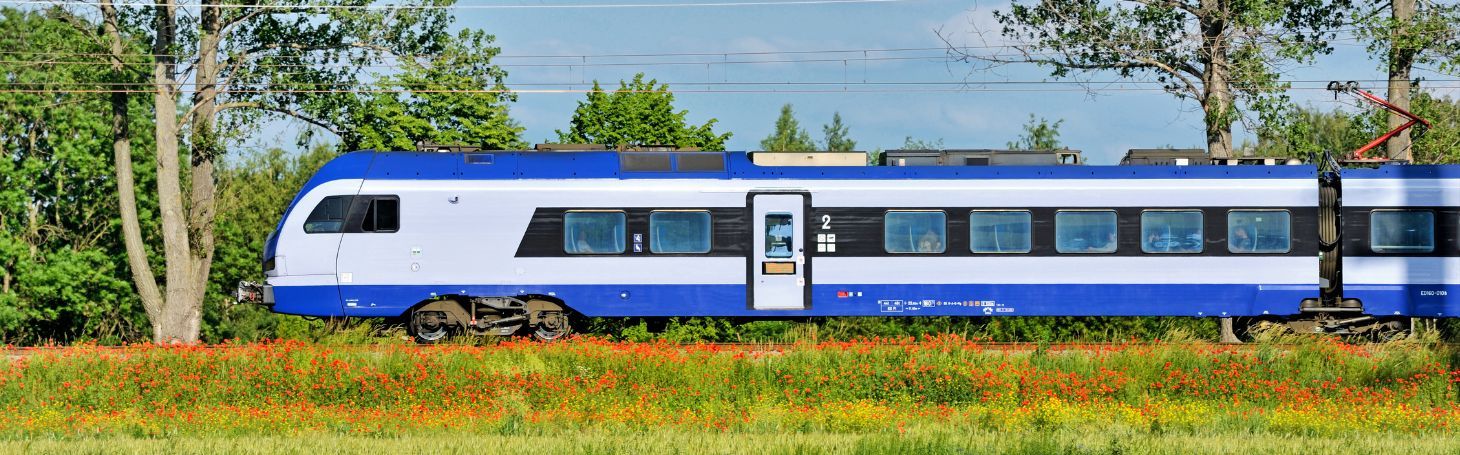
1st or 2nd class on an Intercity train? Comparison, differences and opinions | PolishTrains
Planning a journey on a PKP Intercity train and wondering which carriage class will be best for you? You can buy tickets for all PKP Intercity train categories on PolishTrains without creating an account, with delivery by email and SMS. Domestic ticket sales open up to 30 days before travel, and the earlier you buy, the greater choice of seats and better price you will find. You will see the available seats in the selected class when searching for a connection on PolishTrains, before selecting a specific train. This choice has a big impact on the comfort of your journey and the facilities available, so it's worth knowing what you can count on in each option. Before you buy your ticket, check out the difference between 1st class and 2nd class on the train and which one will better meet your expectations..

Can seats be reserved on Polregio trains? | PolishTrains
Polregio trains are the most popular regional rail transport in Poland. You can buy a Polregio ticket on PolishTrains without creating an account, and the ticket arrives by email and SMS within a dozen or so seconds. You can buy a ticket even on the day of departure and take any available seat on the train. The same mechanism applies to regional routes, so when planning a cheap train trip around Lower Silesia, you can buy a ticket for any Polregio service from PolishTrains (polishtrains.eu) without booking in advance. Thanks to its numerous connections and routes, it is a convenient and economical choice for sections within a given voivodeship or neighbouring regions. If you are about to embark on a longer journey with this carrier, you are certainly wondering whether it is possible to book seats on the Polregio. In the following article, we will dispel your doubts on this issue, as well as present ways to make your train journey more comfortable.
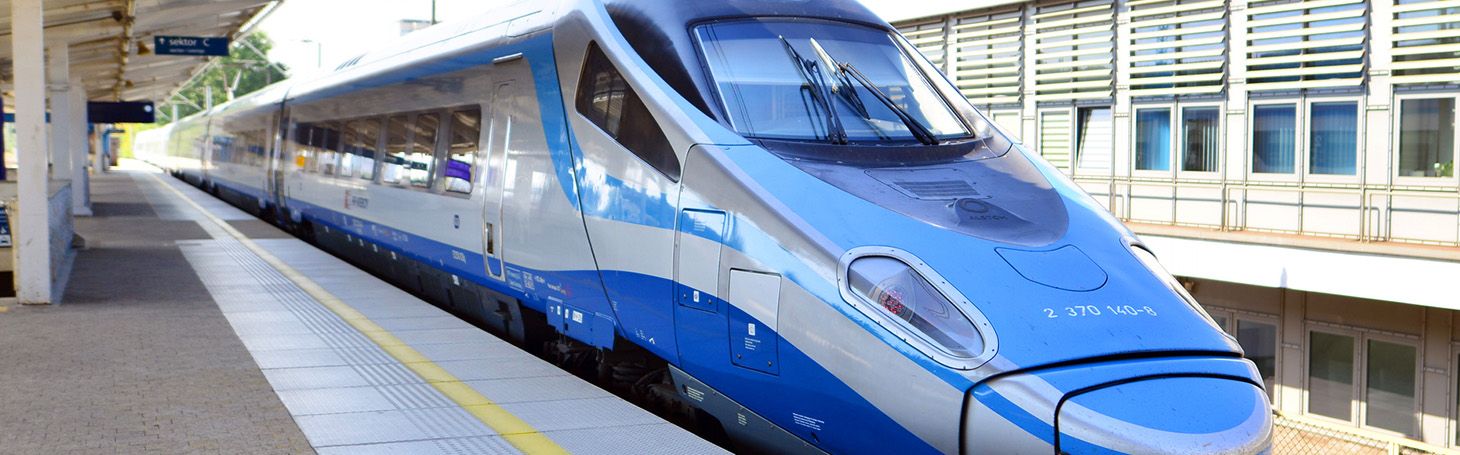
How do I open the doors on Intercity and TLK trains? | PolishTrains
Many travellers do not know how to open the doors on a train, especially the older type. You can buy a ticket for your journey on PolishTrains – it is sent by email and SMS, and 30 minutes before departure you will receive a reminder with a link to the ticket. See how to open the doors step by step in a normal situation and in the event of a failure. If you are travelling on an older TLK, you can check the train formation and timetable for your selected route in the PolishTrains search engine beforehand, so you know whether you will find electric doors or a manual handle. Is it really that difficult and requires a lot of physical strength? We will try to explain in simple terms how the easiest way to get out of a train after a stoppage.