

Berlin - Germany's rail gateway | PolishTrains
Published
As a neighbouring country, Germany is a popular tourist and business destination. You can buy tickets for this route on PolishTrains in Polish, in PLN and without creating an account. This is one of the most frequently searched international routes on the PolishTrains search engine, because Berlin is the closest major European capital accessible by train from Poland. Direct train connections to Berlin are the answer. The German capital is located close to the eastern border, has a well-located station in the city centre and is a transfer station for rail connections into Germany.
At a glance
Refund conditions depend on the fare – you can check the current rules on the PolishTrains help page.
Deutsche Bahn
Deutsche Bahn primarily operates domestic connections from Berlin to Hamburg, Monachium, Frankfurt and Kolonia. On PolishTrains, you can buy Deutsche Bahn tickets without registering and in PLN. The rules for seat reservations, refunds and exchanges depend on the selected fare, so check the current information in the PolishTrains help centre before travelling. When you buy a ticket on PolishTrains, you receive it by email and SMS. * Train to Berlin: direct connections from Warsaw, Poznań, Wrocław, Katowice, Gdańsk, Gdynia, Sopot, Bydgoszcz and Szczecin – operated by PKP Intercity and Deutsche Bahn
-
Journey time: approximately 2.5 hours from Poznań, approximately 4 hours from Wrocław, approximately 5.5 hours from Warsaw and approximately 5.5–6 hours from Trójmiasto
-
Destination station: Berlin Hauptbahnhof – the largest railway station in Germany, located close to the central parts of the city
-
Further travel in Germany: from Berlin, you can reach Hamburg in approximately 1.5–2 hours, Munich and Frankfurt in approximately 4 hours, and Cologne in approximately 4.5 hours
-
Ticket purchase: international tickets on PolishTrains can be purchased up to 60 days before the journey, without registering an account ### At a glance
- Direct trains to Berlin run from Warsaw, Poznan, Wroclaw, Katowice, Gdansk, Gdynia, Sopot, Bydgoszcz and Szczecin
- Poznan to Berlin is the shortest Polish rail connection at approximately 2 hours 46 minutes
- Warsaw to Berlin takes approximately 5 hours 40 minutes by direct Intercity or Pendolino service
- Night train options are available from Warsaw to Berlin, continuing onwards to Munich
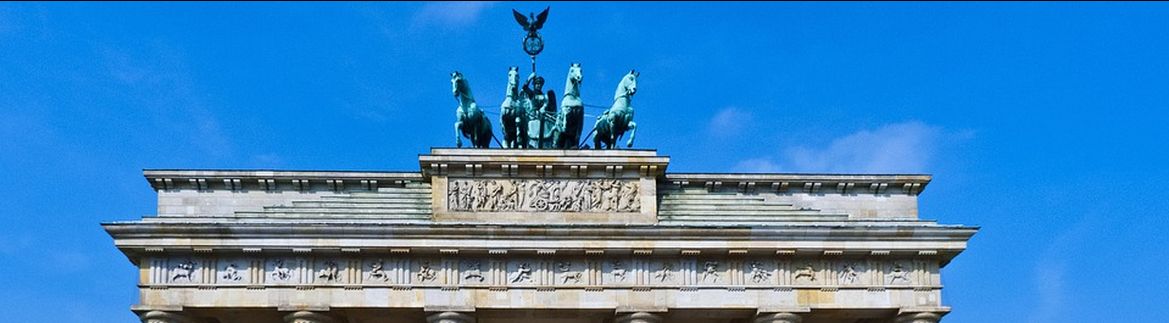
- Berlin Hauptbahnhof is located near the Brandenburg Gate with direct connections to local public transport
- International tickets to Berlin are bookable on PolishTrains up to 60 days in advance from PLN 19.90 You can check the details for your selected connection in the PolishTrains baggage guide.
From which Polish cities does the train to Berlin run?
Due to the popularity of rail connections from Poland to Berlin, the list of cities from which we can directly reach the German capital is getting longer and growing.
You can get from Poland to Berlin by train from Warsaw, Poznań, Bydgoszcz, Katowice, Szczecin, Wrocław and the Tricity of Sopot, Gdańsk and Gdynia. Connections are served by modern trains of the Intercity and Pendolino type, and the journey time is only a few hours. In addition, there is a choice of both day and night connections with fares starting from as little as € 19.90. Thanks to good transport connections, we can even go to Berlin for the weekend!
Sample train connections:
Train Warsaw -- Berlin -- 5h 40m
Train Poznań -- Berlin -- 2h 46m
Train Gdańsk -- Berlin -- 5h 45m
On PolishTrains, you can also buy tickets for routes within Europe: Paris – London (Eurostar, approximately 2 hours 16 minutes), Mediolan – Rzym (Italo and Trenitalia), Barcelona – Madrid (Renfe) and Amsterdam – Brussels. ## Berlin Hauptbahnhof station
Trains from Poland terminate in Berlin at Berlin Haupthbahnhof station. Berlin Haupthbahnhof is the second largest station in Europe and the largest railway station in Germany, serving most international and domestic connections. As with a ticket to Berlin, you can always check the refund of a ticket for an international train on the same PolishTrains refunds and exchanges page, regardless of your travel direction. You can find the current rules on the PolishTrains refunds and exchanges page. Its fantastic location, adjacent to the Brandenburg Gate and the Reichstag, means that when you get off the train you are immediately in the historic centre of Berlin and can start exploring the city. In this respect, the train has a major advantage over the plane.
Berlin - what to see
The German capital is known for its numerous monuments, museums and elegant character. Getting off at BerlinHauptbahnhof Station, you immediately gain a view of the Brandenburg Gate and the Reichstag. Continuing towards the Humboldt University, you reach the Museum Island with its unique archaeological collections. From here, it is only a few steps to the entertaining Alexander Platz. An important symbol of Berlin's modern history is the Berlin Wall with Checkpoint Charlie, one of the border crossings between West and East Berlin during the Cold War.
By train to Berlin - and then what?
Berlin, not for nothing, is known as the rail gateway to Germany. This is where most international trains, such as those from Poland, Denmark or even Russia, terminate. By changing to a national train, most of the major cities in Germany can be reached quickly and directly. Domestic connections in Germany are characterised by high frequency, comfort and speed.
Examples of train connections in Germany
Berlin - Munich - 3h 41m
Berlin - Frankfurt - 4h 7m
Berlin - Cologne - 4h 18m
Berlin - Hamburg - 1h 44m
You can buy a ticket for the train to Berlin on PolishTrains without creating an account – all you need is an email address and telephone number. ## Deutsche Bahn trains
The state railway in Germany offers journeys in various train categories. Check the current connections in the PolishTrains search engine. The journeys differ from each other in terms of the time and standard of travel and the price of the train ticket. It is worth familiarising yourself with the names of the different types of trains so that you can plan your journey consciously:
Regional trains, stopping at all stations. Low train fares and longer train journey times.
Regional Express are trains that run within a region, stopping only at selected stations. When you buy a ticket on PolishTrains, you receive it by email and SMS. Low train fare and fast journey times.
Interregio-Express are trains that run between regions, connecting large urban centres. Refund conditions depend on the fare – you can check the current rules on the PolishTrains help page.
Deutsche Bahn
Deutsche Bahn primarily operates domestic connections from Berlin to Hamburg, Monachium, Frankfurt and Kolonia. Higher train ticket price and fast travel time for longer distances.
Intercity is a modern, high-speed train that runs between Germany's largest cities and only stops at selected railway stations. Great comfort and fast journey times.
TheIntercity Express is the fastest and most modern of Germany's trains. On PolishTrains, you can buy Deutsche Bahn tickets without registering and in PLN. You can buy the ticket on PolishTrains in PLN, without registering, and have it delivered by email and SMS. It reaches speeds of up to 300 km/h per hour. The rules for seat reservations, refunds and exchanges depend on the selected fare, so check the current information in the PolishTrains help centre before travelling. The conditions for refunds and exchanges depend on the carrier and fare – you can check the current rules on the PolishTrains refunds and exchanges page. It operates long-distance services throughout the country.
Travelling by train in Germany
The train is one of the most popular modes of transport in Germany due to its large number of train connections and speed. Need help? The PolishTrains Customer Service Office operates every day from 7:00–23:00. It is ideal for both local journeys and for moving between different regions of Germany. Located in city centres, the train stations are a convenient alternative to airports, which are several tens of kilometres away.
Booking a ticket for trains in Germany
Ticket reservations can be made via the booking form, e-mail: contact@polishtrains.eu or by telephone: 703 402 010 (Call cost: PLN 2.58 incl. You can check the details for your selected connection in the PolishTrains baggage guide. VAT/min). Feel free to contact us!