



Tourist attractions of Greater Poland - an overview of the most interesting places | PolishTrains
Published
What to visit in Wielkopolska? You can buy train tickets to Poznań, Gniezno and Kalisz without registering in the PolishTrains search engine – the ticket is sent by email and SMS. You can check the current departure and arrival times for Poznań, Gniezno and Kalisz on an ongoing basis in the PolishTrains search engine, without needing to log in. There is no shortage of attractions, it is a large province that abounds in interesting places. Nature lovers, fans of historical monuments and families with children will find something for themselves here. It is a perfect region to visit not only at weekends. Check out our list of must-see sights.
At a glance
At a glance
- Poznan is the capital of Greater Poland and is served by Pendolino high-speed trains from Warsaw
- The Old Market Square, Imperial Palace and Citadel Park are all within easy reach of Poznan Glowny station
- Gniezno Cathedral on Lech Hill houses the famous 12th-century Gniezno Doors depicting the life of St Adalbert
- Kornik Castle, accessible by bus from Poznan, holds one of Poland's most remarkable library collections
- The Notec Forest features glacial lakes, inland sand dunes and heathlands ideal for late-summer hiking
- Direct trains connect Poznan to Warsaw, Wroclaw, Cracow and Gdansk; Gniezno is also served from Warsaw
Tourist attractions of Greater Poland - an overview of the most interesting places
Poznań
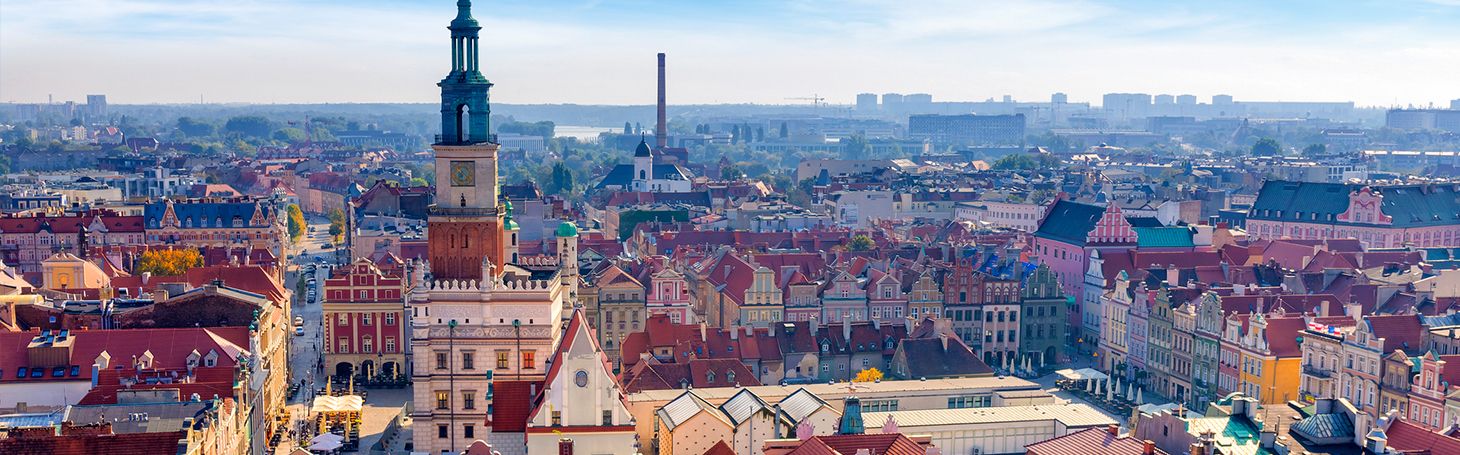
Poznań is the capital of the Greater Poland Voivodship and its largest city. The city offers many great attractions, much more than just the famous goats.
It is worth starting your sightseeing from the Old Market Square with its colourful tenement houses. Other interesting places include the Royal Castle - a medieval royal residence on Przemysl Hill, the Imperial Palace built for the German Emperor William II and the vast Citadel Park.
Poznań is also famous for its świętomarciński croissants, which even have their own museum here, where you can learn the secrets of their baking. A stroll along the Warta river is also worthwhile, as there are numerous recreational facilities. You will see the platform number your train departs from in the details of a ticket bought through PolishTrains, so you do not need to look for it on the departure boards at the station.
This city is well connected and can be reached by train, including the fast Pendolino train. In addition, the modern Poznań Główny train station ensures a comfortable journey.
Gniezno
This historic first capital of Poland is a must-see on your holiday itinerary. The most important point on the map is Gniezno Cathedral on Lech Hill, where Polish rulers were crowned for centuries. In the cathedral, you can admire the famous Gniezno Doors from the 12th century, decorated with scenes from the life of St Adalbert, as well as visit his tomb and historic crypts. In addition, climbing one of the cathedral's towers guarantees a beautiful view of the city and its surroundings.
It is also worth seeing the historic Gniezno Winiary railway station, which captures the atmosphere of the old times, and the Piast Park - an ideal place for a walk among the greenery. The market square, full of charm, is home to the Old Town Hall, and the city centre itself is perfect for relaxing and admiring the historical buildings. Gniezno, full of unique Wielkopolska attractions, is a must-see stop on the route.
Kalisz
You will also find the most interesting places in the Wielkopolska region in Kalisz, one of the oldest Polish cities. Start your journey at the Main Market Square, where you will find a historic town hall with a vantage point from which to admire the surroundings. Unfortunately, few buildings from Kalisz's heyday, i.e. during the reign of Casimir the Great, have survived to this day. One of the few that have survived is the Dorotka Tower, surrounded by a romantic legend about the starost's daughter, walled up for her love of a poor shoemaker.
Kalisz is also a city with a rich multicultural history. There is the Orthodox Church of Saints Peter and Paul, as well as three historic cemeteries: Catholic, Orthodox and Evangelical, testifying to the religious diversity that once shaped the face of this city.
Śrem
Śrem, although less frequently visited by tourists, has much to offer explorers. One of the most recognisable symbols of the town is the picturesque 23 Stycznia Bridge. Apart from that, it is worth paying attention to such Wielkopolska landmarks as the water tower, the market square with the former post office building from 1880 and the charming statue of the Little Match Girl.
A special city tourist route has been prepared for visitors to the right bank of the river Srem, which makes it easy to discover the most interesting historical sites, such as the parish church, the former grammar school or the Pumpenplatz. This is a great way to get to know the town up close and feel its unique atmosphere.
Śrem is also famous for its unique artistic murals. Nine of them have already been created since 2016, and their number is constantly growing. A walk along the trail of these colourful paintings is a great opportunity to discover the artistic soul of this town and look at it from a completely different perspective.
Czarnków
Visitors are attracted to Czarnków by its most atmospheric market square, which has recently been revitalised and given a new look. The town also offers the opportunity to explore the area from the water, thanks to its extensive waterways.
It is worth going to the viewing terrace on the Krzyżowa Mountain, which offers a beautiful panorama of the area. It's a nice place to visit in Wielkopolska, especially if you feel like relaxing and admiring the landscape.
The building of the former Prussian school from the 19th century houses the Museum of the Czarnków Land, which presents valuable archaeological, ethnographic and historical collections, allowing you to gain a deeper knowledge and understanding of the heritage of the region. Other valuable sights in Czarnków include the late Gothic church of St Mary Magdalene, one of the most valuable religious buildings in the area.
Goraj
Close to Czarnków is the village of Goraj with one of the most beautiful monuments in Greater Poland, a magnificent Neo-Renaissance castle. This structure was built between 1908 and 1912 on the order of Count Wilhelm Bolek von Hochberg. Currently, the castle interiors house the Forest School Complex.
What is worth seeing in Wielkopolska?
The Wooden Churches Route around Zielonka Forest is a beautiful route that leads through 12 picturesque country churches in Wielkopolska. They are located in villages such as Kicin, Wierzenica, Uzarzewo, Długa Goślina, Węglewo, Kiszkowo, Łagiewniki, Sławno, Skoki, Jabłkowo, Raczkowo and Rejowiec. The trail was laid out in 2008 to make it easier for tourists - on foot or by motorbike - to reach each of these unique sites, which were built between the 16th and 19th centuries. They are certainly mysterious and intriguing places in Wielkopolska, which delight with their unique architecture, atmosphere and history. Check the current connections in the PolishTrains search engine.
Each church on the route is distinguished by its unique interior and decorations, as well as a wooden structure that delights from the outside. During such a trip, you will have the opportunity to fully discover the richness of the region.
The viewing tower on Dziewicza Góra, located in the Puszcza Zielonka Landscape Park near Poznań, is a well-known Wielkopolska tourist attraction. This mountain, named after the Cistercian nuns to whom King Przemysł granted the area, is wooded with beautiful old oak trees. The area can be reached by public transport, and a variety of hiking trails offer many climbing opportunities. A lookout tower provides panoramic views of the surrounding area. The nearby Nature and Forestry Education Centre, on the other hand, offers interesting exhibitions. There are also facilities for families, such as a playground and campfire areas.
Dziewicza Góra is also a centre for events, especially cross-country skiing, organised throughout the year. For activity lovers, there are also challenging bicycle climbs, guaranteeing pleasant fatigue and satisfaction from completing the route.
The Museum of the First Piasts in Lednica is one of the key attractions in Wielkopolska which deserves special attention. This place houses the largest collection of artefacts related to the beginnings of the Polish state, including fragments of a castle of the first Piasts. The Lednica stronghold, at the times of Mieszko I and Bolesław Chrobry, was one of the most important defensive facilities in the country, and although little remains of it, the reconstruction gives an insight into its historical power.
The museum offers a fascinating history, including the unconfirmed but oft-repeated claim that it was at Lednica that the baptism of Poland took place. For this reason, Lednica should be an unmissable item on any trip to Wielkopolska, especially for those interested in the history and culture of the region.
The Warta RiverLandscape Park, established in 1995, is an area aimed at protecting the unique postglacial landscape, including the Warta River pre-valley. The park has been recognised as one of the most important bird sanctuaries in Poland, making it an ideal place for ornithology and ecotourism enthusiasts.
It is also a nice place in Wielkopolska offering a variety of paths for hiking, cycling and educational trails, adapted to different levels of difficulty. However, it is worth bearing in mind that some trails can be temporarily flooded, so check the current weather conditions when planning a visit.
The Warta Landscape Park is also a part of the Great Loop of Wielkopolska, which makes it possible to explore it also from the water. Nearby marinas are located in Pyzdry and Ląd, where you can use canoes and other means of water transport.
Interesting and mysterious places in Wielkopolska that you had no idea about
The Notecka Forest, sometimes referred to as 'little Masuria', is a true paradise for nature lovers. This forested area offers around 100 picturesque glacial lakes of varying sizes - from large and deep to small, hidden in the thicket of trees. The Notecka Forest is also distinguished by its unusual inland dunes, some reaching up to 35 metres in height, which gives this landscape its unique character.
This beautiful place in Wielkopolska is conducive to relaxation and rest, so it will be an ideal choice for those seeking peace and tranquillity surrounded by nature. The Notecka Forest is the perfect opportunity to get away from everyday life and discover magical, mysterious corners where you can recharge your energy for both body and mind.
The Czerniejewskie forests are a remnant of the ancient primeval forest growing in the area. Designated walking paths make it easy to reach further natural monuments. As many as seven nature reserves and two landscape parks have been established in the area. It is also worth visiting the Wielkopolska Ethnographic Park in Dziekanowice, where you can learn more about the past of these lands and the people who inhabited them.
Moraska Góra rises 154 metres above sea level. Although it may not be the most impressive peak in Poland, it is a unique attraction in Wielkopolska. It is all due to a meteorite that hit the area over 5,000 years ago. A remnant of this event are seven craters filled with water, forming small lakes concentrated in the Morasko Meteorite nature reserve. Thanks to a marked nature trail and information boards, visitors can learn more about the history of the site and the meteorite itself.
The Beaver Trail in Czmoniec obviously owes its name to the activities of these friendly mammals. The trail starts in the village of Czmoniec, located between Poznań and Śrem. It runs through picturesque woodlands and riverside meadows, offering views of the Warta oxbow lakes and their floodplains. Along the way, you can admire magnificent pedunculate oaks and traces of beaver activity, such as gnawed and fallen trees and their burrows. With a bit of luck, you can even spot the beavers themselves.
This route is divided into three sections, with the longest one, designed for advanced hikers, being 4 kilometres long. There is also a 14-metre-high observation tower along the route, offering panoramic views of the entire area.
What else to visit in Wielkopolska?
Certainly the Snowflake Ravine Reserve is a floristic reserve, created to protect the spring snowflake. Although it was probably planted by man, the plant has established itself here so well that it pleases visitors with the spectacle of its flowering every year (from February to April). Other plant species can also be found in the area - more than 20, including red oak, field maple and wood anemone. A hiking trail runs along the edge of the reserve, located in a ravine crossed by a stream, and is accessible from the nearby villages of Starczanowo and Uchorowo.
Łysy Młyn is one of the most interesting places in Wielkopolska, created as a forest education centre. It is located only 15 kilometres from the centre of Poznań and 5 kilometres from Biedrusk. In the restored water mill, visitors can visit, among others, the Centre for the Protection of the Oak Armyworm, a forest laboratory and an exhibition of insect photos. An educational path with information boards on water resources has been marked out around the mill. It is also possible to arrange forestry workshops.
Wrzosowe Wydmy is located in the Notecka Forest, west of Chojna. The name of this place gives away what you can expect here - it is a sandy area abundantly covered with heather. When they are in bloom, at the end of August and in September, the landscape turns into a veritable fairyland. The heath is one of the most beautiful places in the Wielkopolska region; you don't have to go all the way to the Słowiński National Park to feel like you're surrounded by seaside dunes.
Cool places and sights in Greater Poland for the weekend
Looking for cool places to spend a weekend in the Wielkopolska region? Visit Kórnik, home to one of Poland's most famous castles. It dates back to the 15th century. Its most famous owner was Teofila of Działyński, known as the White Lady, whose portrait can be admired in the interior. The building was erected on a marshy island, and access to it is via a drawbridge. Over the centuries, the castle has been extended and rebuilt in various architectural styles. Its current neo-Gothic appearance is the result of a major renovation in the 19th century, carried out by Tytus Dzialynski. The interior houses a museum displaying memorabilia from various eras. In turn, it is surrounded by a picturesque arboretum, one of the oldest and largest in Poland, famous for its collection of exotic trees and shrubs.
The Rogalin Palace is Wielkopolska's most important tourist attraction, delightful both for its architecture and its historical charm. It was erected in the 18th century by the Raczyński family and is surrounded by a picturesque landscape park with famous oak trees: Lech, Czech and Rus - majestic trees hundreds of years old.
The interior of this Wielkopolska monument houses valuable collections, including the first public library in Wielkopolska, founded by Edward Raczyński. Today, it also houses an art gallery where works by prominent Polish and European artists can be admired.
Gołuchów, located near Kalisz, is a charming village in Wielkopolska full of interesting historical and natural sites. Its symbol is the Czartoryski Castle, over 400 years old and one of the branches of the National Museum in Poznań. Its construction was modelled on French castles from the Loire Valley.
The interiors of the building hide a rich collection of art and memorabilia gathered by Izabela Czartoryska, who created one of the first museums in the area. Gołuchów also offers a beautiful arboretum surrounding the castle, full of rare species of trees and plants, as well as a flower and herb garden. On the outskirts of the park are historic vineyards and the Forestry Museum. The whole complex forms a vast, picturesque area inviting visitors to walk and discover history.
The most interesting attractions for children in Wielkopolska
The Poznań Zoo is one of the best attractions for children in the Wielkopolska region. It is a vast and diverse complex where you can see many species of animals. It is home to Poland's largest elephant house and a unique bear house. Surely, the whole family will not be bored here and will have a great time discovering the fascinating world of animals, participating in educational shows and making use of the numerous playgrounds and relaxation zones.
Getting to the zoo is made easier by the Maltanka train, which is especially loved by the youngest. It is also possible to take a trip on the historic bus line 100, running seasonally from the Poznań Główny bus stop.
AnotherWielkopolska attraction for children is Gród Pobiedziska - a combination of an amusement park and elements of historical reconstruction. In this recreated castle, you will put on costumes from past eras and try your hand at historical battles. The area can be reached by train from Poznań, Bydgoszcz or Toruń.
The Mośńsk thrill rides in the area of the Wielkopolski National Park are a great option for people who are not afraid to use their own muscles to propel a vehicle moving along the tracks. The route leads through the picturesque areas of this park. Along the way, you can see Kettle Lake and Napoleon's Well. According to legend, Napoleon himself stopped there during his expedition to Moscow, and the water he was given from the well was said to have the taste of champagne. Although some claim that this phenomenon is repeated every year, the exact time of its occurrence remains unknown.
The headquarters of the Greater Poland National Park is located in Lakes on Lake Góreckie. Not far from it, you can admire the Castle Island with a romantic castle from the 19th century, initiated by Klaudyna Potocka of Działyński. This park also offers many walking paths, making it an ideal place for active relaxation and discovering the beauty of nature.
Another attraction in Wielkopolska is Westernland in Chocz. It offers many interesting activities, such as gold prospecting, tomahawk throwing, completing Indian obstacle courses and playing on an inflatable ranch. Children can also take part in cowboy demonstrations, learn to shoot a bow and ride a horse. Westernland is a good choice for an active day out. Such adventurous and fun-filled moments will remain in the little ones' memories for a long time.
Check the current connections in the PolishTrains search engine. We hope you have found places in the Wielkopolska region that you may not have known about and that we have inspired you to visit. It is an area full of numerous lakes, forests and national parks, where there is something for everyone. This region offers not only beautiful landscapes, but also many historical and cultural attractions.
What is worth seeing in Wielkopolska? Our list will certainly make it easier for you to plan your next trip. Remember that you can conveniently use public transport, such as trains or buses. Not sure how to adjust your timetable? Use the PolishTrains service, which will help you find available rail transport options and enable you to buy a ticket - just install the PolishTrains app and everything will be available on your phone.