




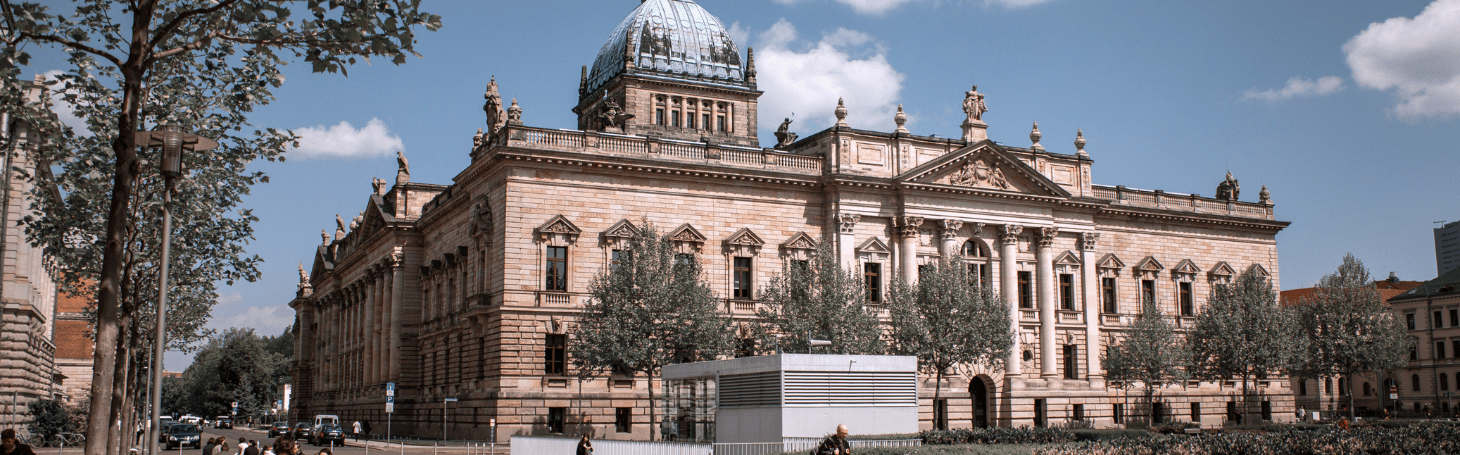
Leipzig - attractions and sights. What is worth seeing and how to get there? | PolishTrains
Published
Leipzig is a city where the musical past meets the modern rhythm of life. On PolishTrains (polishtrains.eu) you can check connections from Warsaw to Berlin and then from Berlin to Lipsk, and buy your ticket without registering – it is sent by e-mail and SMS. You can visit Lipsk’s main attractions on foot – from the station, you can reach Thomaskirche and Nikolaikirche in around a dozen minutes. In the PolishTrains search engine, you will also see the transfer time in Berlin, making it easier to plan the onward journey to Lipsk. Historic townhouses sit side by side with avant-garde architecture, and numerous galleries and cultural events make the city vibrant all year round It was here that Johann Sebastian Bach composed in the 18th century, and more than 200 years later that the peaceful demonstrations that began the process of German unification began. Today, Leipzig attracts both culture lovers and those looking for the atmosphere of a modern, open city. Planning a weekend, city break or longer trip? Find out what Leipzig attractions are worth seeing and how to get there comfortably by train from Poland..
At a glance
-
Attractions in Lipsk: 7 places, from Pomnik Bitwy Narodów to Panometer Leipzig
-
Getting there from Poland: you can travel with a change in Berlin or via Zgorzelec and Drezno; the journey from Berlin to Lipsk takes around 2 hours
-
Station: Leipzig Hauptbahnhof (Leipzig Hbf), Willy-Brandt-Platz 6-8; Thomaskirche and Nikolaikirche are a walk of around ten minutes
-
Documents: Germany is part of the Schengen Area – a valid identity card or passport is sufficient
-
Tickets:* you can buy international tickets up to 60 days before travelling. * Lipsk attractions: 7 places, from the Monument to the Battle of the Nations to Panometer Leipzig
-
Getting there from Poland: you can travel with a change in Berlin or via Zgorzelec and Drezno; the journey from Berlin to Lipsk takes around 2 hours
-
Station: Leipzig Hauptbahnhof (Leipzig Hbf), Willy-Brandt-Platz 6-8; you can reach Thomaskirche and Nikolaikirche in around a dozen minutes
-
Documents: Germany is in the Schengen Area – a valid identity card or passport is sufficient
-
Tickets: international tickets can be bought up to 60 days before travel. ### At a glance
- Leipzig Hauptbahnhof is one of Europe's largest railway stations by floor area
- The Monument to the Battle of the Nations commemorates the 1813 Napoleonic defeat and is Germany's largest national monument
- Thomaskirche is where Johann Sebastian Bach served as cantor and is buried
- Nikolaikirche played a key role in the peaceful revolution of 1989 in East Germany
- Journey from Warsaw to Leipzig takes approximately 7 hours with one change, typically in Berlin
- A national identity card is sufficient for travel to Leipzig as Germany is in the Schengen Area You can check the timetable and search engine on PolishTrains (polishtrains.eu) without logging in; an account is only needed if you want to save your purchase history. On PolishTrains (polishtrains.eu), you can buy a ticket for the entire journey without registering – it is sent by e-mail and SMS. 30 minutes before departure, you will receive an SMS with a link to the ticket, and international tickets are available up to 60 days before travel. Refund and exchange conditions depend on the carrier and fare - you can check the current rules on the PolishTrains refund and exchange page. On PolishTrains (polishtrains.eu), you can also buy tickets for routes in other European countries: Paris – London, Mediolan – Rzym, Barcelona – Madryt, Wiedeń – Salzburg and Rotterdam – Amsterdam.
Monument to the Battle of the Nations (Völkerschlachtdenkmal)
The Monument to the Battle of the Nations is one of the most impressive and symbolic sites in Leipzig and a must-see on the city's sightseeing map. It commemorates the greatest clash of the Napoleonic wars - the battle of 1813, which became a watershed moment in European history and determined Napoleon's defeat. On 16 October, 175 000 soldiers of Napoleon's Grande Armee and 360 000 coalition troops faced each other. Exactly 100 years later, in 1913, the Völkerschlachtdenkmal (Monument to the Battle of the Nations) was unveiled in Leipzig - a monumental memorial that remains to this day the largest national monument in Germany and one of the most important examples of Wilhelminian architecture.
The interior impresses with a huge, acoustic hall in which soft, choral echoes echo, enhancing the atmosphere of reverie and majesty. The monumental figures of giants, symbolise the guardians of freedom and pillars of justice. Brun Schmitz's design is impressive not only for its form, but also for its picturesque surroundings - the monument rises above a pond, surrounded by greenery and walking alleys. It is the perfect place to start a tour of Leipzig or to take a break for a moment of reflection, a stroll or an atmospheric picnic in the fresh air.
St. Thomas Church (Thomaskirche)
Germany's most famous Lutheran church, St Thomaskirche, is located in the heart of the old town at 18 Thomaskirchhof. It is a unique place inextricably linked to the work of Johann Sebastian Bach and the tradition of the oldest boys' choir in Germany. The temple, originally used as a market church, was rebuilt between 1212 and 12222 and became the seat of the University of Leipzig on 2 December 1409.
Between 1482 and 1496, under the supervision of architects C. Roder and Conrad Pflüger, the church acquired its present late Gothic character. It was here that the famous theological disputation between Martin Luther and the defender of conservative Catholicism Jan Mayer von Eck took place in 1519, which became one of the key flashpoints of the Reformation and heralded the subsequent religious changes in the Reich.
St. Nicholas Church (Nikolaikirche)
Leipzig's largest and oldest church is a place of unique history and symbolism. Originally built in the Late Gothic style, it took on a light classicist form in 1790. The church played an important role in recent German history. - It was here that the peaceful revolution in the GDR began in autumn 1989, leading to the reunification of the country. To this day, prayers for peace that ended German reunification are still held in the church every Monday at 5 pm. Today, peace prayers are still held here, continuing the tradition of civic engagement and social dialogue.
In the Nikolaikirchhof square, right in front of the church, there is an impressive light installation in the pavement. It is an artistic metaphor for the awakened political consciousness of the city's inhabitants. St. Nikolaikirchhof, like St. Thomas Church, was under the musical guidance of Johann Sebastian Bach, who performed his cantants during services. It also hosted the premieres of some of his most famous works, including the St John Passion (1724) and the Christmas Oratorio (1734).
Old Town Hall and Market Square (Altes Rathaus und Marktplatz)
The centrepiece of the old town is the Market Square - surrounded by colourful townhouses, cafés and elegant arcades, it is a meeting place and hosts many musical events. At its heart is the Old Town Hall. A Renaissance gem designed by Hieronymus Lotter between 1556 and 1557, it attracts attention with its spectacular colonnade and later clock tower. The former seat of the city government, it now houses the Leipzig History Museum, where you can learn about Leipzig's history and see a range of memorabilia related to the city's musical traditions. Just behind the Town Hall is the Naschmarkt with the Old Stock Exchange, one of the prettiest corners of old Leipzig.
Augustusplatz (Augustus Square)
Just a few steps from the Market Square, we can get to know the modern face of Leipzig - Augsustplatz. One of the largest city squares in Germany, it is an important transport hub. It is also a space where architecture of different eras meets. The most important buildings include the Leipzig Opera, the famous Gewandhaus and the modern university complexes Augusteum and Paulinum. Towering over the square is the City-Hochhaus, a distinctive skyscraper shaped like an open book, which is the second tallest building in Germany. A must-see is the observation deck on the 31st floor, from where you can enjoy the magnificent panorama of the city or take a lunch break in the Panorama Tower restaurant.
Museum der Bildenden Künste Leipzig (Museum of Fine Arts Leipzig)
The modern, glass-roofed edifice houses one of the oldest civic art collections in Germany. The 7,000 m² of exhibition space showcases more than 500 years of painting history, from Lucas Cranach and Frans Hals to Caspar David Friedrich and artists of the New Leipzig School such as Neo Rauch and Matthias Weische. The MdbK is also a place for families and younger audiences. It hosts, among other things, the Leipzig Children's and Young People's Exhibition and the "emdebeka" workshops, which introduce children to art in an inspiring and accessible way.
The MDbK is open from Tuesday to Sunday from 10 a.m. to 6 p.m. The permanent exhibition is accessible free of charge. Visits to the temporary exhibitions are charged at €10. Guided tours cost €90. The museum is a partner of the Leipzig Card, offering cardholders cheaper access to the collections and educational offer.
Karl-Heine-Kanal (Karl-Heine-Canal)
In the west of the city is one of Leipzig's most atmospheric places - the Karl Heine-Canal. A 15 km long stretch of water with three bridges connects the harbour of Lindenau with the White Elster. The surroundings of the canal are best admired from a boat or canoe or by walking along the quayside and the former industrial architecture, which now houses numerous art galleries and studios and trendy cafés. This is one of those routes that allows you to see Leipzig from a different, peaceful perspective. Right on the canal, there are numerous watercraft rental shops. The average cost of renting a boat is 15 euros. Tourists can also use the cycle paths.
Panoramic Museum (Panometer Leipzig)
Leipzig's attractions are not just monuments. From the larger Polish cities, you can get here by train via Berlin or via Zgorzelec and Drezno, and you can buy your ticket on PolishTrains (polishtrains.eu) without registering. The Panometer Leipzig is a place that works on the imagination! The 32 m high former gasometer presents huge 360° panoramas by Yadegar Asisi. Watching the realistic installations with sound, light and space arrangement, visitors can literally 'step into' the fascinating world of Mount Everest, a coral reef or Leipzig at the time of the Battle of the Nations. From the central viewing platform, visitors can enjoy a 1:1 panorama of the city, while an accompanying multimedia exhibition provides a behind-the-scenes look at the creation of the installation. The Panoramic Museum also hosts themed workshops and guided tours tailored to children.
A normal ticket costs €16, a concessionary ticket costs €14 and the cost of entry for a child over 8 years old is €8. The average tour time is 1.3 - 2 hours. The museum is open from Monday to Sunday from 10:00 to 17:00/.
How to get to Leipzig?
Our article has inspired you to visit Leipzig? Let's find out the best way to get there. Travelling from Poland, it is best to start in Wrocław or directly in Zgorzelec. Situated on the western border, the town serves both Polish PKP traffic and German TLX and DB trains. From the larger Polish cities, you can get here by train via Berlin or via Zgorzelec and Drezno, and you can buy your ticket on PolishTrains (polishtrains.eu) without registering. The journey from Zgorzelec to Leipzig requires a change of trains in Dresden and takes around 3 hours.
Alternatively, there are connections via Berlin. You can comfortably reach the German capital by direct train from Warsaw or Szczecin. Depending on the option you choose, the journey takes around 5 hours or an hour. The journey from Berlin Hbf to Leipzig Hbr takes about 1 h 48 minutes.
Sightseeing in Berlin: /recipes-on-trip/international/berlin-top-attractions-what-to-see-and-how-to-get-there
Leipzig Germany - how to get to and buy a ticket online?
It is best to plan your entire journey in advance by purchasing tickets online. Tickets for Polish and international connections are available at polishtrains.eu, after contacting our consultants. Our call centre is open for you from 7 a.m. to 11 p.m., 7 days a week at: +48 123 451 661. You can also contact us by e-mail: contact@polishtrains.eu.
Marcin Lis, member of the PolishTrains team. A travel enthusiast who regularly travels by train across Poland and Europe. Analyst and marketer studying travellers’ needs and behaviour since 2017.
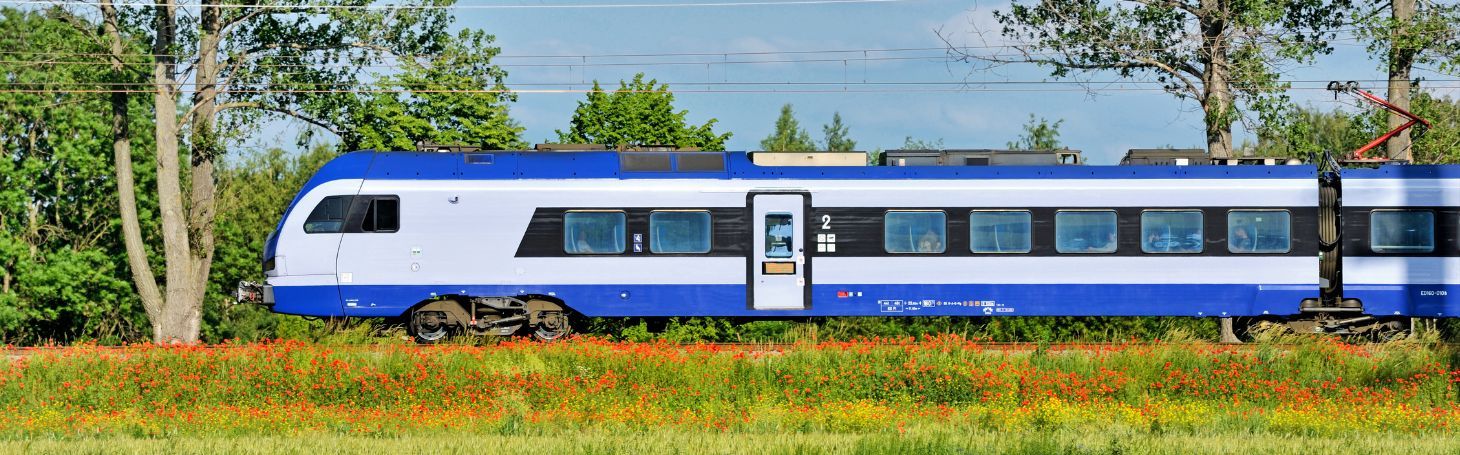
1st or 2nd class on an Intercity train? Comparison, differences and opinions | PolishTrains
Planning a journey on a PKP Intercity train and wondering which carriage class will be best for you? You can buy tickets for all PKP Intercity train categories on PolishTrains without creating an account, with delivery by email and SMS. Domestic ticket sales open up to 30 days before travel, and the earlier you buy, the greater choice of seats and better price you will find. You will see the available seats in the selected class when searching for a connection on PolishTrains, before selecting a specific train. This choice has a big impact on the comfort of your journey and the facilities available, so it's worth knowing what you can count on in each option. Before you buy your ticket, check out the difference between 1st class and 2nd class on the train and which one will better meet your expectations..
Train abroad - how to use international PKP connections?
How to travel abroad by train? On the Warsaw–Berlin route, you can buy your ticket in the PolishTrains search engine, choosing your class and seat during the purchase. You can buy tickets for these routes on PolishTrains in PLN, without creating an account – the ticket is sent by e-mail and SMS a few seconds after payment. Just take advantage of PKP Intercity's international connections, which enable direct travel from Poland to many European capitals - Berlin, Vienna, Prague, Budapest or Vilnius. In the 2025/2026 timetable, the carrier offers as many as 57 pairs of international trains. Find out how to take advantage of PKP's international connections and enjoy your trip abroad.

Big Family Card discounts on PKP - buy cheaper tickets for a family trip | PolishTrains
Family travel can be a challenge, especially when you have to combine driving with looking after the kids. In such a situation, a comfortable train journey can be a great solution. With these discounts, you can plan a budget family trip by train, checking prices and available concessions in the PolishTrains search engine. You can buy a ticket with the selected discount without creating an account in the PolishTrains search engine - it is sent by email and SMS within a dozen or so seconds of payment. What's more, the cost of the journey doesn't have to be high, especially if you have a Big Family Card, which entitles you to special discounts on train tickets. What PKP discounts are available to families with the Large Family Card and what conditions do you need to meet to benefit from them? We write about this in today's article.

PKP concessions and discounts - who is entitled to cheaper tickets? | PolishTrains
Travelling by rail is not only about convenience and speed. You can choose the discount when purchasing your ticket in the PolishTrains search engine – the ticket is sent by email and SMS without creating an account. It's also about being able to take advantage of the various discounts offered by the Polish State Railways. The rules for applying them vary depending on the group and carrier. This also applies to international tickets – in the PolishTrains search engine, you can buy tickets for Eurostar, Deutsche Bahn, Italo NTV and RegioJet, although statutory PKP discounts apply only to domestic journeys. In this article, we'll take a closer look at what types of concessions are available on the PKP and who can benefit from them. Whether you're a student, senior citizen, disabled person or parent, you'll find information on how to travel cheaper by train here.