




Key innovations in rail transport | PolishTrains
Published
Rail transport has come a long way from the first steam locomotives to modern high-speed trains and autonomous technology. You can buy tickets for these fast connections, including routes served by TGV and Eurostar, using the PolishTrains search engine, making it easier to plan your first trip abroad by train. You can already check some modern rail connections on PolishTrains. The rail industry is constantly evolving with innovations that are changing the way people and goods are transported. In this article, we take a look at some of the most important innovations that have changed or could change rail transport in the future.
At a glance
At a glance
- France's TGV, Japan's Shinkansen, and China's CRH trains exceed 300 km/h in regular commercial service
- Poland's PKP Intercity EIP Pendolino trains reach up to 200 km/h on adapted track sections
- Maglev trains use electromagnets to float above the track, eliminating friction and enabling speeds up to 600 km/h
- Hyperloop proposes speeds exceeding 1,000 km/h in low-pressure tunnels but has no commercial lines yet
- ERTMS standardises European train traffic management and is deployed in over 30 countries
- Alstom Coradia iLint hydrogen trains have been in commercial operation in Lower Saxony, Germany since 2022
High-speed rail
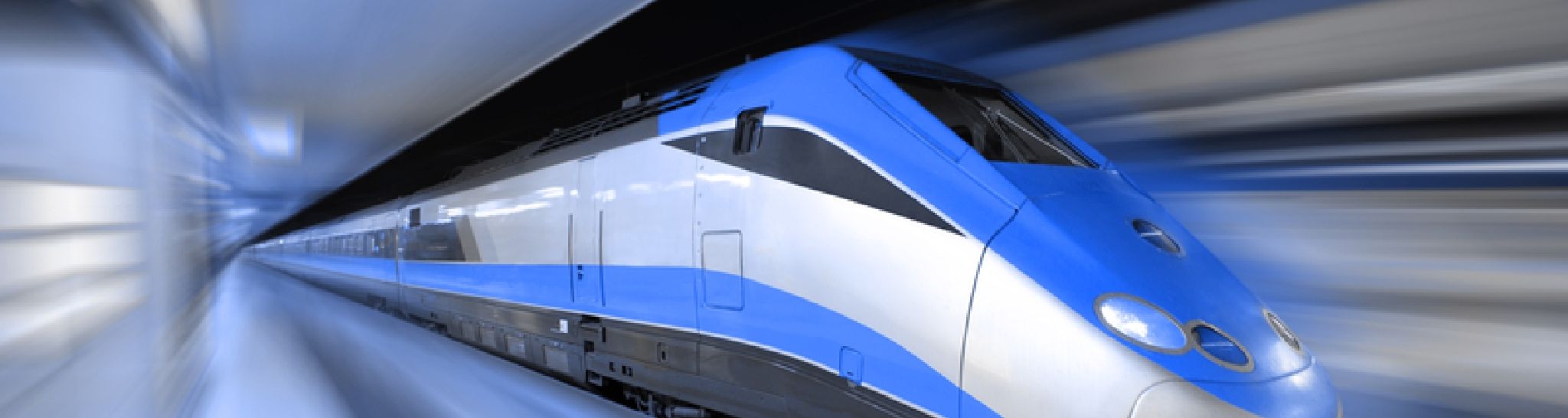
High-speed rail has revolutionised travel, offering fast and convenient connections. This category includes trains that are capable of reaching and maintaining speeds much higher than standard passenger trains, often exceeding 250 km/h. France's TGV, Japan's Shinkansen and China's CRH trains show how advanced technology can significantly reduce journey times, contributing to greater transport efficiency and a reduced environmental impact.
You can check the track and platform number for a specific Pendolino service in the timetable on PolishTrains. In Poland, high-speed rail has made its presence felt with the Pendolino trains, operated by PKP Intercity under the EIP (Express InterCity Premium) brand. Although the Polish railway infrastructure does not yet allow comparable speeds to be reached, the Pendolino accelerates to 200 km/h on suitably adapted sections. The successive modernisation of railway routes is significantly reducing travel time between Poland's major cities.
How does the magnetic railway work?
Magnetic rail, known as Maglev (from magnetic levitation), is a transport system in which trains are lifted above the tracks by powerful electromagnets. By using their forces to both lift and propel the train, physical contact between the vehicle and the track is eliminated. Thus, traction is reduced, so energy is used more efficiently.
You can check modern rail connections in Europe and Poland on PolishTrains. Maglev offers a number of advantages over traditional rail systems, including the ability to reach extremely high speeds - up to 600 km/h. The trains are characterised by quiet operation, lower energy consumption per passenger and a lower environmental impact due to the lack of emissions directly from the vehicles.
Hyperloop - what's next?
Hyperloop is a transport concept that uses capsules travelling at speeds in excess of 1,000km/h in low-pressure tunnels. The idea, proposed by Elon Musk, has the potential to revolutionise long-distance land connections through the use of magnetic levitation. It enables smooth and fast movement with much less friction, and the low pressure in the tunnels reduces drag.
However, such innovative traction systems for rail face challenges, such as the need to build advanced vacuum tunnels o and manage safety at high speeds. Investment costs are high, but progress in prototypes and testing shows promising potential. If Hyperloop overcomes these barriers, it could offer a fast, efficient and environmentally friendly alternative to traditional transport methods, changing the way we think about long-distance travel and logistics.
Safety on the tracks
Railway track safety has improved significantly in recent years due to the introduction of advanced technologies and systems. Key elements such as rail traffic monitoring and management systems (e.g. ERTMS) have played a significant role in making the tracks safer.
ERTMS (European Rail Traffic Management System) is designed to standardise and automate rail traffic management processes at an international level. It helps speed up train movements and reduces the possibility of operational errors. It consists of traffic control and communication systems, which make it possible to increase the speed of a train and automatically adjust it according to track occupation, among other things.
Modern safety systems use an extensive network of sensors and cameras to monitor the condition of tracks, trains and the environment in real time. You can check modern rail connections in Europe and Poland on PolishTrains. There is increasing talk of using artificial intelligence to detect potential threats. The integration of AI systems and machine learning algorithms makes it possible to analyse the vast amounts of data generated by monitoring systems, which also enables automatic responses, even without human intervention. For example, systems can automatically slow down a train or even stop it when they detect an obstacle on the tracks, significantly reducing the risk of accidents.
Autonomous trains
Autonomous trains, using artificial intelligence and 'big data' to manage traffic, represent a breakthrough towards improving the efficiency and safety of rail transport. Advanced systems will make it possible to run a train without driver support in the future. This is a far-reaching vision, slowly becoming a reality. However, full automation will certainly be the subject of much discussion.
There are pilot projects and research into autonomous trains around the world that could revolutionise rail transport in the future. Examples of such initiatives include tests of autonomous trains in subways in various metropolitan areas or research into goods trains capable of navigating complex rail networks autonomously. The results of these tests are promising.
Despite the numerous advantages, the introduction of autonomous trains comes with technological, legal and social challenges. The most significant issue is related to digital security and accountability for AI decisions. There may also be a lack of acceptance of driverless trains, especially when it comes to passenger transport.
Hydrogen rail: is this the future of rail transport?
Hydrogen is a common element on the planet that is emerging as a greener fuel. More and more vehicles with hydrogen cells are appearing in the public space, which can successfully replace internal combustion engines. These cells convert hydrogen into electricity, water and heat, allowing the train's electric traction motors to be powered without emissions.
Hydrogen technology in rail transport can be used to power trains as well as the electrical grid. This solution is particularly attractive in the context of the drive towards sustainability and reducing the carbon footprint of transport.
Advantages of using hydrogen technology for public transport:
-
Zero-emission - hydrogen cells do not emit CO2 or other pollutants, making them extremely environmentally friendly. The only products of combustion are water and steam.
-
Unlimited fuel source - hydrogen, being the most abundant element in the universe, theoretically offers an unlimited fuel source, especially when produced using renewable energy sources.
-
High energy efficiency - hydrogen cells have high energy conversion efficiency, which can contribute to better use of energy resources.
-
Support for the power grid - hydrogen can be stored and used as a buffer to stabilise power grids, especially in the context of energy production from less stable renewable sources.
Electric trains are generally very efficient, but their carbon footprint depends mainly on the energy sources used to power the grid. If the grid is powered by renewable energy sources or hydrogen cells, these trains can also be considered zero-emission.
In the context of the growing global interest in sustainability, hydrogen technology in rail transport presents itself as a promising pathway to reduce emissions and pollution. Test projects demonstrate the practical potential of this technology and its importance in the future transport ecosystem. However, key to widespread deployment will be further refinement of the technology and lowering the cost of cell production and hydrogen procurement.
New technological solutions for railways - summary
Rail innovations such as high-speed trains, hydrogen technology and autonomous trains are opening up new horizons for travellers. Offering faster, safer and more sustainable travel options, they are becoming an increasingly powerful alternative to other modes of transport. Explore the further development of the railways with us and book your tickets on polishtrains.eu to experience the emerging innovations for yourself.
Marcin Lis, member of the PolishTrains team. A travel enthusiast who regularly travels by train across Poland and Europe. Analyst and marketer studying travellers’ needs and behaviour since 2017.