




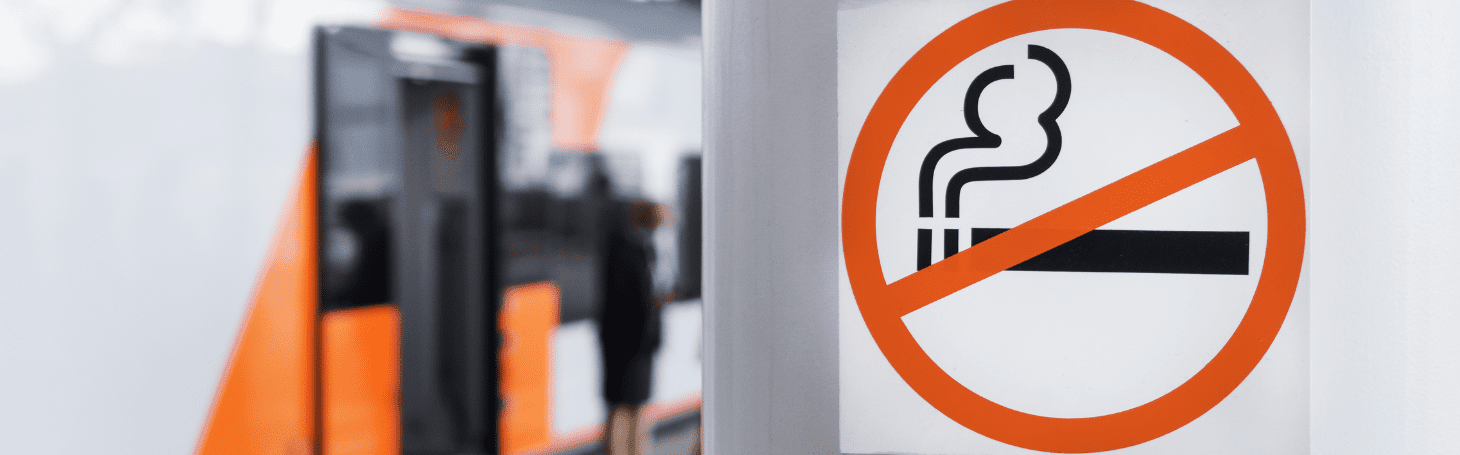
Can you smoke on the train and platform? Find out the rules | PolishTrains
Published
If we are the kind of people who reach for a cigarette, especially if we have a long journey ahead of us, the question that may come to mind is whether we can smoke on the train. You can buy a ticket for your journey on PolishTrains without creating an account – the ticket is sent by email and SMS. For breaking the ban, SOK or the Police may issue a penalty notice. The PolishTrains search engine also lets you check international train timetables, e.g. Eurostar, Deutsche Bahn or Italo NTV, before you plan a journey without smoking on board. The answer is a simple no. Smoking is strictly prohibited on board trains, regardless of the train or train operator. It is a good idea to comply with this rule, as breaching it can result in a hefty fine of up to PLN 500!
At a glance
At a glance
- Smoking is strictly prohibited on all trains in Poland, including e-cigarettes and heated tobacco products
- The ban covers passenger compartments, corridors, vestibules, catering cars and toilets
- E-cigarettes and heated tobacco devices have been banned on public transport since 2016
- Fines for smoking on a train range from PLN 50 to PLN 500, issued by SOK or the Police
- Dedicated smoking areas at stations are the only legal place to smoke during a rail journey
- Refusing a fine results in the case being referred to the district court, which may impose a higher penalty
Is it OK to smoke on the train? Check before you light up on the move
Smoking of tobacco products and e-cigarettes is strictly prohibited on every train that runs on tracks in Poland. It is worth remembering the latter ban in particular, as many people think that e-cigarettes are less restrictive, which is not the case.
The smoking ban in trains applies to:
-
passenger compartments;
-
corridors and vestibules
-
catering cars;
-
toilets.
It does not matter what kind of train it is - the smoking ban applies to long-distance PKP Intercity trains as well as all regional services. The legal basis is the Law on the Protection of Health against the Consequences of Tobacco and Tobacco Products Act 2010, which clearly details the ban on smoking in public transport.
The PolishTrains search engine immediately shows which of these carriers operates a direct connection on the selected route, helping you plan a journey without changes and without smoking on the way. This makes it easier to choose a route before buying a ticket. As far as e-cigarettes and tobacco warmers are concerned, smoking them in public places, i.e. also on trains, has been prohibited since 2016, when an amendment to the anti-smoking law was introduced. While the smoke from such products is less intense as from a classic cigarette, it can still not only be a nuisance to other passengers, but also set off smoke detectors.
Smoking compartments on Intercity - myth or reality?
Smoking compartments existed in the 1990s and early 2000s. However, Intercity withdrew them in 2010 following the introduction of the Smoking in Public Places and Public Transport Prohibition Act. So today, there is no specially designated smoking area in any carriage or elsewhere on the train.
It is also important to remember that it is illegal to smoke in a toilet, for example, and you could receive a fine for this. The fine for smoking on a train is between PLN 50 and PLN 500. If you are caught smoking, you run the risk not only of a fine, but also of the train being stopped and the journey delayed as a result. This is because the train crew has the right to report a breach of the regulations to the Railway Guard or the Police.
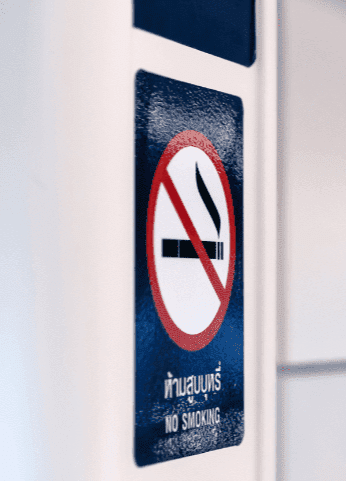
Smoking on the platform - is it legal? Here's what the regulations say
Furthermore, you can also receive a fine for smoking on the platform. The regulations clearly regulate this. Smoking is permitted in specially designated areas, marked with a sign saying "Smoking zone". These can be found in large stations such as Warszawa Centralna and Kraków Główny. If there is no specially designated area, smoking is prohibited, which is regulated by the anti-smoking law and railway regulations.
How much is the fine for smoking on the train and who issues it?
The penalty for smoking on the train can be severe, so it is worth complying with the rules. Fines start at PLN 50, but the upper limit is PLN 500. In extreme situations, a passenger disobeying the law and the regulations may be removed from the train, and staff may call the appropriate services.
Importantly, the ticket is not issued by the conductor or any other railway employee. Special services are authorised to do so, among which are:
-
Railway Protection Service
-
Police
You can receive a fine both on the train and on the platform, after leaving the train or if you smoke outside the train in a non-designated area.
How do the competences of the SOK differ from those of the Police?
The SOK can only intervene in the railway area, viz:
-
on trains;
-
on platforms and in station buildings;
-
on sidings.
In terms of powers, in terms of railway offences, i.e. smoking in an unauthorised place, for example, the SOK has very similar possibilities to carry out interventions as the Police. It can:
-
Issue a fine under the same rules as the Police and in the same amount.
-
Identify passengers and, if necessary, remove them from the train.
Use direct coercive measures in the event of resistance. Most often, it is the SOK that responds to all offences, including smoking in prohibited places, as these units are present at many stations but also patrol depots en route.
The police, on the other hand, can intervene anywhere. It is usually called in situations where:
-
The passenger refuses to accept a ticket from the SOK. The police can then make a note to the court.
-
The situation escalates and aggression occurs.
-
There is a suspicion that the passenger on whom the SOK wants to fine for non-compliance with railway regulations has committed other offences or crimes.
Smoking ban on trains - why is it so strictly enforced?
After receiving a penalty notice, you can accept it or refuse. Refusal means that the case is referred to the district court, which may impose a higher penalty.
-
Accepting the penalty notice on the spot: the case is closed
-
Refusing to accept it: SOK or the Police draws up a report, and the case is referred to the district court
-
Appealing against the penalty notice: after accepting it, you can submit an application to the district court within 7 days of the decision being issued
If the intervention affected your journey, check the PolishTrains ticket refund rules. For matters concerning a ticket bought through PolishTrains, you can also contact Customer Service. You can buy a ticket for an international route, for example to Berlin, through PolishTrains and pay in Polish zloty, regardless of which carrier operates the connection. Smoking is not permitted on public transport. This prohibition is strictly enforced and the fine for smoking on the platform and on the train can be so high for several reasons. Among them are:
-
Fire safety - an improperly extinguished cigarette or the ash from it can ignite system components in the carriages. Most of the toilets also have smoke detectors, so triggering an alarm could result in the train being stopped, services intervening and resulting in delays and costs to the operator.
-
Compliance with European Union standards - EU directives and TSI standards require the installation of fire protection systems and the elimination of potential sources of danger.
-
Travel comfort - not everyone can tolerate cigarette smoke and air-conditioned interiors make it difficult to ventilate carriages. Every traveller should have the right to a comfortable journey, a component of which is the ability to breathe air freely and without additional pollutants such as cigarette smoke.
In the 1st half of 2024, PKP Intercity indicated that SOK officers intervened an average of 35 times per day and among these interventions were those related to violations of the smoking ban. Controls are frequent, so before we break the ban, let's consider whether it is worth risking a moment of pleasure, for which we can get a fine of up to PLN 500.
Frequently Asked Questions (FAQ)
After receiving a penalty notice, you can accept it or refuse. Refusal means that the case is referred to the district court, which may impose a higher penalty.
-
Accepting the penalty notice on the spot: the case is closed
-
Refusing to accept the penalty notice: SOK or the Police draws up a report, and the case is referred to the district court
-
*Appealing against the penalty notice: after accepting it, you can submit an application to the district court within 7 days of the decision being issued
If the intervention affected your journey, check PolishTrains' ticket refund rules. Can you smoke an e-cigarette on the train?
No, smoking e-cigarettes, like regular tobacco, is prohibited. Tobacco warmers are also not allowed on trains. This ban has been in force since 2016.
Are there trains with smoking cars?
Since 2010, there are no longer trains with smoking cars. There is a total smoking ban in force and breaking this ban will result in a fine.
Can I smoke on the platform?
Yes, as long as there is a specially designated area with smoking signs. Smoking is not permitted outside this area. Smoking areas are usually organised in larger stations and smaller stations may not have them. For matters concerning a ticket bought through PolishTrains, you can also contact Customer Service. The absence of a smoking area means that smoking is prohibited.
Who can issue a fine for smoking on a train and what is the amount?
A fine can be issued by both the SOK and the Police. Due to greater accessibility in areas under the authority of the railways, it is usually the former. The amount of the fine is between PLN 50 and PLN 500. Is there more than a fine for breaking the smoking ban? Normally not, but if a passenger is aggressive and does not comply with the instructions of the services, they can be removed from the train. You can buy a ticket for an international route, for example to Berlin, through PolishTrains and pay in Polish zloty, regardless of which carrier operates the connection.
In summary, there is an absolute ban on smoking in trains, as well as on platforms. The latter may have separate smoking areas, but this is not mandatory. Since 2010, there are no longer separate smoking compartments and trains are equipped with smoke detectors. This can result in an alarm being triggered and action being taken by the service - leading to delays and costs. So if you are a smoker, we recommend that you use the designated area on the platform before boarding the train, and refrain from smoking during the journey.

How to check if there is WARS on the train? A practical guide for travellers | PolishTrains
Planning a train journey, wondering if there is a restaurant car on the train? Pendolino, meaning EIP-category trains, is the most reliable choice if you are counting on a WARS dining car on your route. On PolishTrains, you can check this before buying your ticket on the seat map, where the dining car is marked with a crossed-cutlery symbol. In our practical guide, we suggest how to quickly and effectively check if there is a tasty meal waiting for you on the train. You will find out how to check if there is a WARS on the train. Where to look to find out if there is WARS on the train and which trains most often offer it?
Ticket surcharge on the train - how much does it cost and when is it charged? | PolishTrains
Travelling by train is a convenient way to get around, but what if you don't manage to buy your ticket before boarding the carriage? On PolishTrains, you can buy a ticket before travelling without creating an account – the ticket is sent by email and SMS within a dozen or so seconds of payment. Whether a surcharge is charged mainly depends on the availability of a ticket office or ticket machine at the station and your statutory entitlements. You can check the timetable for TLK and other carriers in advance using the PolishTrains search engine, allowing you to buy your ticket online and avoid this fee. Fortunately, most carriers allow you to buy your ticket from the conductor, although this usually incurs an additional cost. What is the charge for issuing a ticket on REGIO, KM and TLK trains? When can it be avoided? Here is everything you need to know before boarding a train without a valid ticket..
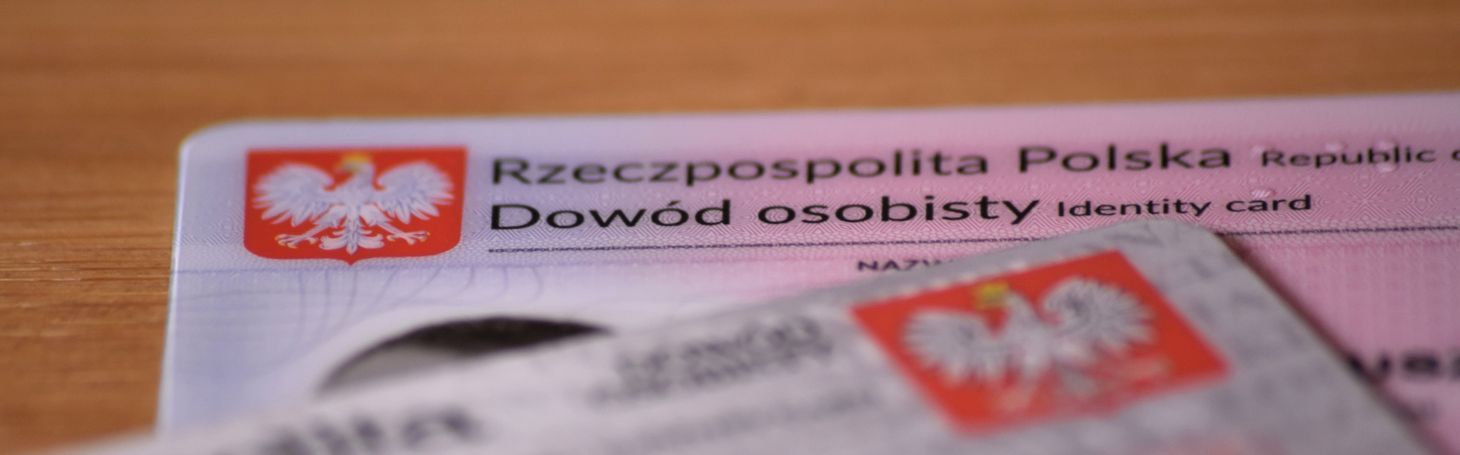
Lack of ID on the PKP - what are the passenger's risks? | PolishTrains
Are you about to travel by train? You can check the detailed document requirements on the PolishTrains help page. When a document is required, what alternatives are available to you and what to do if you forget your identity card - we explain it step by step. You can buy a ticket for an international route, for example to Berlin, through PolishTrains, bearing in mind that mObywatel will not replace your passport or identity card there. Remember that in addition to a valid ticket, you must also carry your identity card. Especially if you have bought your ticket online or are taking advantage of discounts. There is a risk that the lack of an identity card will be treated by the PKP as grounds for not accepting your ticket. You can read about the consequences and possible solutions for forgetful travellers in the following article.
Train delay | PolishTrains
Are you standing on the platform waiting for your train and suddenly an announcement pops up on the information board that your train has been delayed? You can submit a claim for a ticket purchased via PolishTrains online – without visiting the station, using a form and the ticket PDF. The rules differ between carriers, so first check whether you are claiming for a delayed train or an unused ticket after the passenger missed the train. This also applies to the Warszawa–Berlin route operated by Deutsche Bahn, where you can check the complaint rules on PolishTrains (polishtrains.eu) before submitting your claim. You have three choices - show patience and wait because you want to make your planned journey, return the pkp ticket you bought and buy one for the next train or cancel your journey. However, everything has its limits and passengers should know their rights and exercise them. You too can miss your train. In this article we outline how to get compensation for a delayed train or a late passenger.
This article was prepared by the PolishTrains editorial team. We follow the rail market in Poland and Europe, look for new connections and support you at every stage of your journey.