


Christmas in Poland - traditions, food and the best places to visit
Published
December in Poland feels different from anywhere else in Europe. The air smells of cinnamon, dried fruit and cold winter evenings. Windows glow with warm light, families prepare their homes for the celebrations, and Christmas Eve is spoken about with a sense of importance you can feel even as a visitor. Christmas in Poland isn’t only a holiday, but rather a collection of important traditions, flavours and gestures that connect generations. Some are centuries old, others are modern interpretations, but all of them shape the atmosphere people associate with Polish winter. For visitors planning to experience these seasonal traditions, PolishTrains can help arrange rail travel around Poland before Christmas closures affect services.
For many, the season begins long before December. Markets around the country open in November, Christmas trees appear in town squares and families start planning the Christmas Eve dinner. What often surprises foreigners is how central Wigilia, the evening of 24 December, is to Polish culture. It is big, family-driven, symbolic, and deeply personal. Streets empty out, families gather, and the night unfolds.
Below, you will find out what makes Christmas in Poland so distinctive: the customs, the dishes, the symbolism and the places where the holiday season becomes especially memorable.
Whether you want cultural insight, culinary discovery or inspiration for where to spend Christmas in Poland,we will give you a closer look at how the season is experienced across the country. Because shops and most restaurants close on 25 and 26 December, PolishTrains helps travellers schedule journeys and meals around those quieter days.
How is Christmas celebrated in Poland?
The key day of Polish Christmas is Christmas Eve (Wigilia). Families gather after sunset for a dinner that traditionally includes 12 meat-free dishes. The dinner begins only after the first star appears in the sky. This tradition reflects the story of the Star of Bethlehem. Before anyone reaches for food, the family shares opłatek, a thin wafer broken into pieces while exchanging wishes, and more religious families speak prayers together. Many households follow this custom strictly, even if other traditions have become more flexible over the years.
On Christmas Day (25 December) and the second day of Christmas (26 December), families visit relatives, eat festive lunches, and attend church. Shops and most restaurants remain closed, as these two days are meant for rest, not large public celebrations. Gift-giving practices vary by region. In some parts of the country gifts arrive on 6 December (St. Nicholas Day), but in others, presents are opened on Christmas Eve, just after the festive dinner. To explore regional Christmas flavours, travellers can use PolishTrains to plan rail journeys towards Podhale, eastern Poland, Silesia, or major festive cities.
Unique Christmas traditions in Poland you should know
Most Christmas traditions in Poland are tied to Wigilia (Christmas Eve). The most known custom is the empty place at the table, set for an unexpected guest or someone who cannot be present.
The dinner itself traditionally includes twelve dishes, none containing meat. However fish, especially carp, plays a major role, along with mushrooms, poppy seeds and dried fruit. Children often look forward to carolling later in the evening, and in many homes, families attend Pasterka, the midnight mass, which continues to be one of the most attended church events of the year. In some households, people break a small piece of the wafer for pets as a symbolic gesture of kindness and wait until midnight to see if their pets will start speaking in a human voice.
Regional differences shape the holiday as well. In Podhale, families may include highlander dishes. In eastern regions, kutia appears on the table, in Silesia, dumplings and sweet desserts take the spotlight. The Christmas gift-givers also vary depending on the region. Presents may be delivered by Święty Mikołaj (Santa Claus), Aniołek (Angel), Gwiazdor (Father Christmas) or Dzieciątko (Baby Jesus).
Christmas traditions in Poland are diverse, but they all share two qualities: togetherness and a strong sense of continuity.
Christmas food in Poland - traditional dishes
The Polish Christmas table is built around flavours that appear only once a year. Some are mild and comforting, others aromatic and rich, but all tied to memory.
The dinner often begins with barszcz z uszkami, a beetroot soup with small mushroom-filled dumplings. The combination is earthy and slightly sweet, warming after a cold December day. Next comes pierogi, usually filled with cabbage and mushrooms, a dish that varies slightly from region to region.
Carp remains one of the most iconic Christmas foods in Poland. Although its popularity changes from generation to generation, it still appears in many homes in fried, baked or jellied form. Herring served in oil or cream is another staple.
Desserts are symbolic as well. Makowiec (poppy-seed roll), kutia (wheat with poppy seeds, honey and nuts) and piernik (gingerbread) represent prosperity and good luck. Many families also serve kompot z suszu, a drink made from dried fruit that has a smoky, nostalgic flavour.
Christmas Day usually includes more dishes, those often with meat, but the heart of Christmas food in Poland remains the carefully prepared, symbolic meal of Christmas Eve.
The Christmas tree in Poland - history and symbolism
A Christmas tree in Poland is more than a simple decoration. The tree is a symbol that reflects both tradition and family identity. Although the modern tree tradition came from Germany in the 19th century, Poles quickly made it their own. Before trees became common, households decorated a podłaźniczka - a spruce branch hung upside down from the ceiling. In small villages, this custom survived well into the 21st century.
Today, most families put up their tree a few days before Christmas Eve, though many younger households decorate earlier to match the festive atmosphere in cities. Ornaments often include straw decorations, gingerbread, hand-painted baubles, and family keepsakes passed down across generations. In some regions, especially in the countryside, children still make chains from paper or dried oranges, filling homes with a homemade touch.
The Christmas tree in Poland blends traditional symbolism mixed with modern lights and ornaments. It’s often the centrepiece of the living room during the holidays. In cities such as Gdańsk, Kraków or Warsaw, large public trees are placed in main squares and become central points of holiday events.
Where to spend Christmas in Poland - top festive destinations
If you’re considering where to spend Christmas in Poland, think about the type of winter atmosphere you want. And, on the brightest side, you can try the famous Oscypek from its region of origin!
For snow and mountain scenery
Zakopane and Karpacz are the most popular choices. Wooden highlander houses, decorated streets and snowy peaks create a holiday setting that feels both traditional and lively.
For historic charm
Kraków and Toruń offer beautifully decorated Old Towns, carollers in the streets and long-standing customs that shape their Christmas character. Kraków’s Christmas Market is known as the most traditional Christmas Market in the whole country.
For modern city lights and vibe
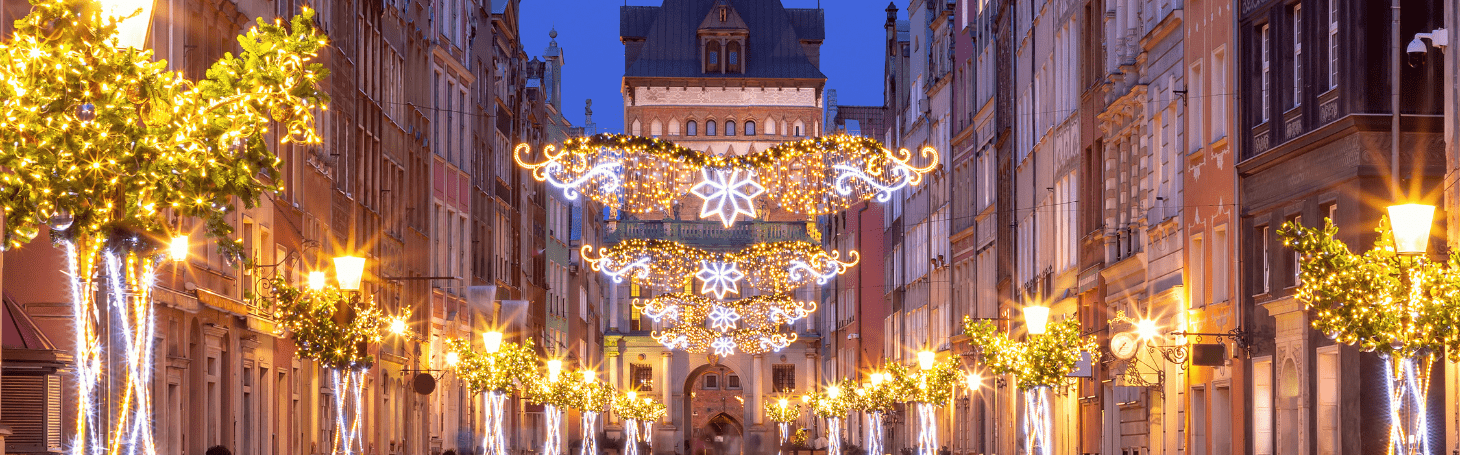
Warsaw, Poznań and Gdańsk combine festive markets with large-scale illuminations, ice rinks, concerts and cultural events. The biggest event takes place in Poznań, as part of the Ice Carving World Championship happens mid-December. Artists from around the world gather to carve elaborate figures using chainsaws, chisels and light tools. All is performed live in front of thousands of spectators.
If you want a more international Christmas atmosphere, be sure to visit Warsaw. The capital is known for the international Christmas street food stalls.
For quiet, rural celebrations
Small villages in Podlasie, Podkarpacie or Mazowsze provide a more intimate Christmas experience. They should be perfect for travellers interested in local traditions rather than big events.
When do Christmas markets start in Poland?
Christmas markets in Poland usually open in the second half of November and continue until just before Christmas. Though, some cities keep their stalls running into early January. Larger markets, such as those in Kraków, Gdańsk or Wrocław, announce their schedules in early autumn.
Weekdays tend to be quieter, while weekends draw bigger crowds, especially in December. Christmas markets have become an important part of the season and offer a cheerful way to experience winter in the city.
Typical patterns:
-
Opening dates: 15-25 November
-
Closing dates: 23 December -> early January (depending on the city)
-
Operating hours: midday to evening, with longer hours on weekends
Conclusion
Christmas in Poland is shaped by rituals, flavours and gestures that have survived generations. Some of them are simple, like waiting for the first star, sharing the wafer, preparing the same dishes year after year. Yet, they carry meaning that’s deeply felt across the country. The season blends family warmth with quiet reflection, local customs with regional variations, and old symbolism with modern interpretations.
Whether you’re interested in the food, the traditions or the atmosphere of Polish winter, Christmas offers a chance to see the country from a new perspective. It’s a time when modern cities slow down, village customs resurface and homes fill with the sounds and smells that mark the most important night of the year.