




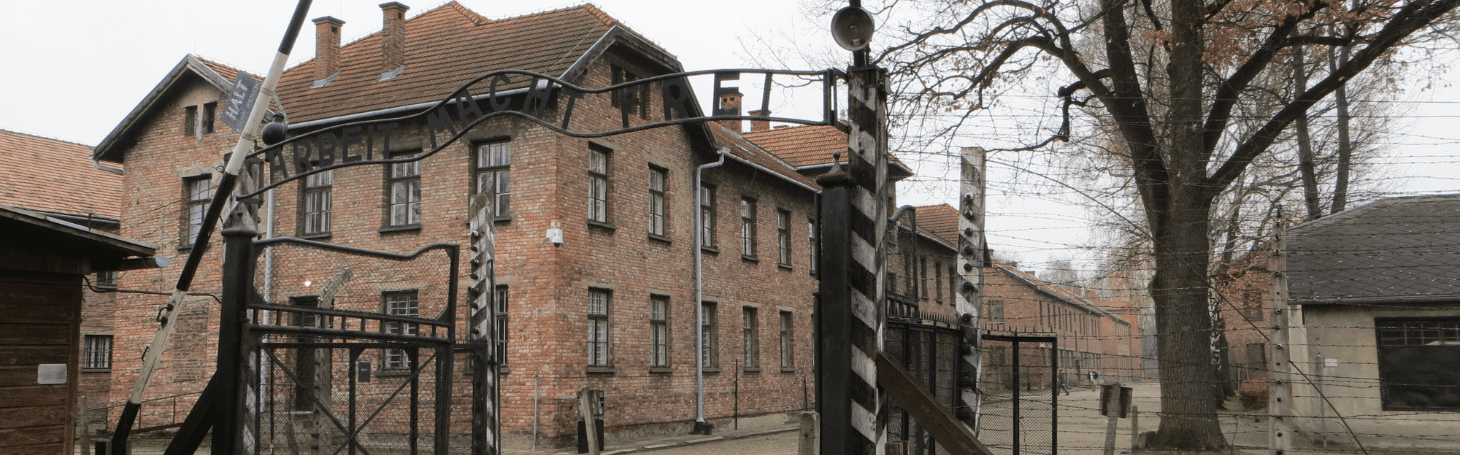
Auschwitz-Birkenau Tour - what to know before visiting the memorial?
Published
Auschwitz-Birkenau is the largest former Nazi concentration and extermination camp, and today it serves as one of the most important memorial sites in Europe. People come to understand history, to learn, and to pay respect to the victims. The visit requires preparation and awareness, as the site documents real places where crimes of the Holocaust took place. For visitors planning independent travel, PolishTrains helps compare train connections to Oświęcim while keeping the memorial’s solemn purpose in focus.
The memorial is located in Oświęcim, in southern Poland, around 70 km west of Kraków. Because of this, Auschwitz and Birkenau tours from Krakow are the most common and convenient. However, visitors also travel from cities such as Katowice or Wrocław, either independently or through organised transport. Below, we will try to explain to you how to get there and how to prepare for a respectful visit. Using PolishTrains to check Kraków Główny–Oświęcim services helps visitors plan arrival before the museum’s recommended thirty-minute early check-in.
Auschwitz-Birkenau - history
Auschwitz was established by Nazi Germany in 1940 in occupied Poland. It began as a concentration camp for political prisoners but quickly expanded into a complex that became central to the genocide carried out during the Holocaust. Between 1940 and 1945, approximately 1.3 million people were murdered there, the majority of them Jews.
The camp system consisted of three main parts:
-
Auschwitz I - the original camp, where administrative buildings, the first prisoners’ barracks, and key exhibitions are located today
-
Auschwitz II-Birkenau - the largest part of the complex and the main extermination site. This is where gas chambers, crematoria, and the railway unloading platform operated
-
Auschwitz III-Monowitz - a labour camp connected to industrial factories, particularly the IG Farben plant
People imprisoned in Auschwitz came from many countries, including Poland, Hungary, France, the Netherlands, Germany, the former Czechoslovakia, Yugoslavia, and Greece. In addition to Jewish victims, the camp also held Poles, Roma and Sinti, Soviet prisoners of war, and other persecuted groups.
The camp was liberated by the Red Army on 27 January 1945, a date now recognised as International Holocaust Remembrance Day. Two years later, in 1947, the Auschwitz-Birkenau State Museum was established to preserve the site and create a place for education and commemoration. Travellers coming from Wrocław can use PolishTrains to review connecting services to Oświęcim and allow time for the onward walk or local transport.
Auschwitz-Birkenau guided tours - what do they include?
A guided Auschwitz-Birkenau tour follows a structured route prepared by the museum to give visitors a clear understanding of the site and its history. Tours are led by licensed museum educators who specialise in Holocaust studies.
The camp can be visited with a guide in two variants:
-
General guided tour - 3.5 hours
-
Study guided tour - 6 hours
General Group Tour (approximate duration 3.5 hours):
This includes a visit to the permanent exhibition and sites within the Auschwitz I main camp, and a tour of the most important post-camp sites at Auschwitz II-Birkenau: prisoner barracks, the unloading platform (the ramp), and the ruins of gas chambers and crematoria II or III.
One-Day or Two-Day Study Tour (duration 6 hours or 2x3 hours):
The first part of the tour includes a visit to the permanent exhibition, selected national exhibitions, and sites within the Auschwitz I main camp. The second part includes a tour of the grounds of Auschwitz II-Birkenau, including the ruins of gas chambers and crematoria II-V, the residential and sanitary barracks, and the area of the so-called "Kanada" (storage barracks).
Guided tours are available in several languages. Audio headsets are provided so participants can hear the guide clearly throughout the visit.
Photography is allowed in many areas but is restricted in some exhibition rooms out of respect for the victims.
How to get to Auschwitz-Birkenau from Krakow?
Because of its location, most visitors choose an Auschwitz and Birkenau tour from Krakow.
Travel options from Kraków to Oświęcim:
1. Organised tours
These include round-trip transport, entry slots and a licensed guide.
2. Public transport - bus
Regular buses depart from Kraków MDA Bus Station and stop close to the entrance of Auschwitz I. This is the most direct public option and runs frequently throughout the day.
3. Train to Oświęcim
Trains depart from Kraków Główny and arrive at Oświęcim railway station. From there, it is a 20-25 minute walk or a short local bus ride to the museum.
4. Car travel
The route takes around 1:15h. Parking is available near the museum, but advance booking may be required during busy periods.
Once at the museum, free shuttle buses connect Auschwitz I and Birkenau, located about 3 km apart. Regardless of the transport method, visitors should arrive 30 minutes early to ensure they join their assigned entry group on time.
Auschwitz-Birkenau tour from Wrocław - travel options and tips
Although Kraków is the closest major city to Oświęcim, many visitors begin their Auschwitz-Birkenau tour from Wrocław.
1.Organised tours from Wrocław
-
Several tour companies offer full-day trips from Wrocław, including:
-
Round-trip transport (usually 3h–3h 30 min each way)
-
Reserved entry time
-
A licensed Auschwitz-Birkenau museum guide
-
Assistance with logistics and on-site coordination
2. Train travel from Wrocław to Oświęcim
You can take a connecting train from Wrocław Główny to Oświęcim.
-
Travel time: 3-4 hours, depending on the connection
-
After arrival you need to prepare for 20-25 minute walk to the Auschwitz I entrance, or a short local bus/taxi ride
3. Car travel from Wrocław
-
Distance: approx. 235 km
-
Travel time: 2h 45 min - 3h 15 min depending on traffic
-
Parking: the museum has paid parking zones near the Auschwitz I entrance
Practical tips for visitors coming from Wrocław
-
Book entry slots early. Visitor limits apply and tickets often sell out weeks in advance
-
Plan a full day. The round trip + museum tour typically requires 10-12 hours in total
-
Check museum rules. Bag size limits, security checks and silence in commemorative areas are strictly enforced
-
Dress appropriately. The Birkenau site is very large and mostly outdoors. Warm layers and comfortable shoes are essential.
-
Allow time for reflection. Many visitors find the experience emotionally heavy, so avoid over-scheduling the rest of the day
Conclusion
Visiting Auschwitz-Birkenau is not a typical tourist experience. It’s a solemn, educational journey into one of the darkest chapters of human history. Guided tours help visitors understand the historical context, the scale of the atrocities and the personal stories behind the figures and ruins. The preserved barracks, the railway ramp at Birkenau and the exhibitions inside Auschwitz I serve as powerful reminders of the lives lost and the consequences of hatred, discrimination and totalitarian systems.
The memorial today functions not only as a museum but also as a centre for documentation, education and remembrance. Millions of people visit every year to learn, reflect and honour the victims.